
Fourth Avenue, Harlow - The angle
Rock Townsend was commissioned by Clarion Housing to deliver a new residential development as part of their long-term investment in Harlow and the surrounding area. The 0.36-hectare site is currently vacant following the demolition of a former YWCA hostel and a privately-run nightclub and music venue. Positioned on the northwestern edge of the town centre, between the Harvey Centre and the Princess Alexandra Hospital, the site has a triangular shape, bordered by Fourth Avenue at the junction with Haydens Road Roundabout.


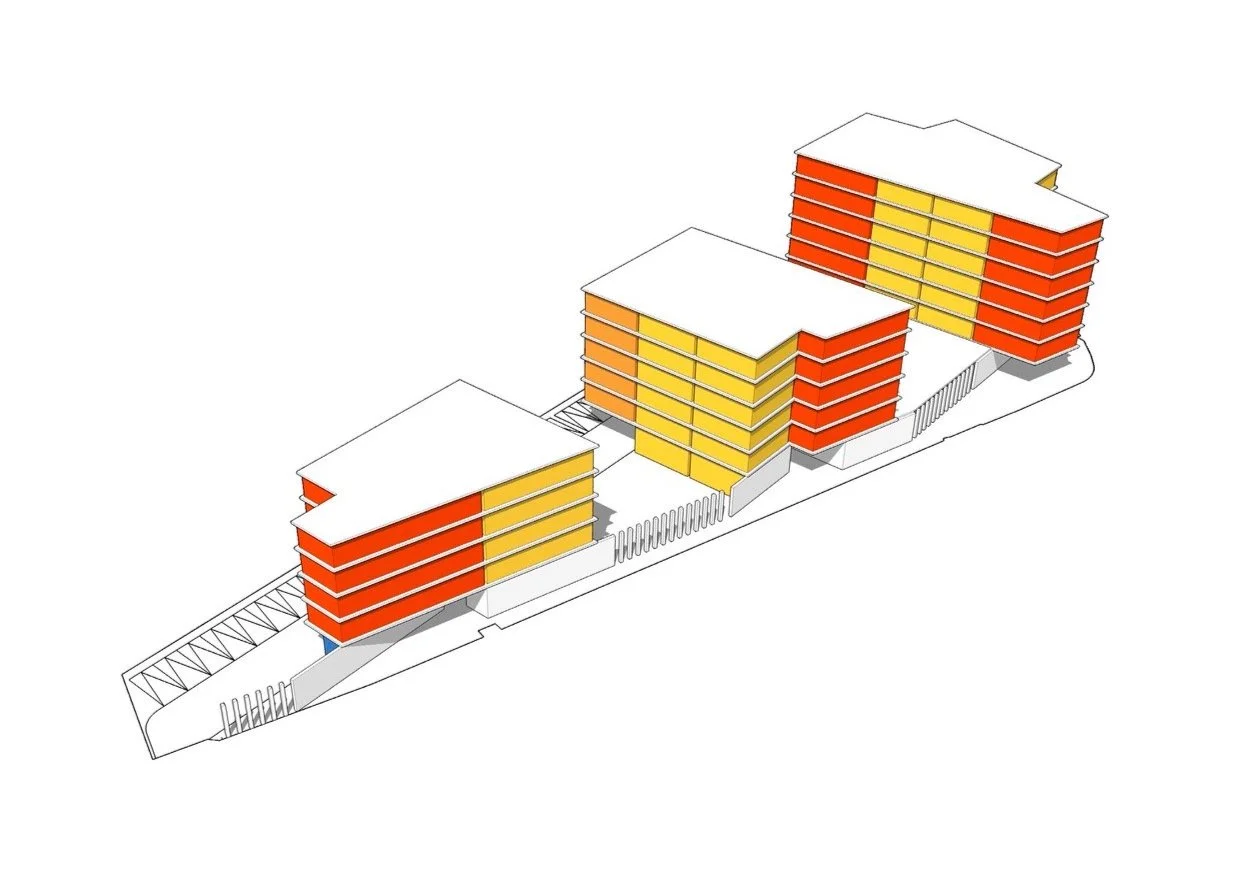
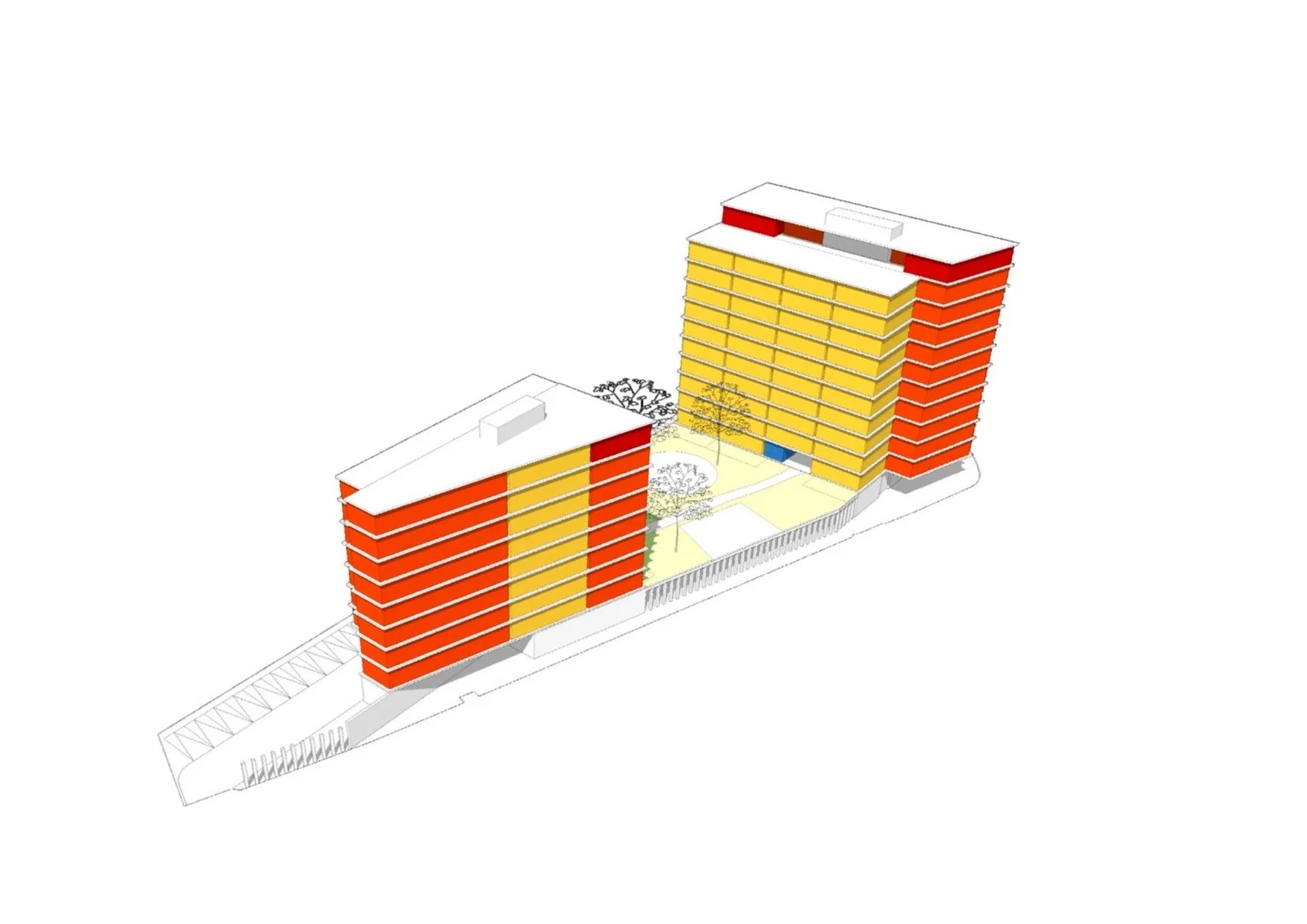
Right. Option A - up to 90 homes; Option B - up to 92 homes; Option C - up to 130 homes.Right. extrusion of plan form to achieve a balance of dwelling numbers, amenity space and protection from overlooking
It is located near several prominent tall buildings, including Joseph Rank House and Edmunds Tower, both 12 storeys, and the 6-storey Princess Alexandra Hospital. The previous building on the site stood at seven storeys, establishing a precedent for the proposed development’s height.
The brief for this project is to create high-quality new homes that address local housing needs, offering a mix of market sale and affordable housing. Importantly, the design must optimise viability and align with the area's market position. Through a process of design evolution, three options were tested. Option A proposed three separate blocks with an open ground floor for parking, entrances, cycle storage, and refuse areas, increasing in height towards the northeast. This was ultimately dismissed due to high construction costs and the close proximity of the blocks to each other. Option B explored two buildings with ground-floor parking but lacked sufficient communal spaces, restricting the number of apartments and failing to meet economic feasibility and urban design aspirations. Option C, the selected approach, comprises two buildings linked by a podium-level communal space. This design optimises ground-floor parking while increasing the number of apartments and creating a cohesive, well-integrated urban form.
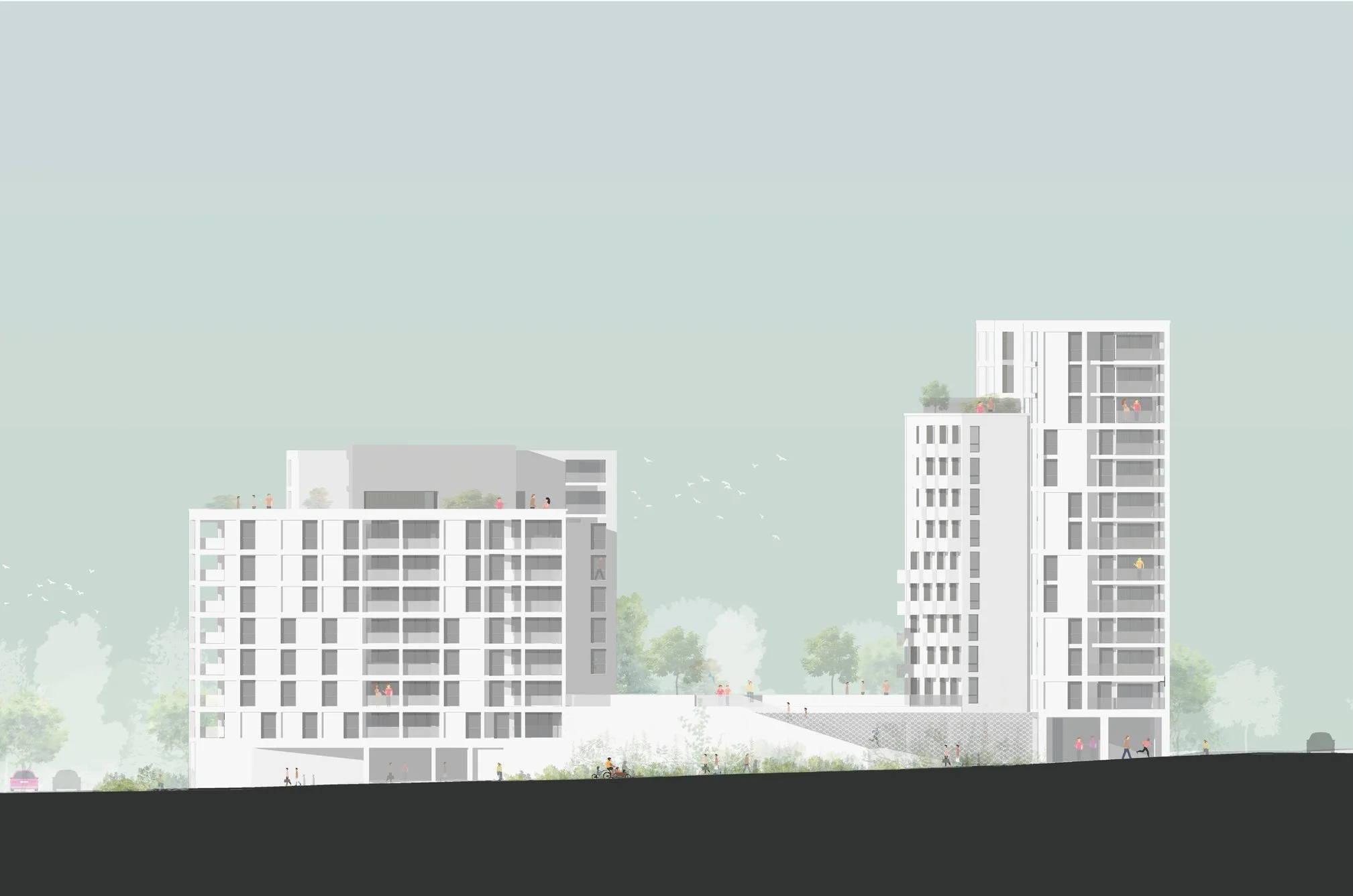
The layout of the development responds to the site's triangular shape and surrounding built environment, aiming to reinforce the area's urban identity while incorporating green spaces and establishing a landmark gateway to the town centre. Block A, at 13 storeys, is positioned along the northern boundary, serving as a prominent marker visible from Fourth Avenue and Haydens Road. Block B, standing at 10 storeys, defines the southern edge of the site along Fourth Avenue. A central podium connects the two buildings, enhancing visual continuity and creating a communal space that integrates with the adjacent hospital’s green landscape.
The development is designed to support both pedestrian and vehicular movement, with a primary pedestrian entrance from Fourth Avenue featuring generous arrival spaces. A gated vehicular entrance beneath Block B provides secure access to private parking. The scheme also prioritises sustainable transport, offering one secure cycle storage space per unit along with additional visitor cycle parking near the building entrances.


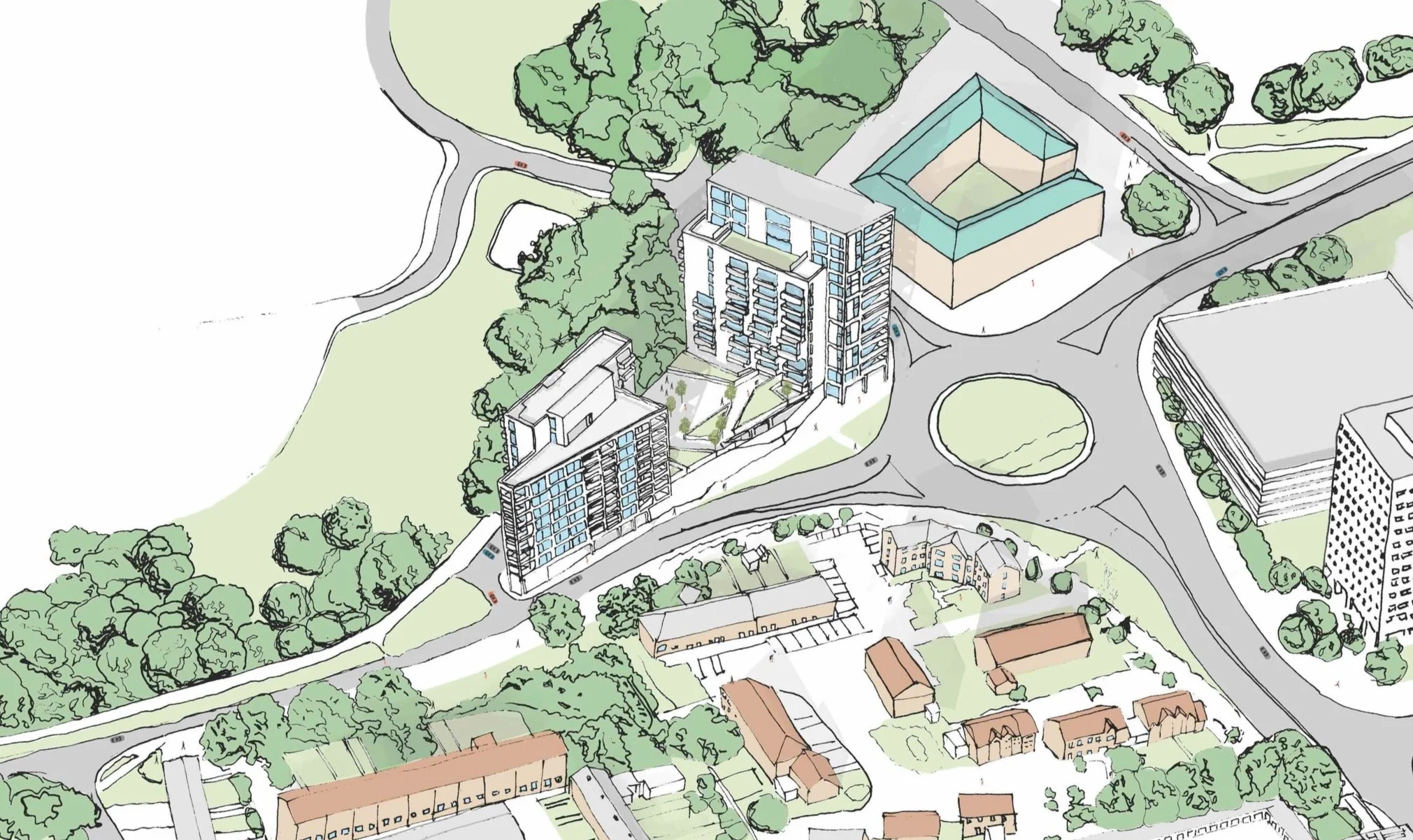
The design includes 15 wheelchair-accessible homess designed to M4(3). Every home benefits from a private terrace or balcony, while podium and rooftop gardens provide additional communal spaces, fostering a strong sense of community and enhancing the quality of living.
The architectural design incorporates a material palette that balances modern aesthetics with sensitivity to the surrounding context. The use of light and medium buff bricks helps define the building’s massing while contributing to an animated street frontage. Grey concrete tile cladding highlights key elements such as entrances and rooftop amenity areas, while podium-level perforated panels allow for natural ventilation in the parking areas without compromising street appeal. The roofing incorporates a combination of rooftop amenity spaces and non-visible flat roofs, while powder-coated grey and black balcony balustrades enhance privacy and add visual depth to the elevations.
A fabric-first approach combined air-source heat pumps (ASHP) and mechanical ventilation and heat recovery (MVHR) all work to deliver an energy efficient design with significant carbon emissions reduction and addressing issues of fuel poverty.
The development delivers 128 apartments, including 51 one-bedroom and 77 two-bedroom four-person apartments. The tenure mix consists of 30% shared ownership units, all within Block B, and 70% private sale units. Parking provision includes 93 spaces in total, with 80 allocated for residents and 13 designated for visitors.


Above. South-east elevation; Above right. South -west elevation.
Right. Study of elevational geometry and materials palette.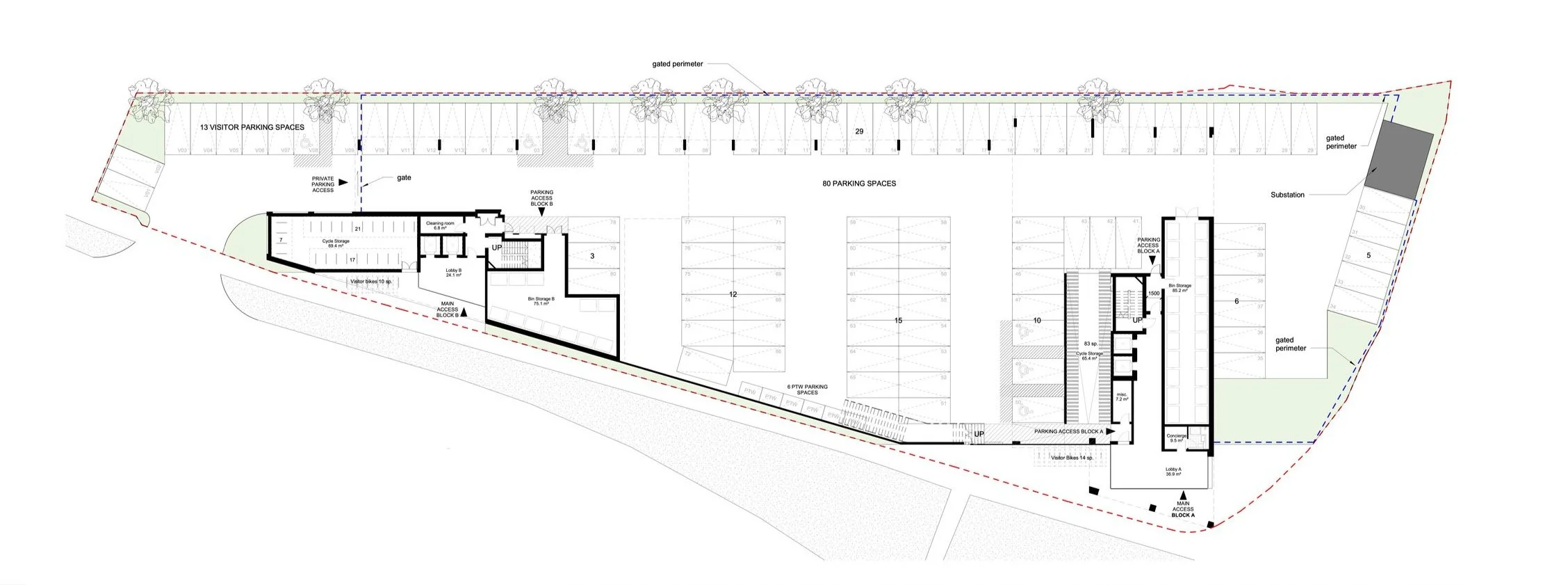
Ground floor layout - entrance and parking
First floor layout - podium and residential
Typical building B floor plan layout
Typical building A floor plan layout
Typical 1B2P 50SqM apartment
Typical 2B4P 70SqM apartment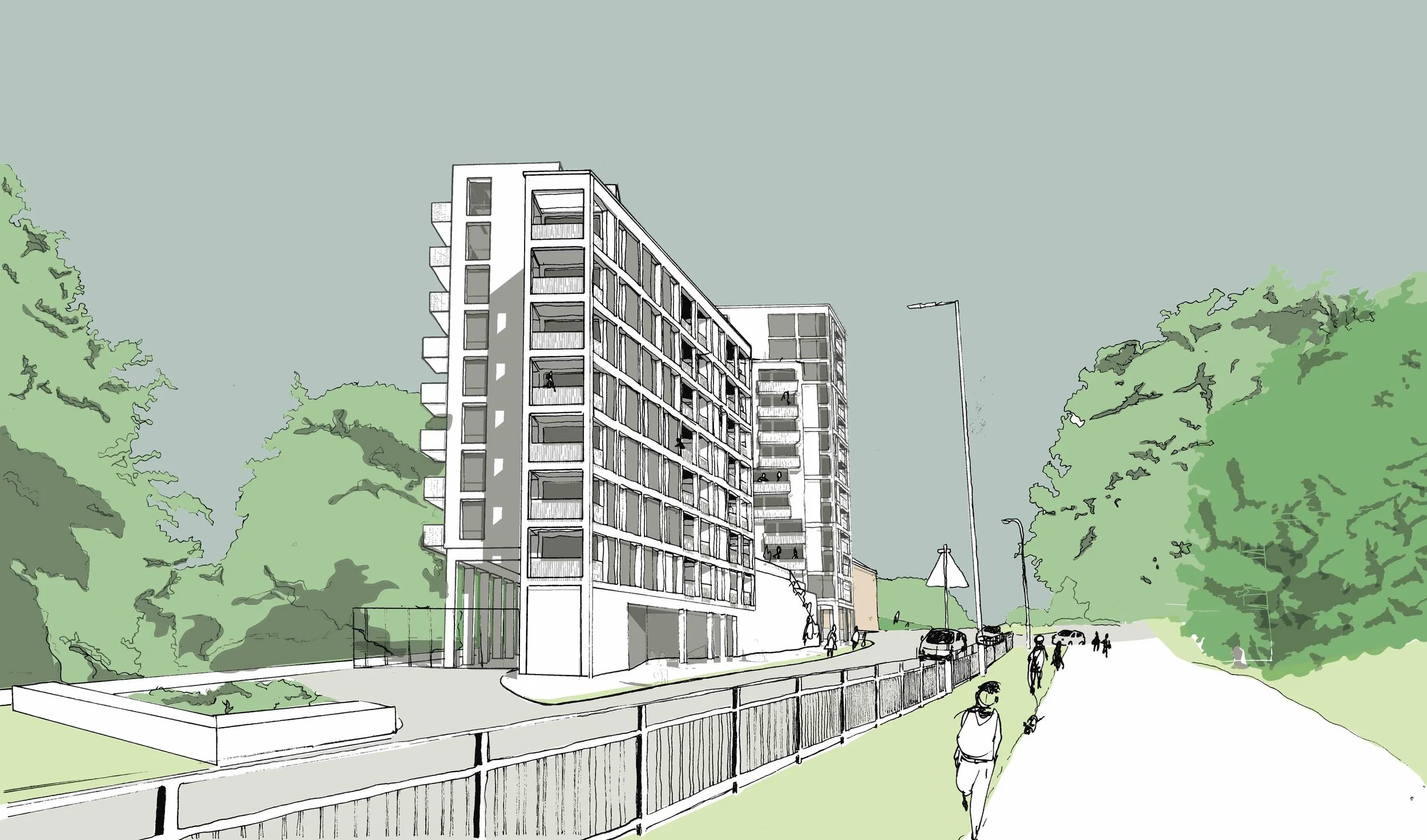
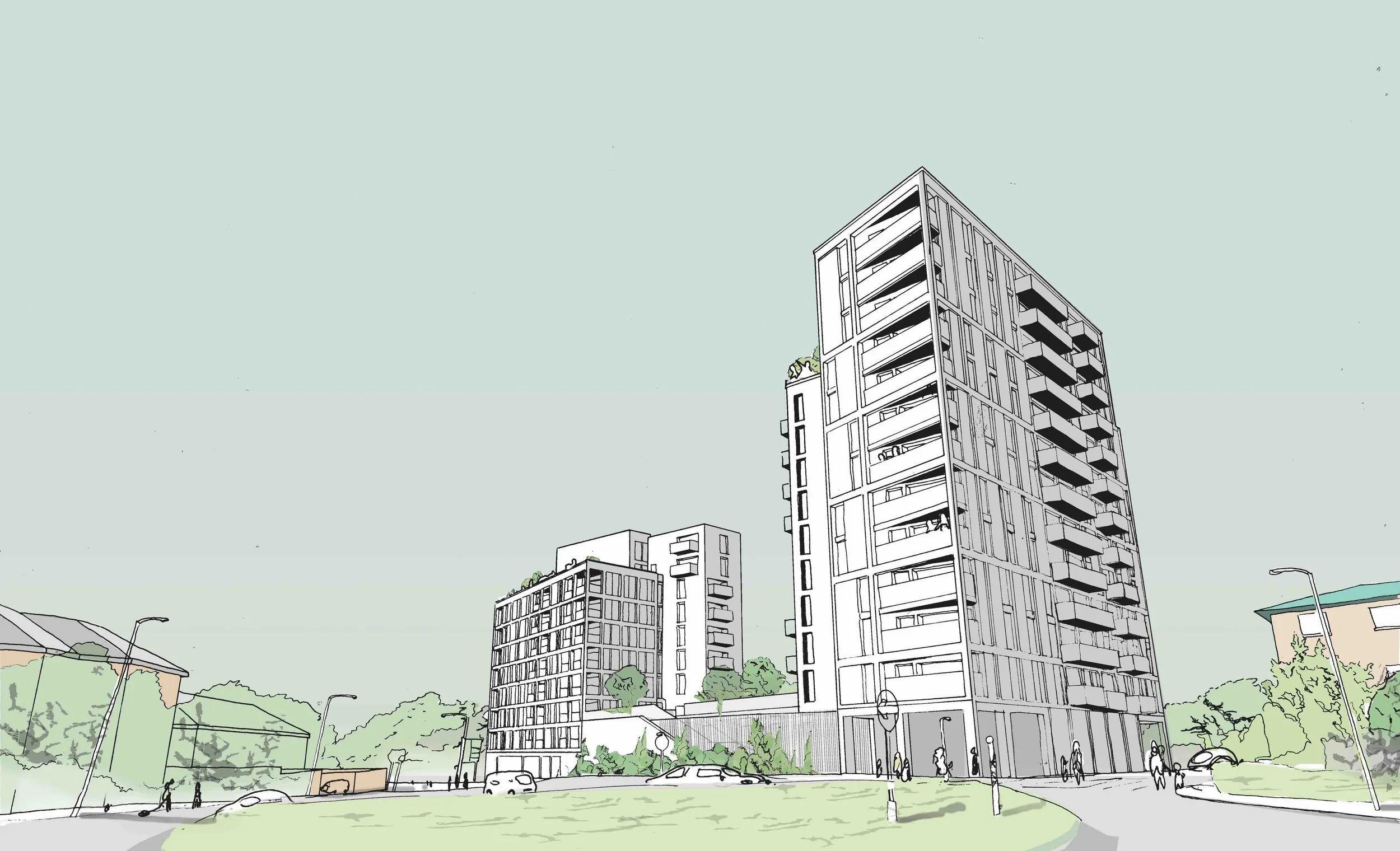
Description: 128 apartments over 10 and 13 floors for private and affordable tenure
Client: Clarion Housing
Floor Area: 11,120 SqM
Value: -
Status: Stage 3 complete
Planning: Savills
Struct. Eng.: Tully De’ath
MEP Eng.: Mendick Waring
Transport: MayerBrown
Landscape: TEP The Landscape Partnership
RT Team: Benjamin Campos, George Njike
