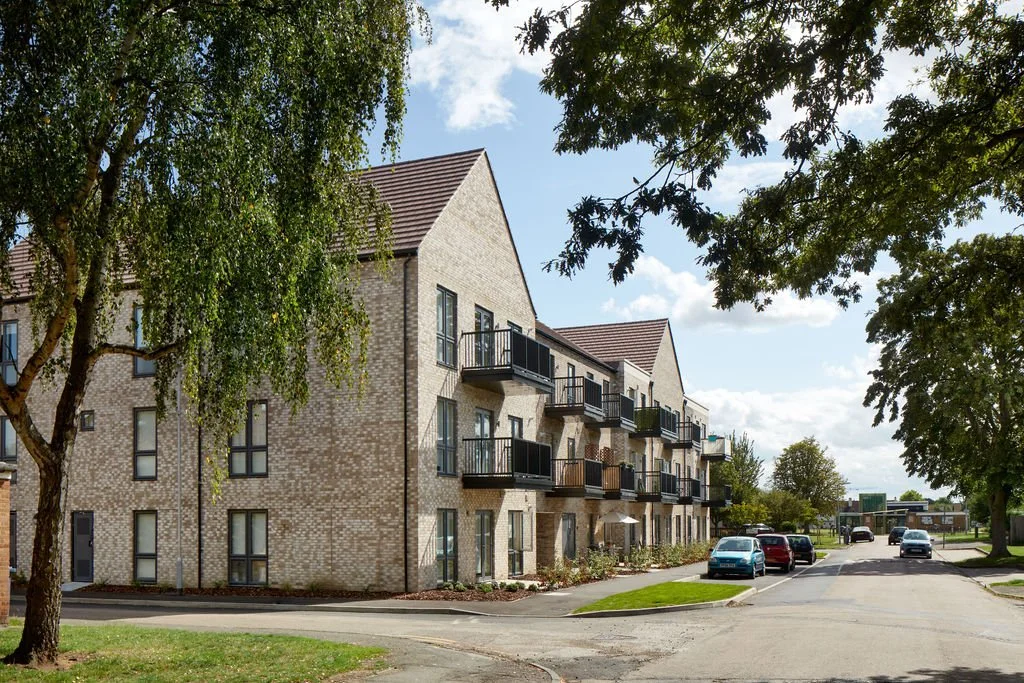
Anstey Way, Trumpington, Cambridge
Cambridge Investment Partnership is an equal partnership between Cambridge City Council and Hill Investment Partnerships. Established in 2017, it was created to address the housing shortage across Cambridge by providing high-quality rented council homes and market sale homes, commercial and community facilities.

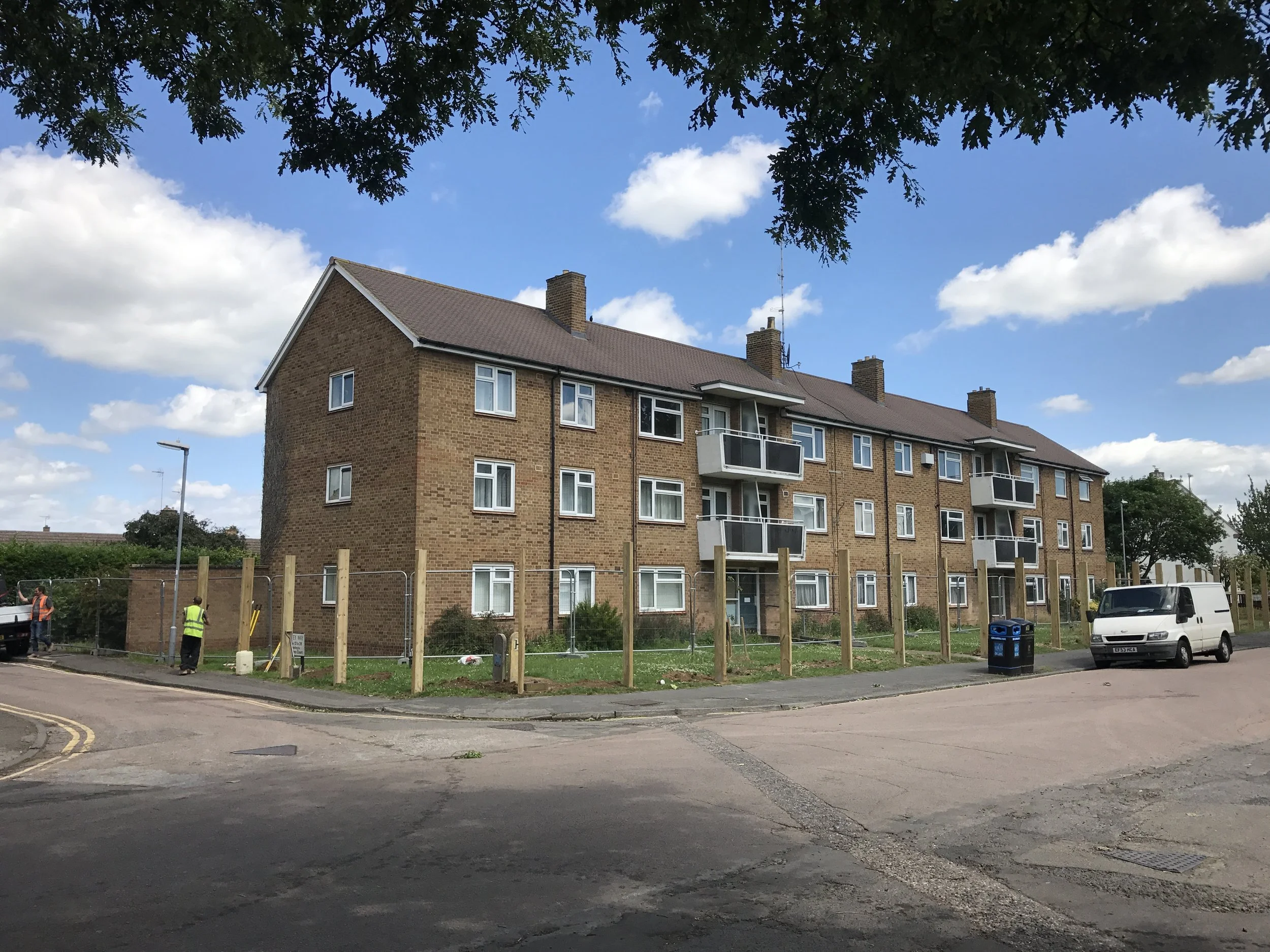
Anstey Way was the first of five projects for the Partnerships. This under-utilised parcel of land comprised 16 bungalows and an apartment building of 12 sub-standard bedsit flats built in the 1950’s.
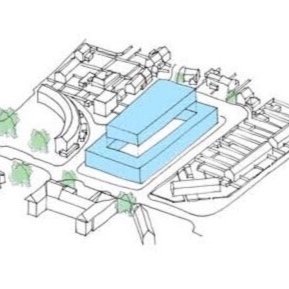
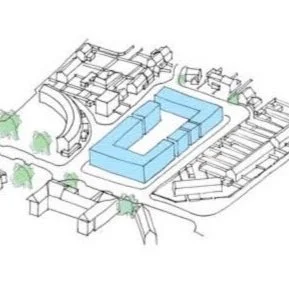
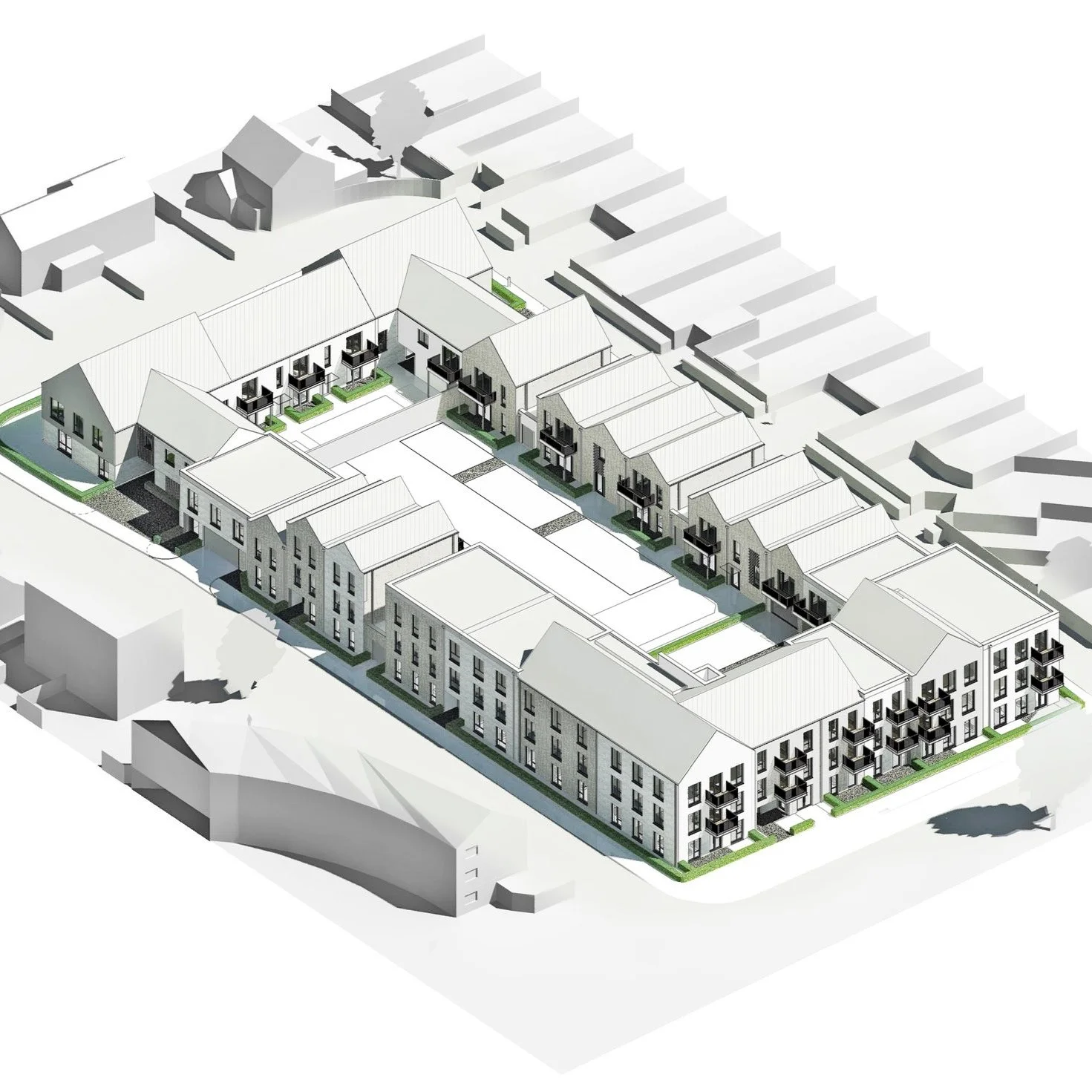
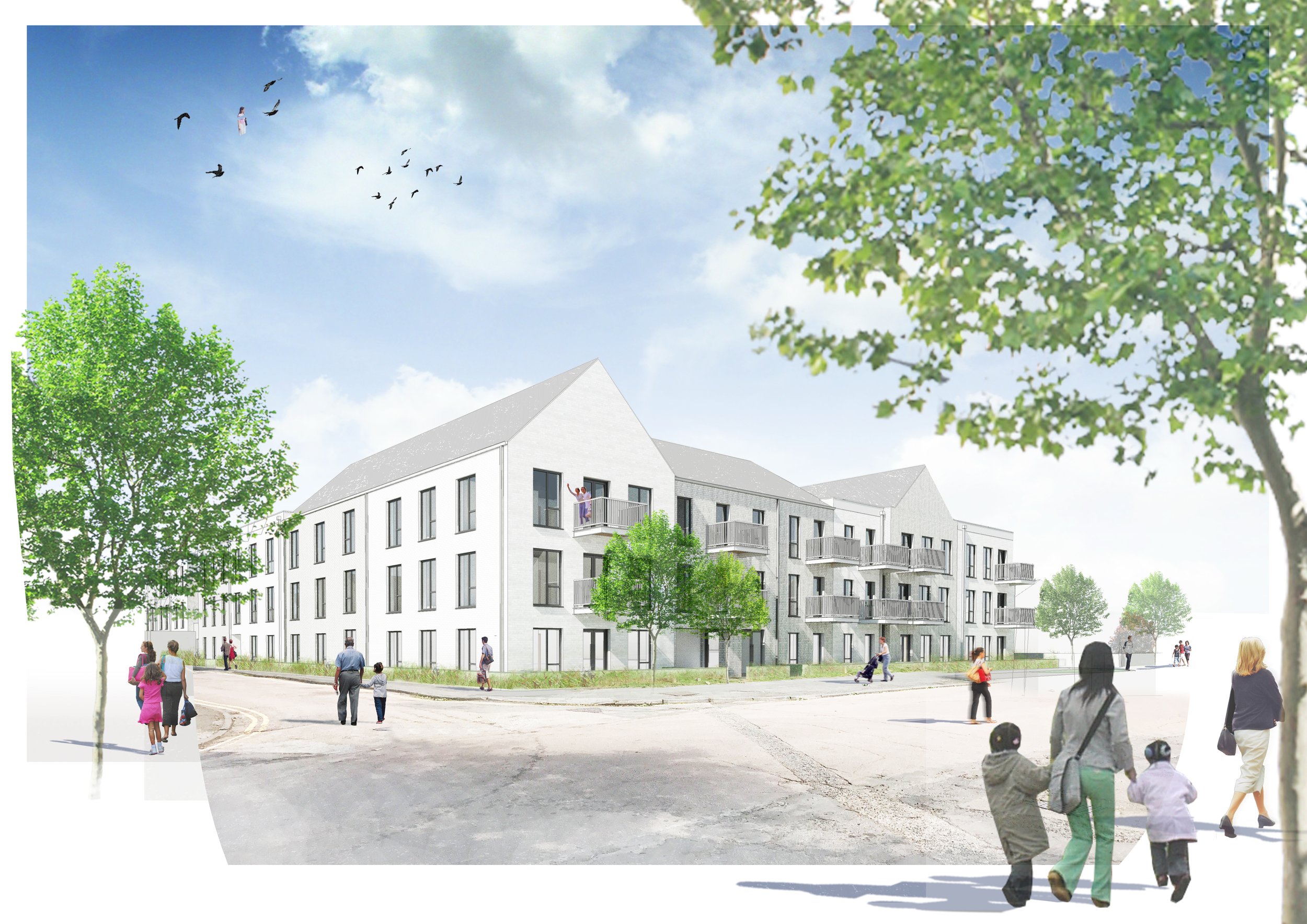
Rock Townsend were commissioned to design 44 new homes for general needs rent comprising one and two bedroom apartments. A number of early options were developed to test the capacity of the site but it was the ‘perimeter block’ concept that exceeded the brief, addressed the physical constraint of the site and could deliver the most robust and sustainable development.
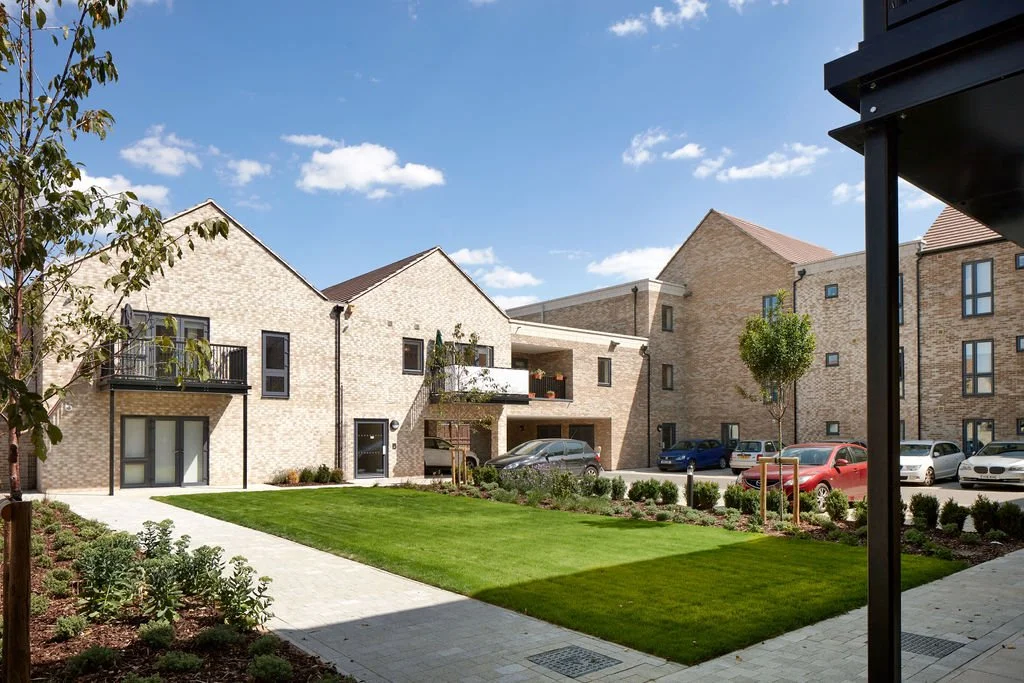
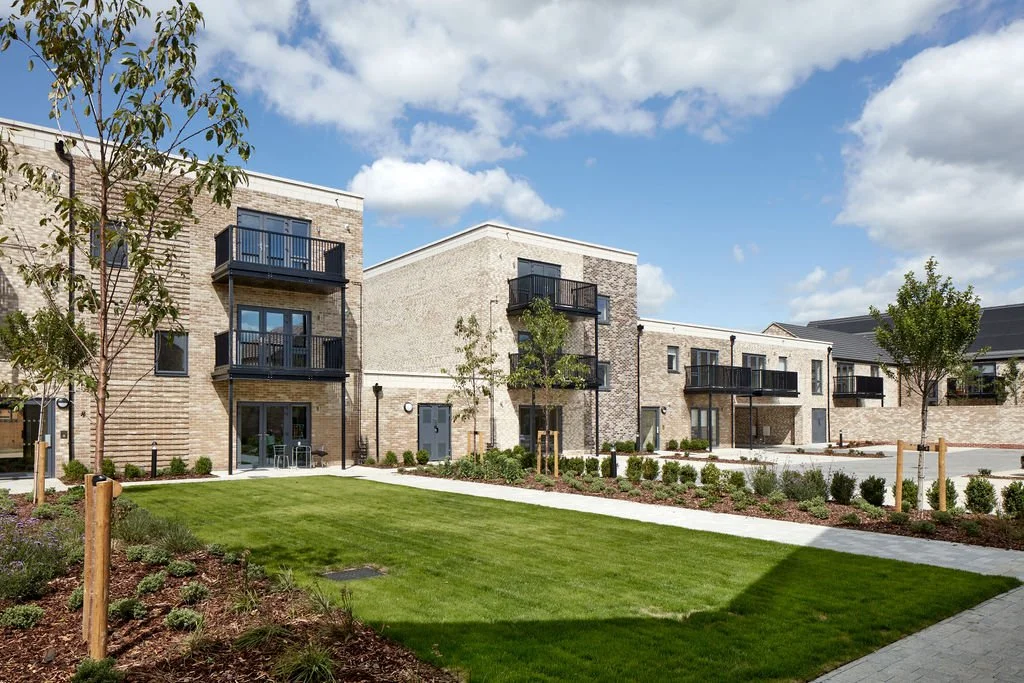
The proposed density challenged the local authorities own aspirations and policies however with perseverance the 56 new one, two and three bedroom homes, arranged around a communal courtyard garden was welcomed by the Development Committee. With 12 additional homes achieved, the development was able to reinstate some of the existing independent retirement living that would have otherwise been relocated.
By demonstrating policy compliance and meeting Cambridge City Council’s (CCC) design guidance and stringent cycle storage demands the higher density was recommended for approval by the planning officer and granted planning consent in the Spring of 2018.
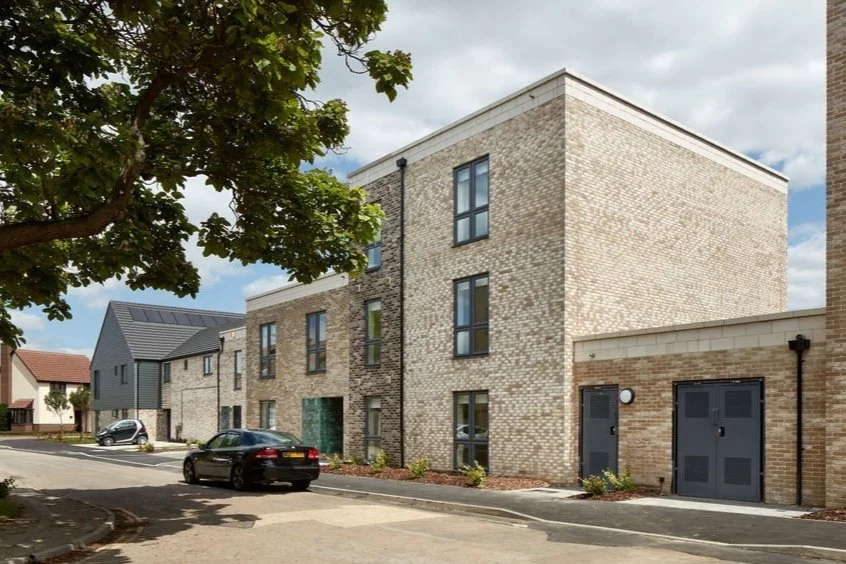
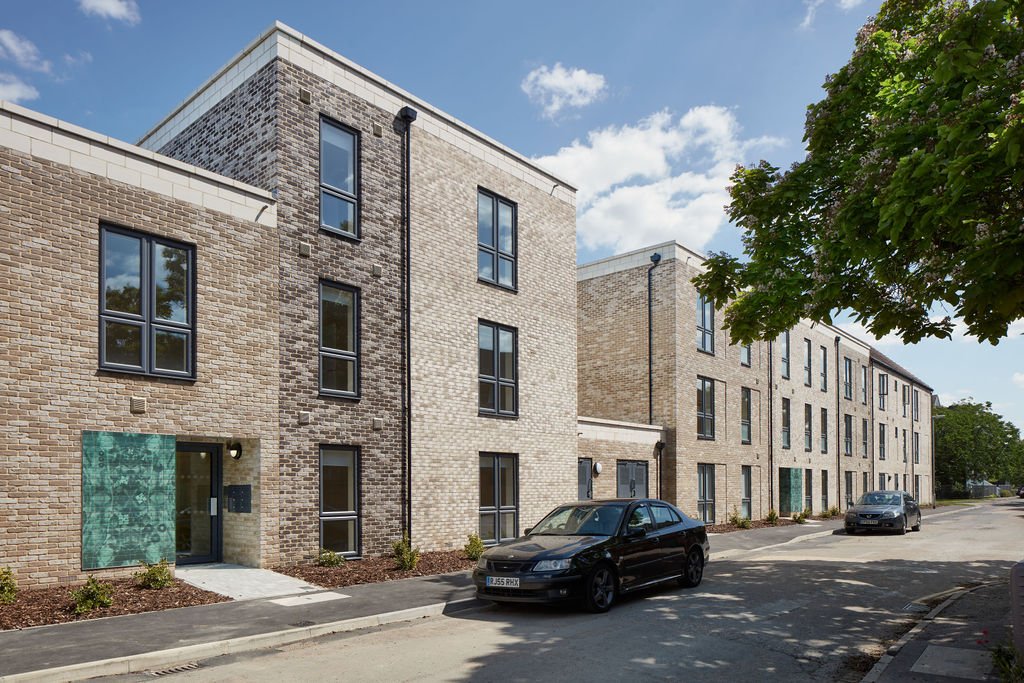
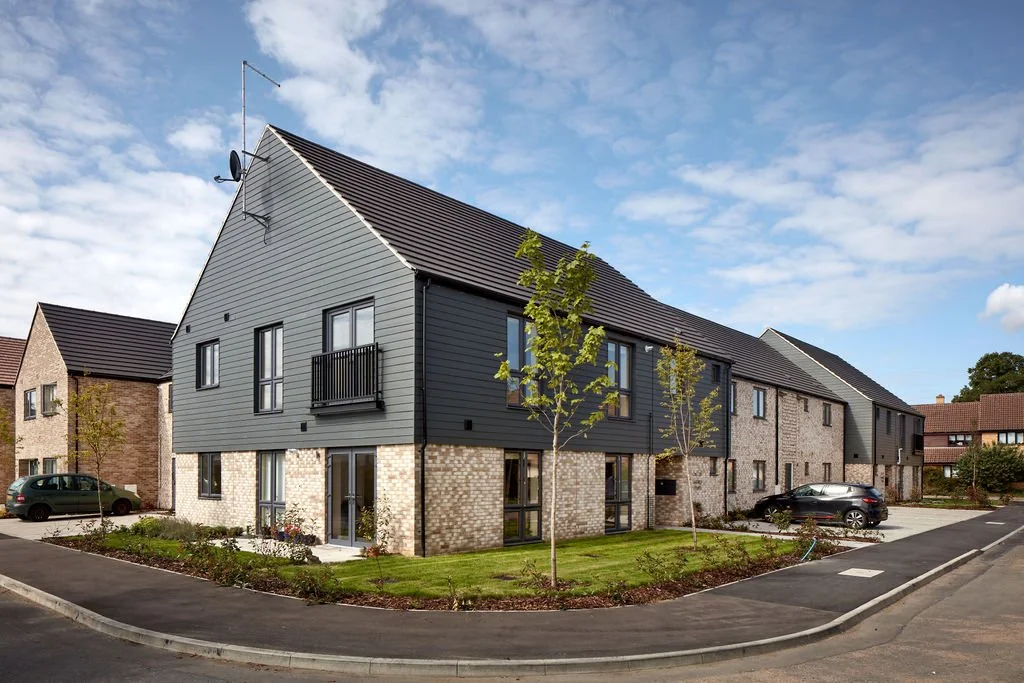
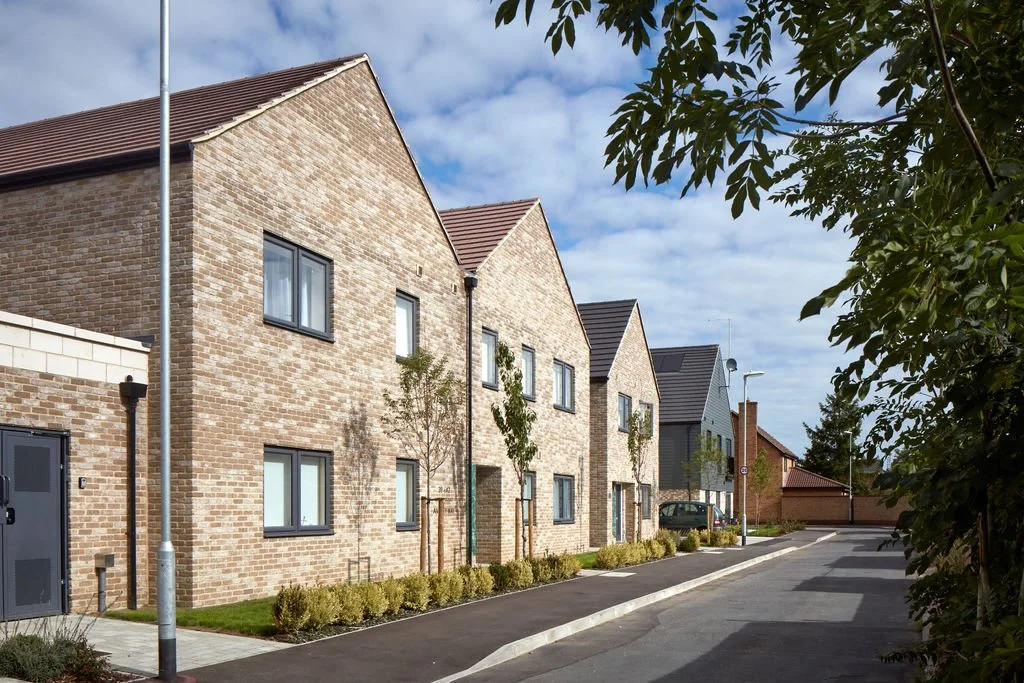
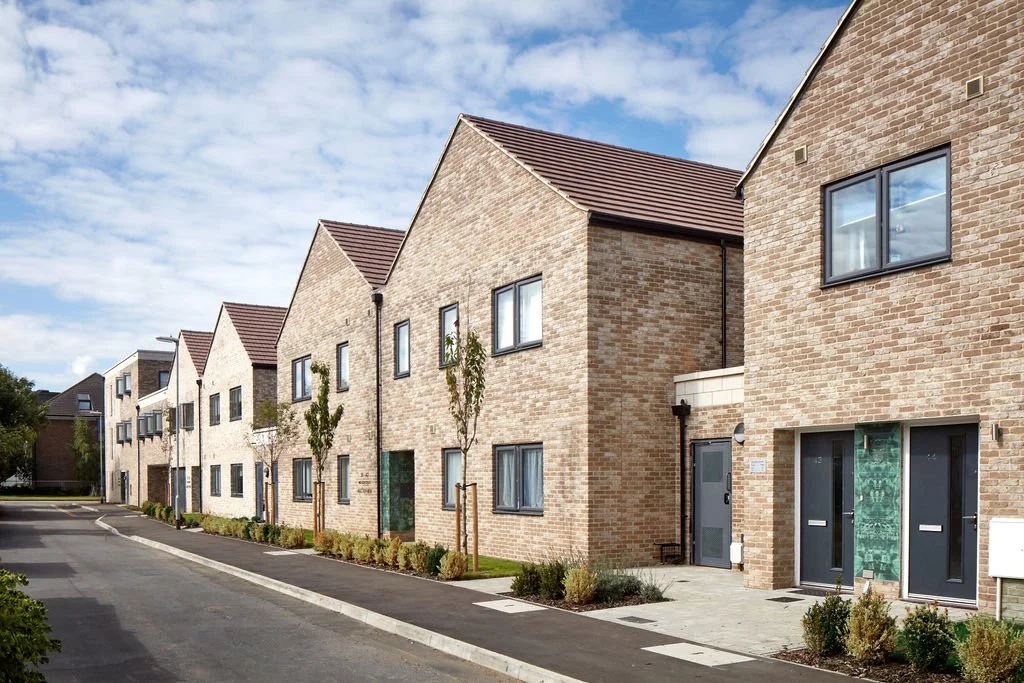
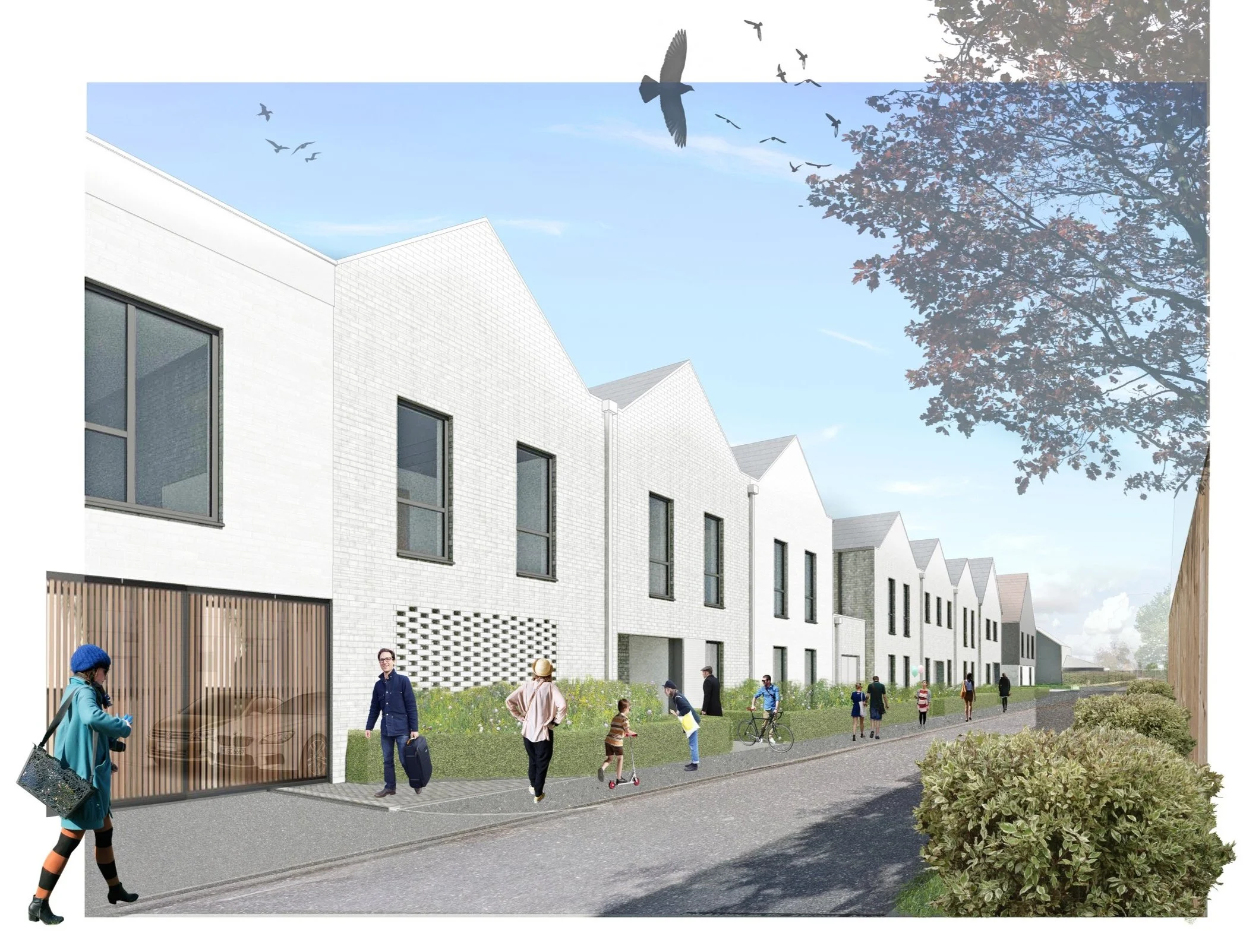
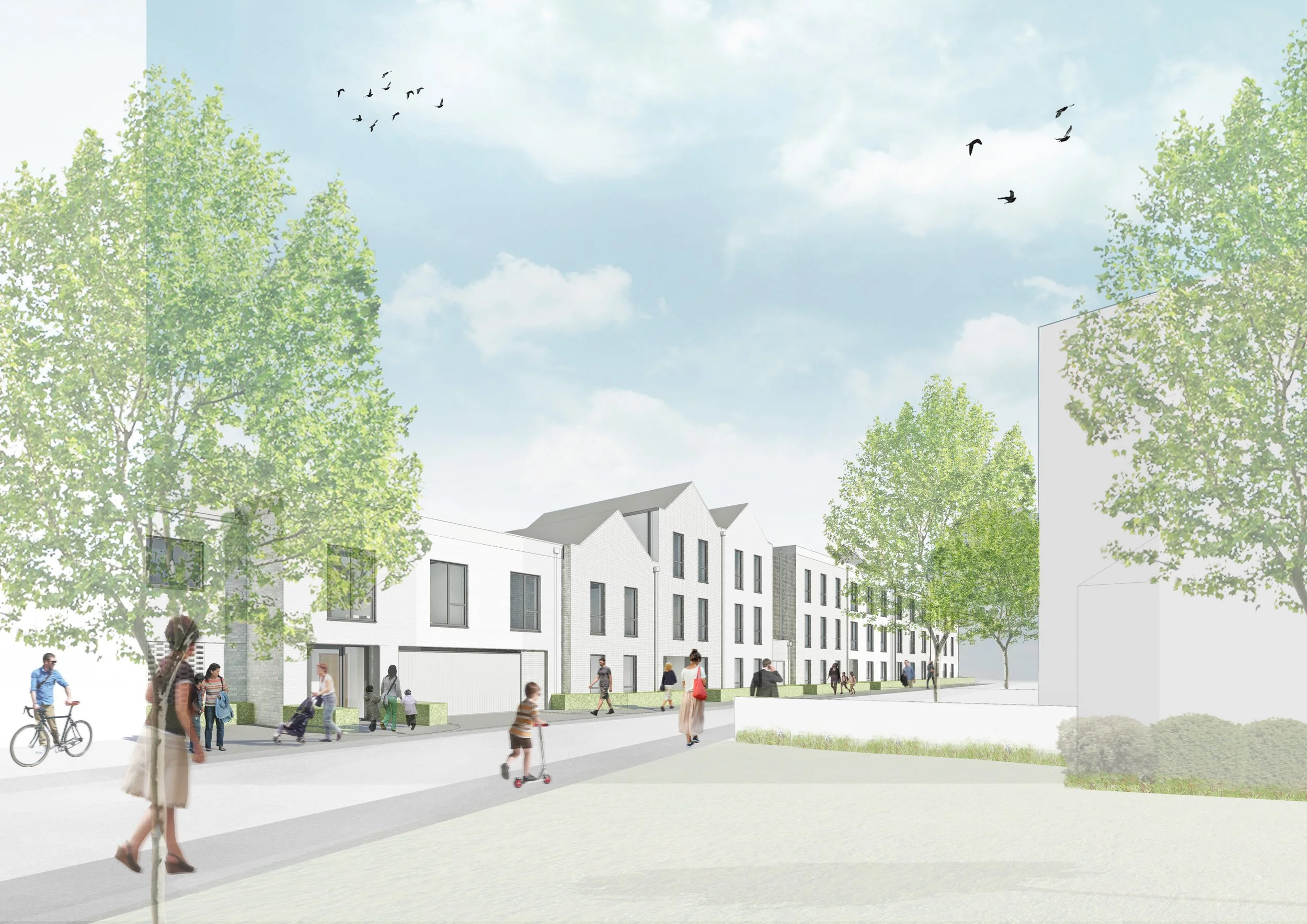
Working with the Council’s Urban Design Team we were able to create a ‘masterplan’ and a form and massing that was a direct response to the adjoining streets and neighbouring building. The 11 apartment buildings, each individually identifiable, all address the four perimeter road activating and animating the street scene. The Urban Design Team sought to ensuring the proposed scale and grain reflected the neighbourhood and that articulation of elevations and the need for ‘sky gaps’ between building was reflected the suburban character and guaranteed no street was dominated by a single built form.
Two and three storey apartment buildings were separated by single storey cycle and bin storage maintaining the perimeter block and sense of enclose from with yet allowed glimpses and vistas through the site and of the courtyard itself.
The composition or organisation of the perimeter buildings was a pragmatic one. General needs rented apartments occupy the majority of the site whilst the independent retirement living apartments are located to the north of the site. With their own secure communal courtyard garden and dedicated cycle and mobility scooter parking the 12 apartments, over 2 storey are access via two cores with the majority of homes facing south overlooking the garden.
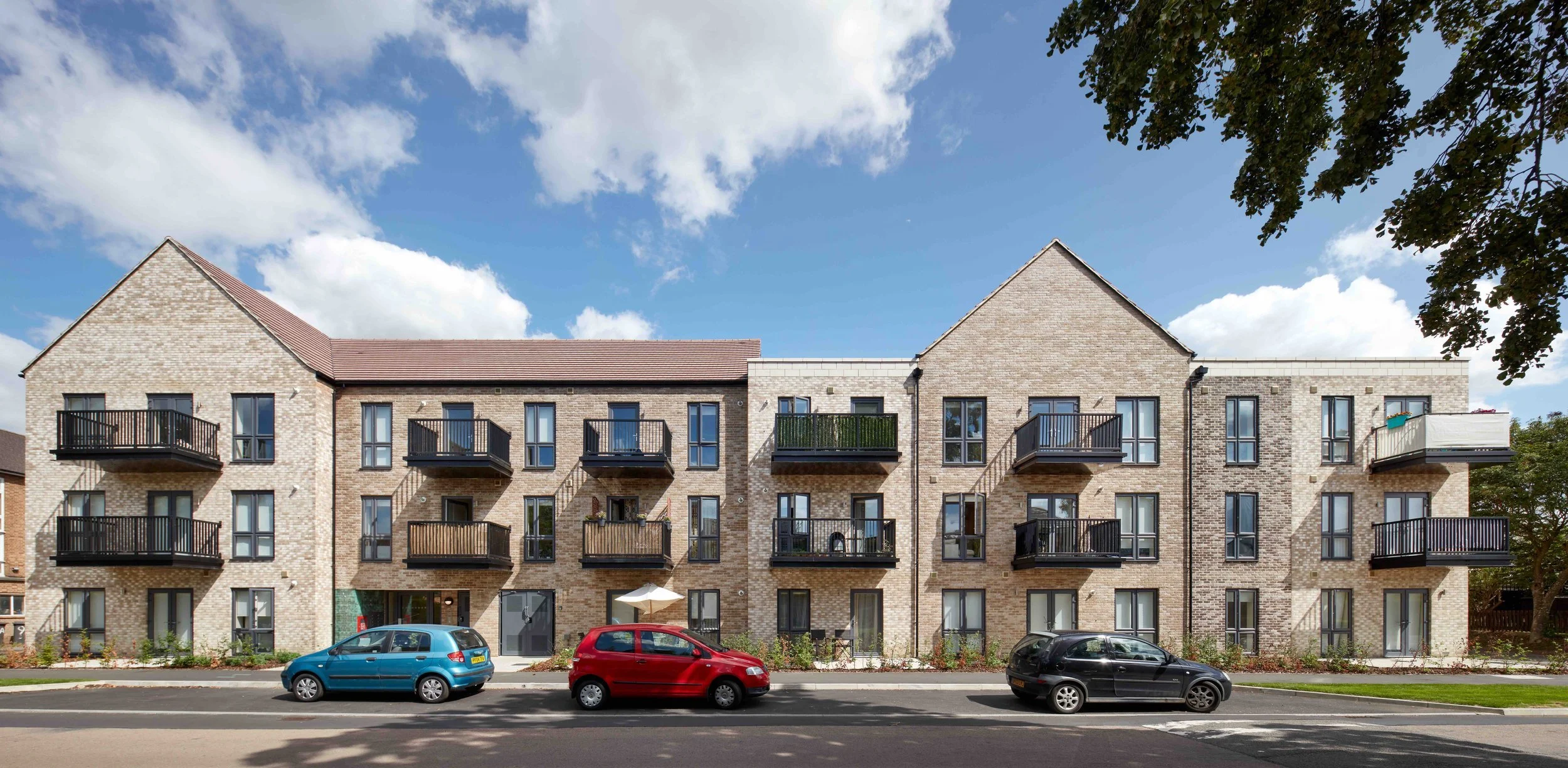
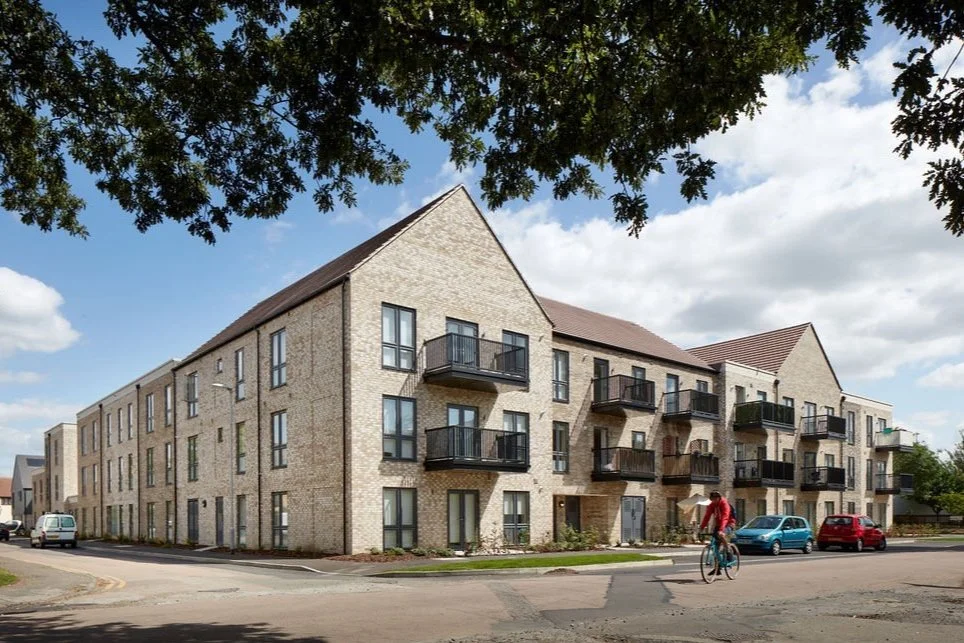
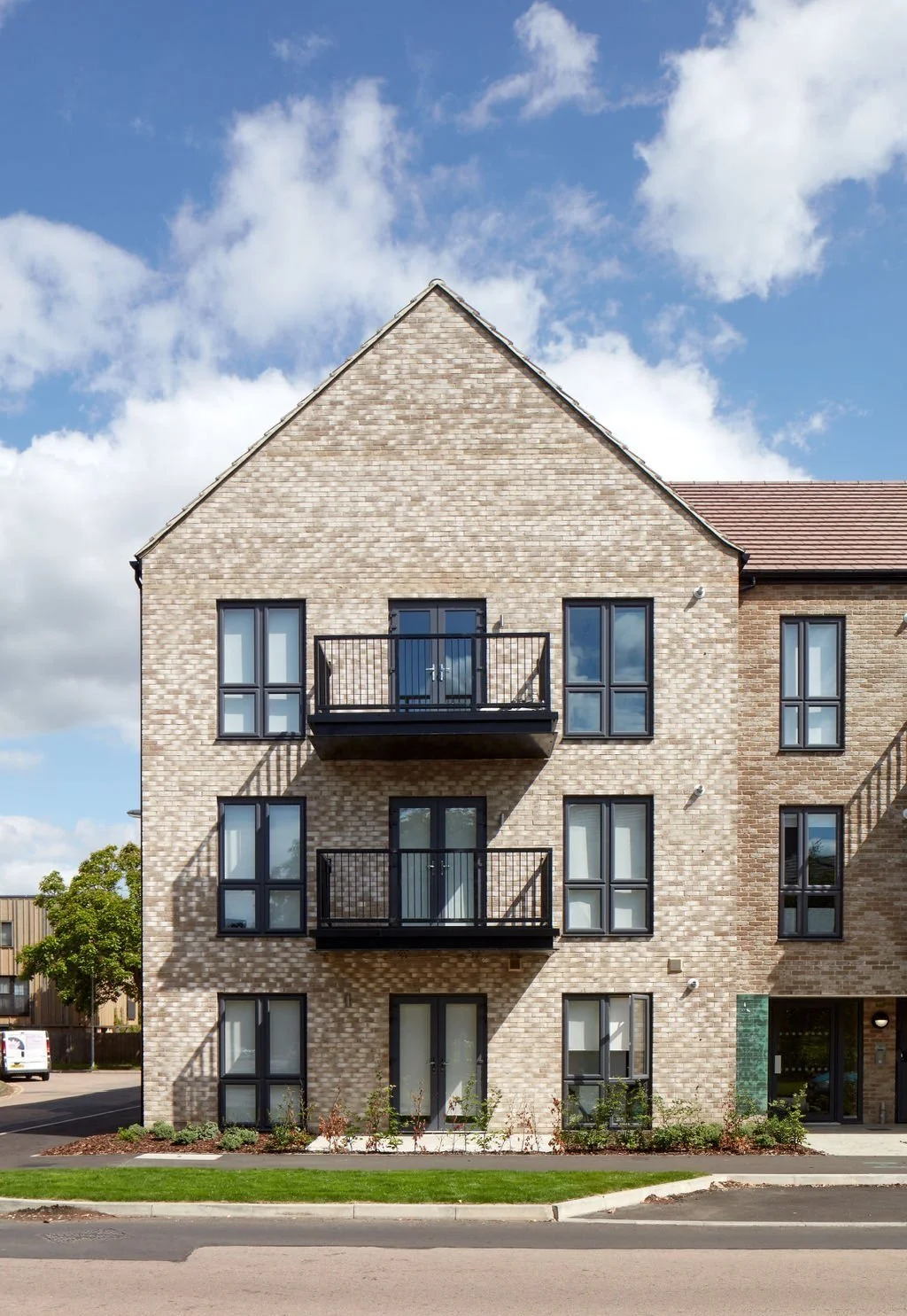
Right and below. south elevation and east elevation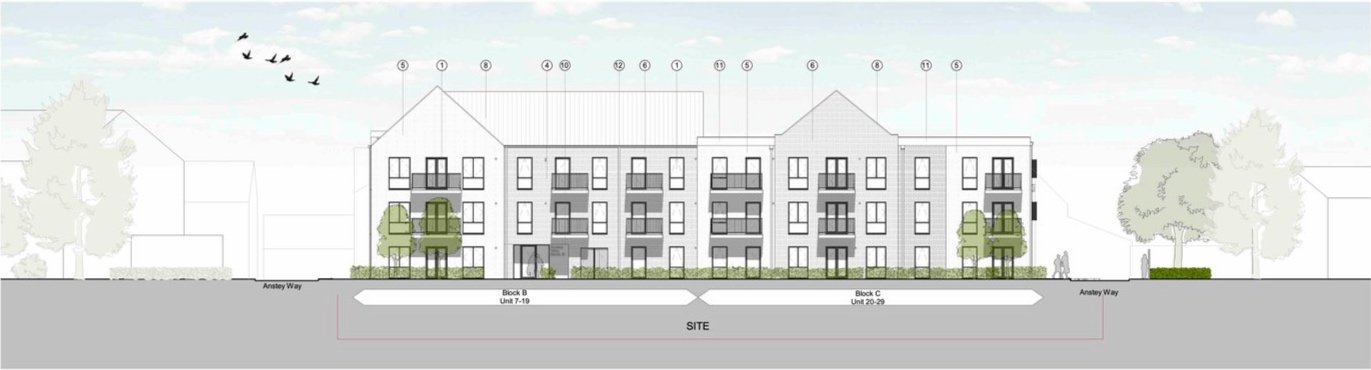

As construction on site progressed discussions with the Council’s homeless team began to explore Housing First*, an initiative to provide a route out of homelessness. Two general needs rented apartment were allocated to Housing First, becoming the City’s first with one being fully adapted for wheelchair accessibility.
In addition to the 56 new general needs rented homes, retained by the Council, £125,000 was invested into local parks, play areas and sports facilities with a further £30,000 invested into public art within the development.
Housing First
The Housing First approach was first developed in New York by Pathways to Housing in 1992. It has since been widely adopted in the USA and become central to the national homelessness strategies in Canada, Denmark, Finland and France. Since 2010, a growing number of local areas within the UK have established Housing First services to meet and identified need.


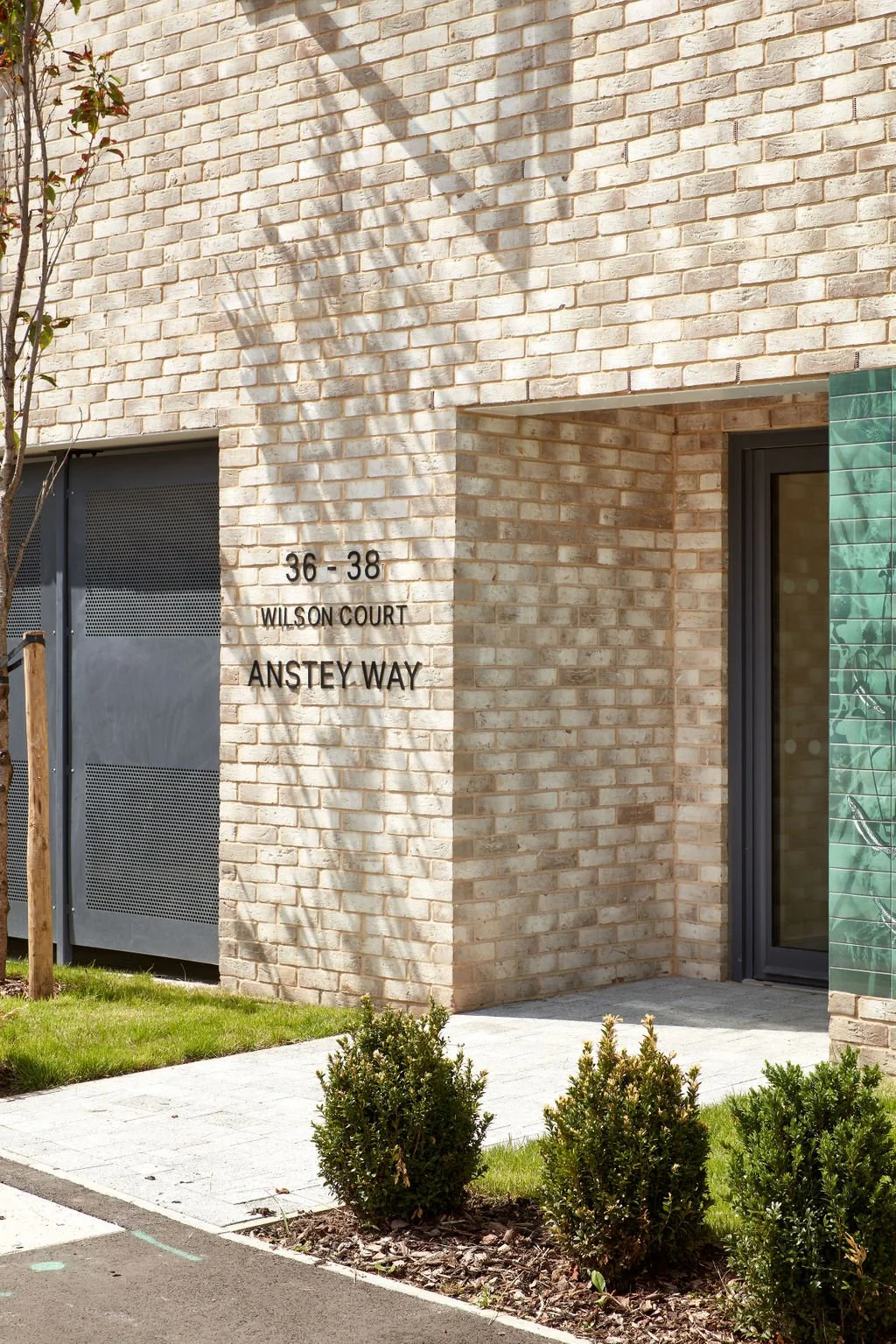

Public Art
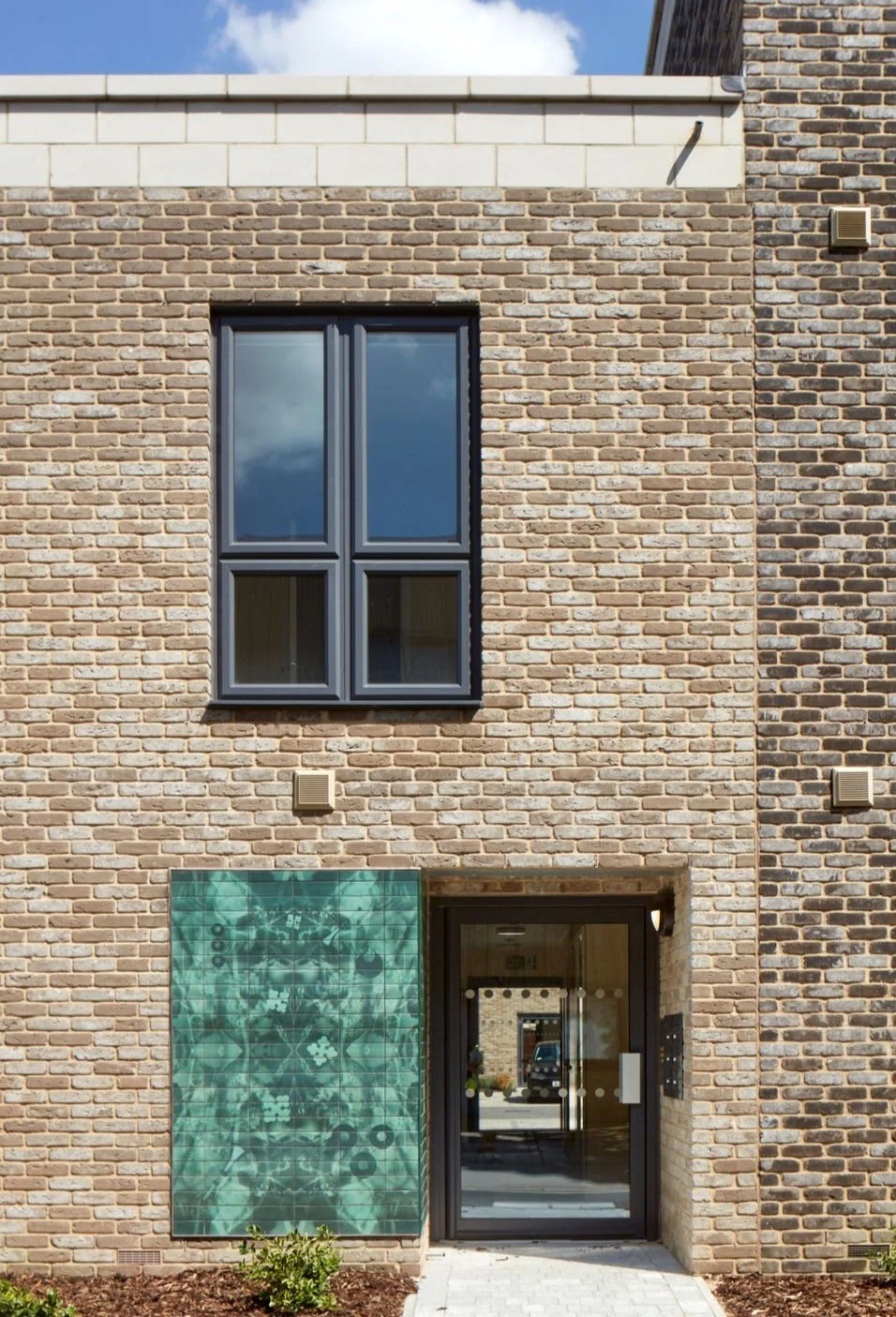
Forming part of CCC’s city-wide cultural investment and secured through the planning process, the £30,000 allocated for public art within the development was undertaken by Sarah Sabin, Rodney Harris and Valda Jackson:
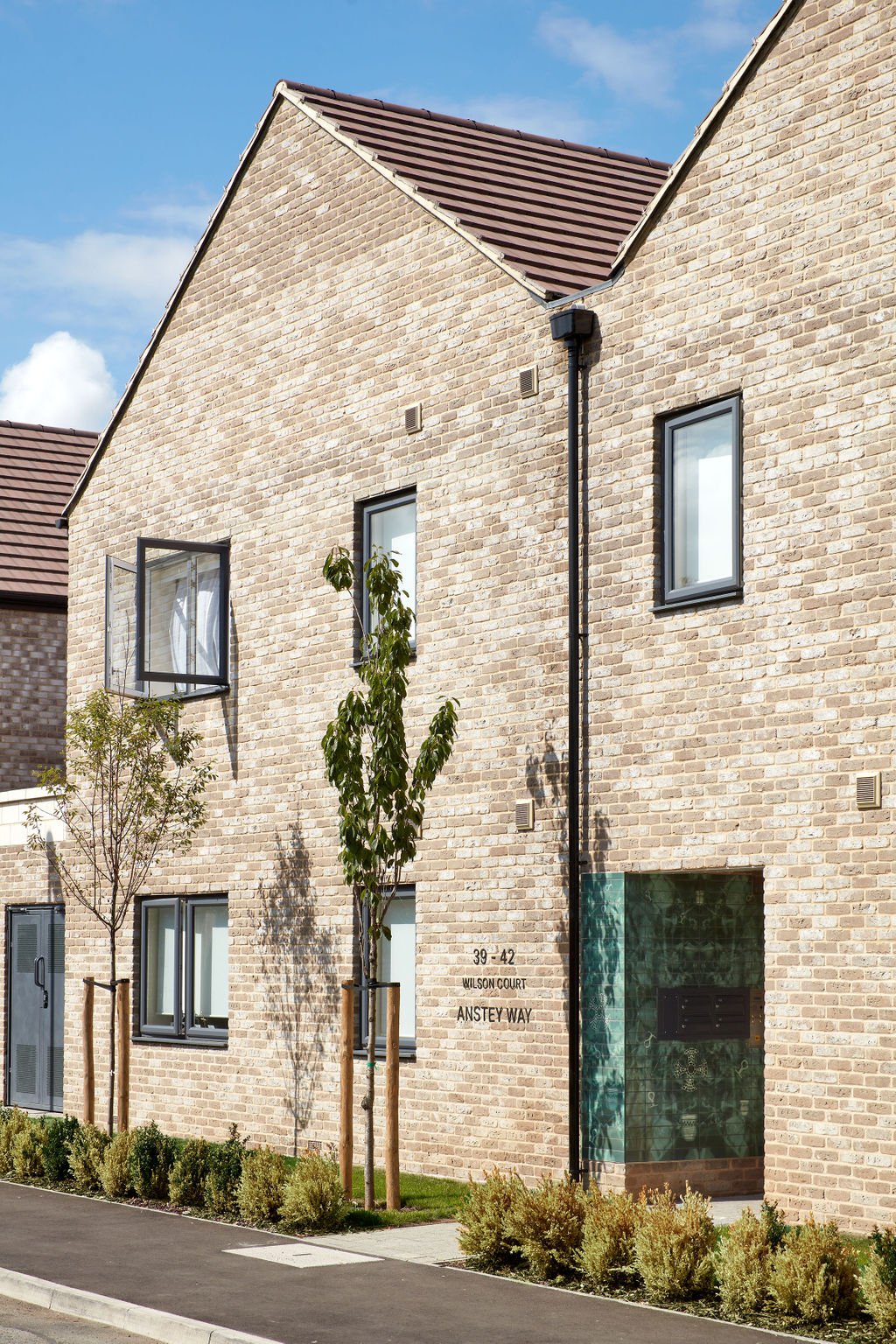
Sarah Sabin undertook works to each of the 11 entrances in the form of illustrations captured on ceramic tile; Working with Fawcett Primary School and groups, Sarah hosted a series of workshops which would form the base of the artwork design. Themes were identified and developed into the art work and transferred to ceramic tiles and used for each of the entrances:
Bldg A: Plant Breeding Institute (now closed) - locally developed crop varieties; Bldg B: Allotments, tools, plant pots, eggs, bees and other objects; Bldg C: Community orchard fruits and blossoms; Bldg D: River & nature - fish, plant, bird and insect life; Bldg E: Archaeology - local find such as the cross, ceramic vessels; Bldg F: School and pupils - the growing nature of the village; Bldg K: Wilson brothers’ - commemorates 3 local brothers who were killed in the First World War; and Bldg L: Historical features - aspects of the village signs and milestones.
Rodney and Valda Harris captured, through a brick sculpture, integral to the buildings, the history of planting breading with Trumpington in particular the development of the Maris Piper.*Housing First is a housing and support approach which gives people who have experienced homelessness and chronic health and social care needs a stable home from which to rebuild their lives. It provides intensive, person-centred, holistic support that is open-ended and places no conditions on individualsin relation to their tenancy.


“This approach can benefit the whole of Cambridgeshire and we are exploring Housing First and other models to make sure we get the right approach to fit different parts of the county.”
— Cllr Anna Bailey, Chair of the Adults Committee CCC
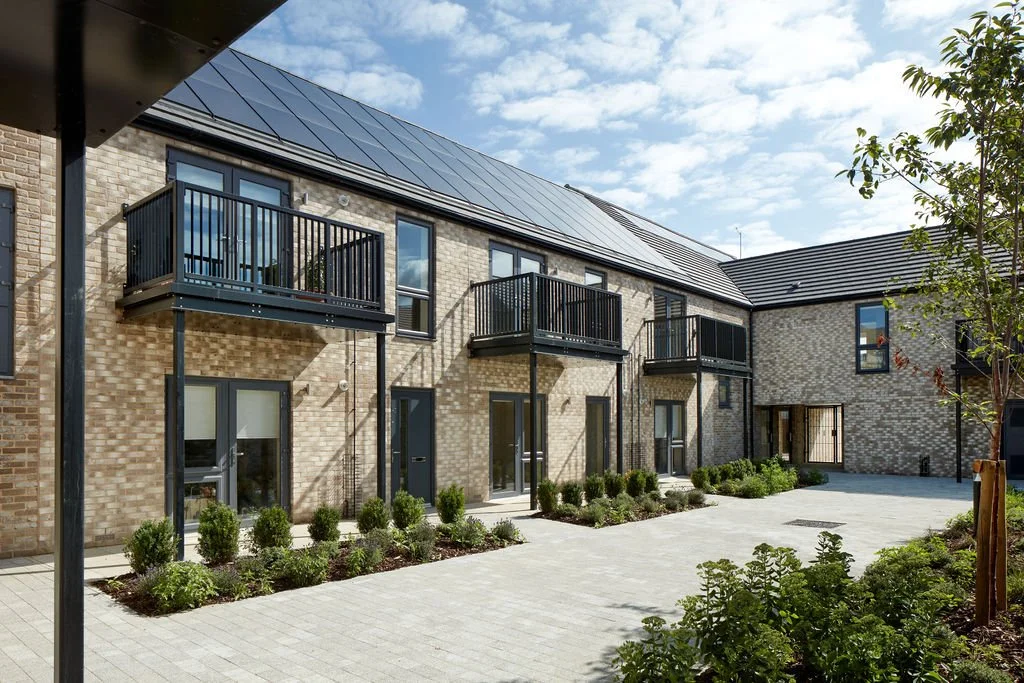
Right. 12 retirement living apartments arranged around a communal courtyard garden, independent from the 44 general needs homes.Below and right. Communal courtyard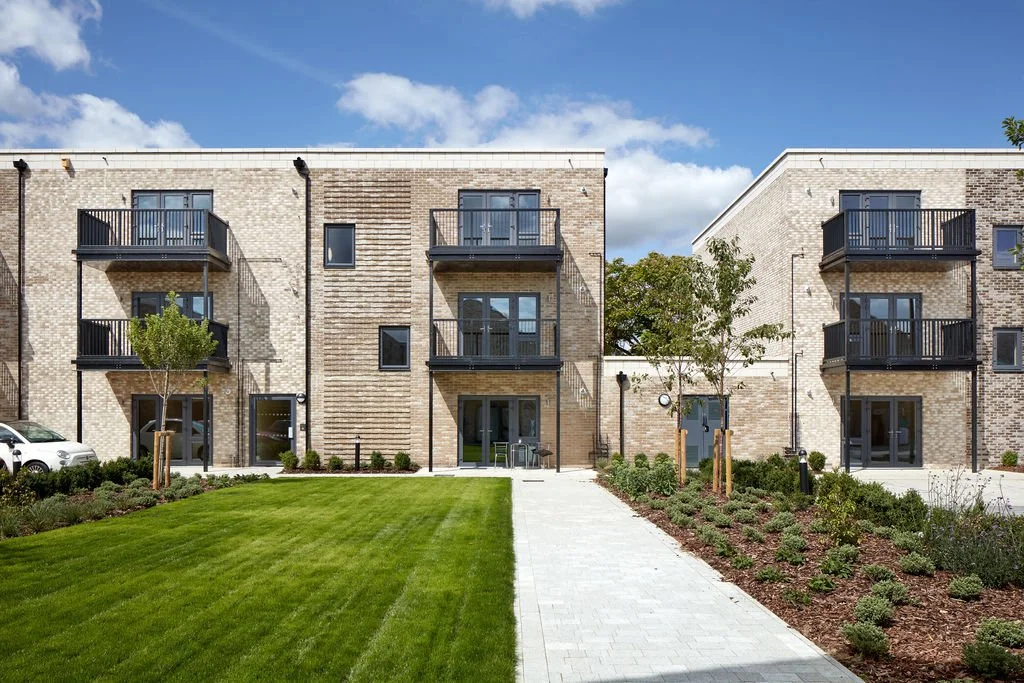





Description: 56 one-, two- and three-bedroom flats including 12 flats for retirement living.
Client: Cambridge City Council & Cambridge Investment Partnerships & Hill Group
Site: 0.48Ha; Floor Area: 4,065 SqM
Value: £9m
Status: complete, July 2020
Architect Stage 0-6: Rock Townsend:
Planning Consultant: ELG Planning
Transport: Create Consulting Engineers
Air Quality: Create Consulting Engineers
Structural Eng.: MLM Group
Landscape Arch.: The Environment Partnership
Contractor: Hill Partnerships Limited
Photography: Matt Clayton Photography
RT Team: James Ford, Hidely Garcia & Giulia Simone.