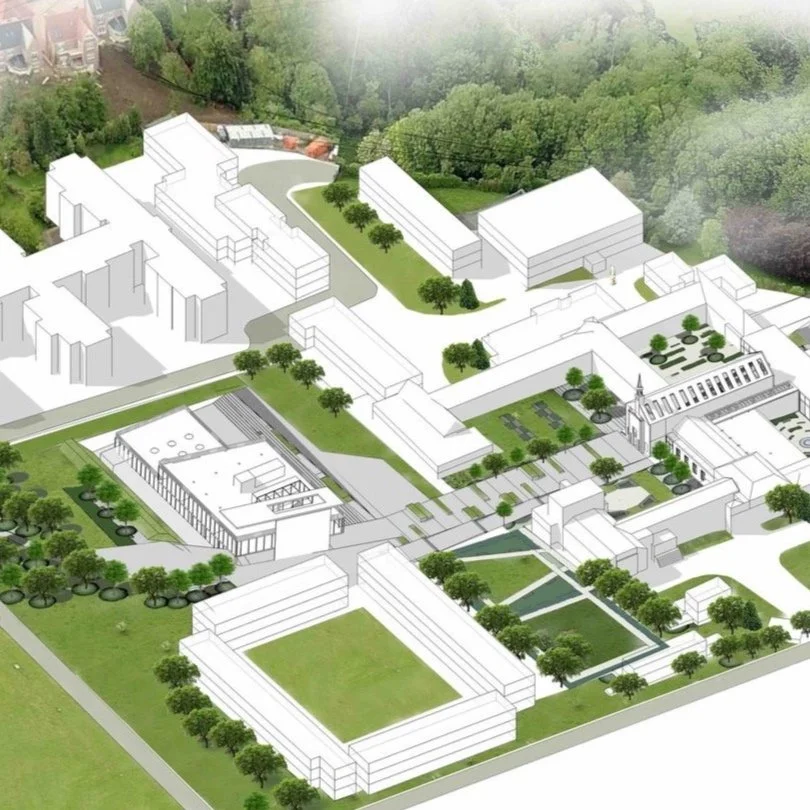
Harcourt Hill Campus, Oxford Brookes University
The University aims to transform Harcourt Hill Campus into a vibrant and efficiently utilised space, following a reassessment of its current use and future needs.
The campus currently includes buildings of varying size and quality—some suitable for refurbishment, while others are better suited for replacement. With approximately 13,000 m² GIA of academic space (11,700 m² NIA), much of which is inefficient, the goal is to maintain a campus of similar size but reconfigured to better meet current and future teaching and learning needs.

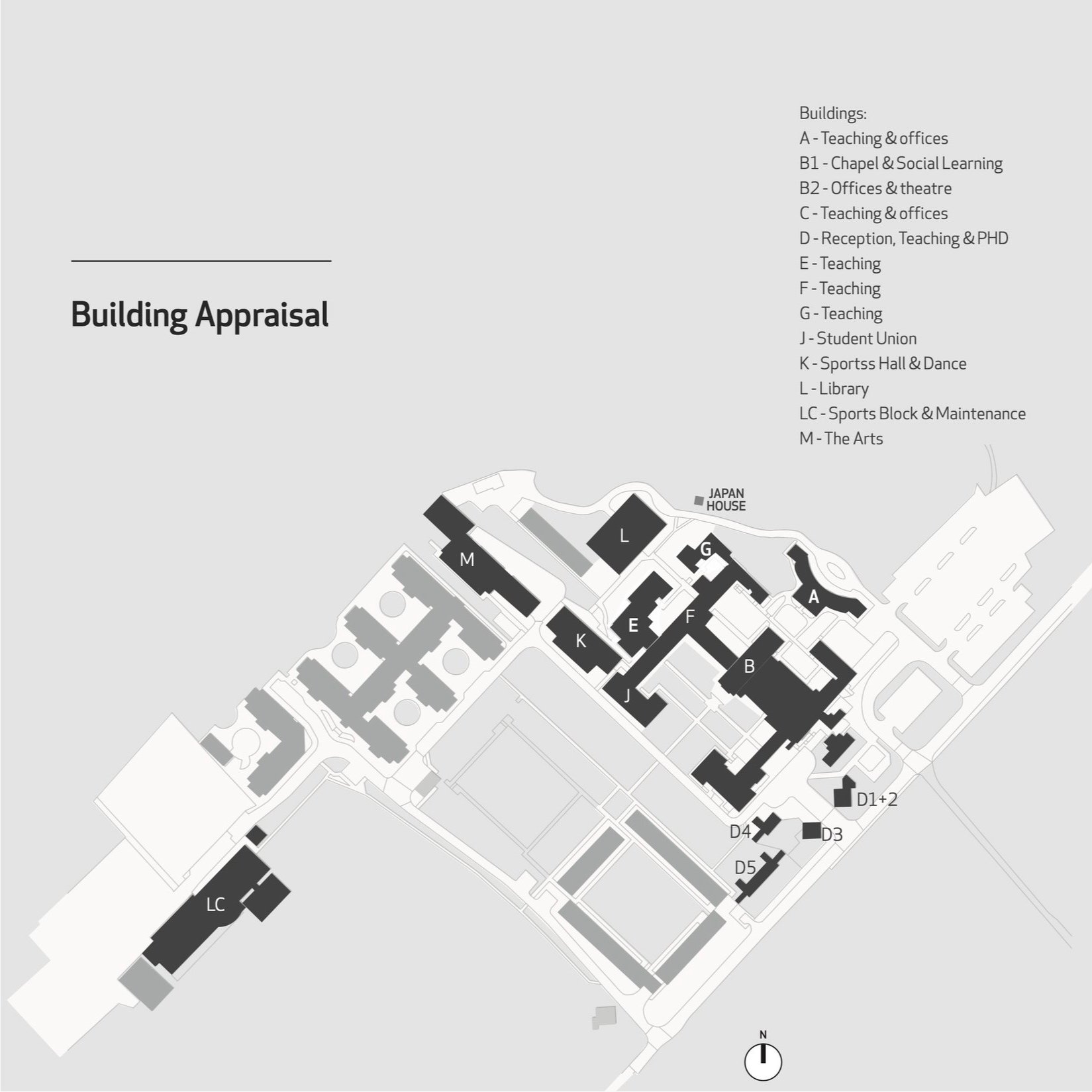
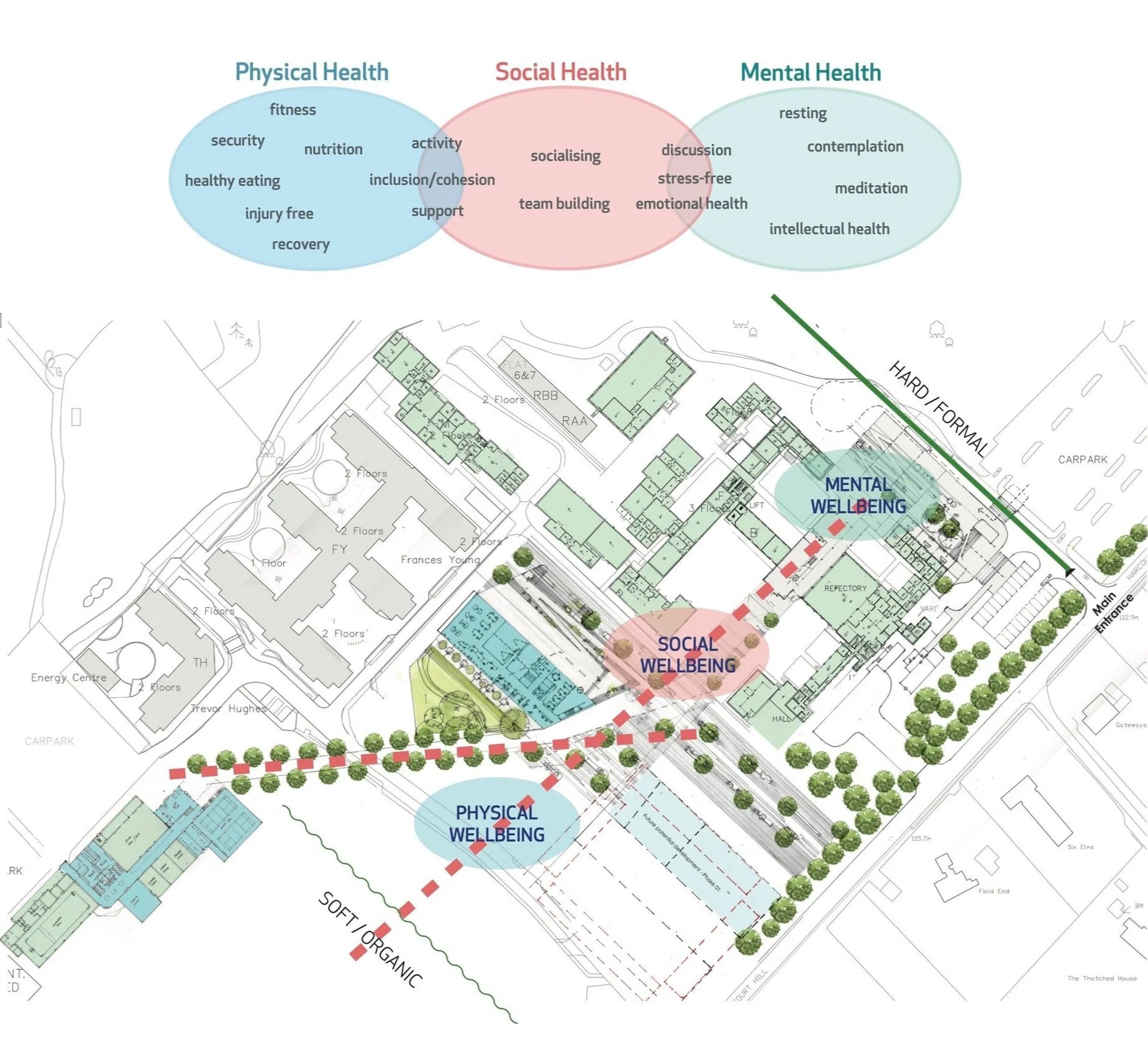
Unlike the John Henry Brookes building at Headington Campus, Harcourt Hill lacks a central hub. To address this, a comprehensive "space needs assessment" was conducted to establish a brief that accommodates the Faculty of Humanities and Social Sciences (HSS), part of Health and Life Sciences (HLS), and various support departments.
The brief and vision is to develop a Campus Development Plan (CDP) that, once approved, will guide the commission, tender, construction, and handover of a new Teaching and Resource Learning Centre (TRLC). To demonstrate how the campus brief will be fulfilled through a combination of new construction, refurbishment, and demolition, achieving the desired 80/20 net-to-gross space ratio.
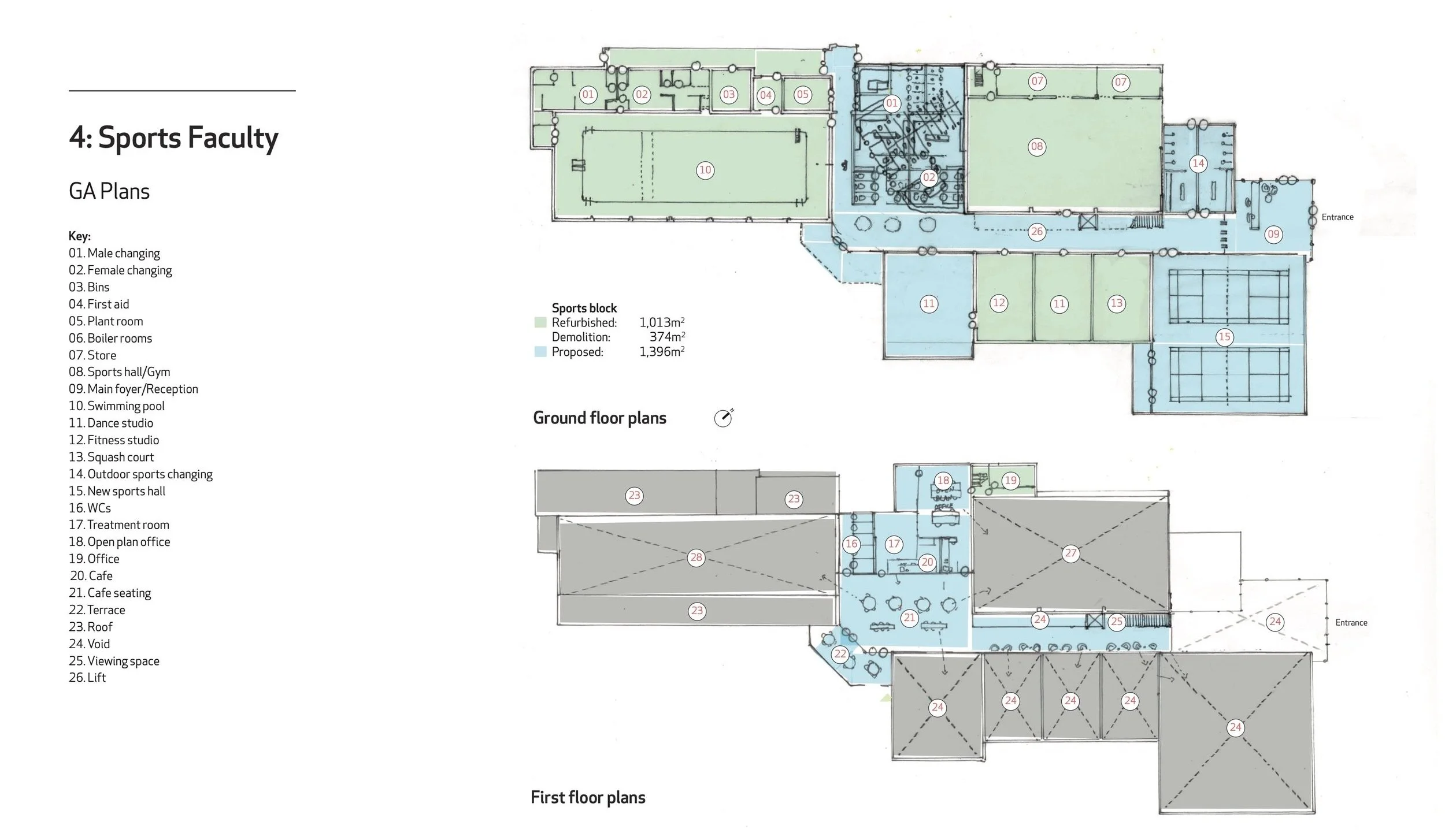
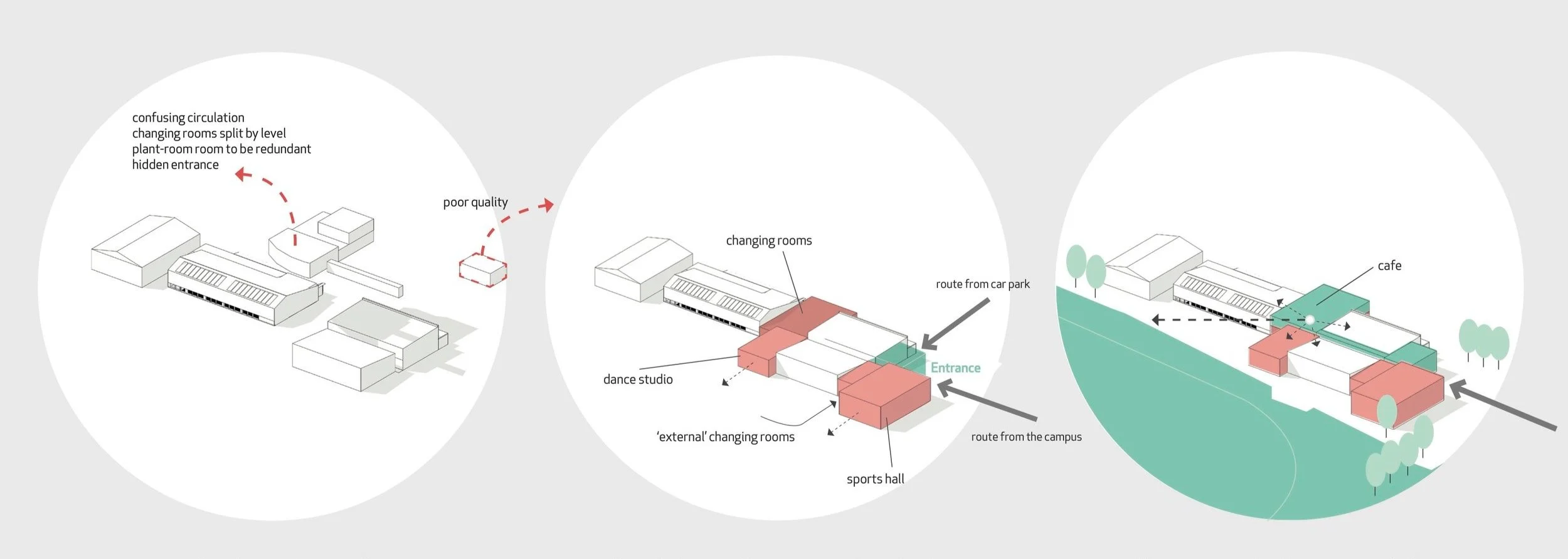
With specific objectives considered in locating the faculties of Humanities and Social Sciences (HSS) and Health and Life Sciences (HLS) within the campus; providing a new TRLC and extensions to the existing Sports Block; enhancing the campus by creating transformational change, improving the student experience, reducing the overall estate size for a more affordable, sustainable, and efficient campus, and improving access, wayfinding, and overall campus quality with facilities comparable to those at Headington; and delivering these objectives within a 7 year phased construction period.
The Stage 2 feasibility presented a series of costed options for how the Campus Development Plan (CDP), including the Teaching and Resource Learning Centre (TRLC), can meet the university’s objectives. Each option was been assessed against the following core objectives:
Site Opportunities & Constraints: Identifying any site-wide infrastructure improvements and exploring options for future power/heat solutions.
Campus Brief Realization: Demonstrating how the brief can be met through a mix of new builds, refurbishments, or demolitions, adhering to an 80/20 net/gross requirement.
Transport Solutions: Assessing opportunities to address transportation issues around the site.
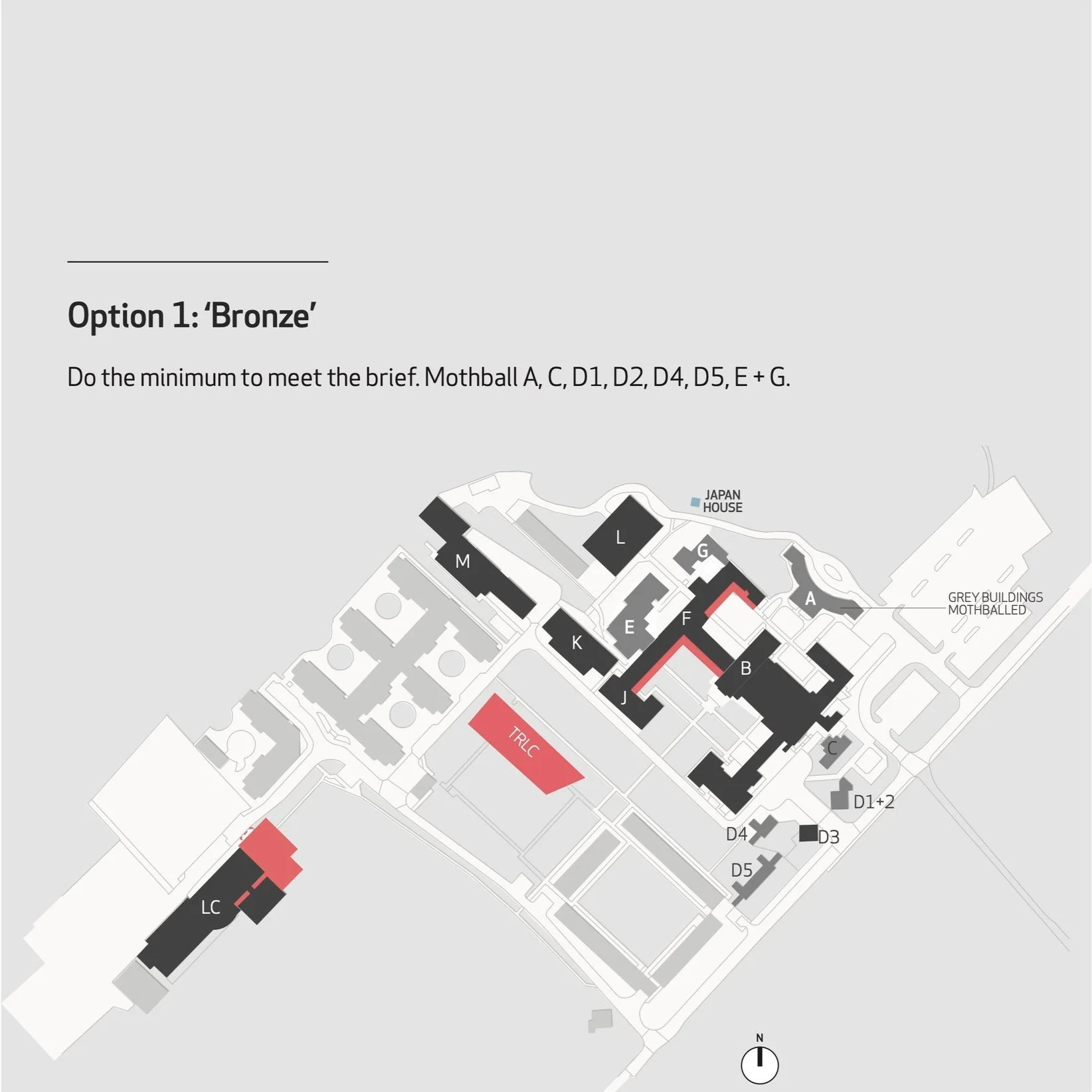


The options appraisal, ‘bronze’, ‘silver’ and ‘gold’ provided different level of intervention and costs to deliver transformational change and enhance student and staff experience. The goal was to create a campus environment on par with facilities at the university's Headington site.
The CDP options begin with a baseline assessment. From there, a series of increasingly ambitious options were proposed:
Option 1 ‘bronze’: Do the Minimal: This approach houses the Schedule of Accommodation within the existing buildings, but compromises space functionality and flexibility. It includes minimal upgrades for building life extension and external accessibility improvements, with some buildings being retained and mothballed.
Option 2 ‘silver’: Do the Optimum: This option meets the brief requirements, including the Schedule of Accommodation, stakeholder aspirations, and higher levels of internal reconfiguration. It features a new entrance, necessary works for a 30-year building life, extensive landscaping, and demolition of redundant buildings.
Option 3 ‘gold’: Do the Maximum: The most comprehensive option, which fulfills all stakeholder aspirations and creates a future-proofed campus with flexible spaces. However, the cost would significantly increase, aiming to replicate the environment seen at the JHB site in Headington.
Access and Connectivity: Options 2 and 3 incorporate major initiatives to resolve access and campus connectivity issues, including:
Reconfiguring the chapel to serve as a main circulation hub, creating a central heart space.
Joining buildings F & B to enhance campus connectivity and foster interaction.
Re-orienting the site’s entrance to the north to address transport challenges.
After a detailed feasibility analysis, the design team recommends Option 2 ‘silver’ ("Do the Optimum") as the most advantageous solution. This option balances cost with achieving the maximum number of objectives outlined in the brief.
The feasibility study has concluded that achieving all objectives within the current budget would require either a highly compromised scheme or a phased approach over many years. Option 2 ‘silver’: Do the Optimum provides the best balance of meeting objectives within a mid-range budget, offering significant improvements without the financial burden of the highest-cost solution.
TRLC and Sports Block. Initial design strategies for both the TRLC and the Sports Block have been developed in alignment with the brief and the Schedule of Accommodation, ensuring they meet the needs of the university.
During Stage 1 design evolution proposals for the new north entrance, the chapel transformation, campus connectivity improvements, and the initial strategies for the TRLC and Sports Block were presented to key groups, including: Estates and Facilities, Vice Chancellor Group, Finance and Resources, Harcourt Hill Campus Development Group, TRLC Steering Group, Sports Steering Group.
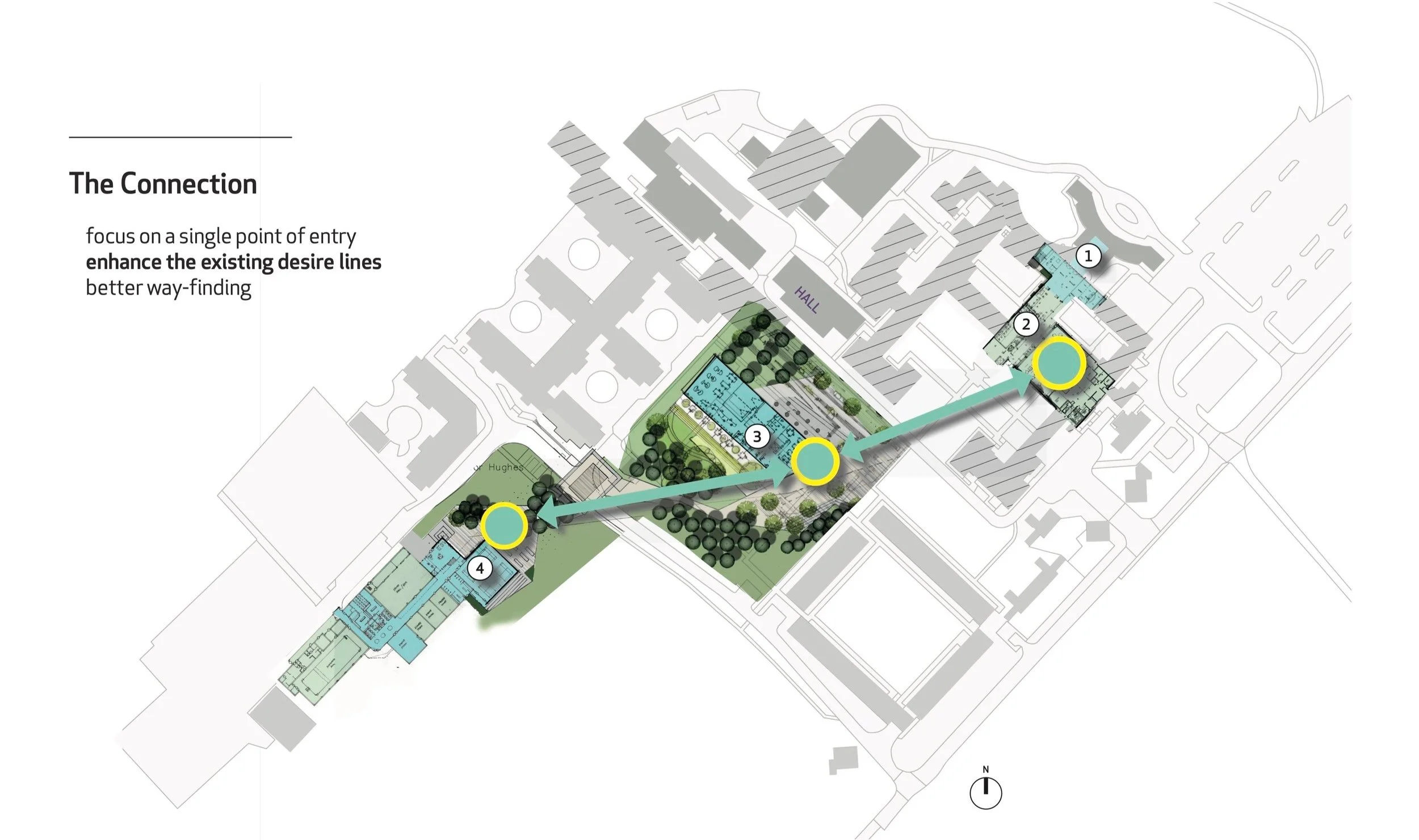
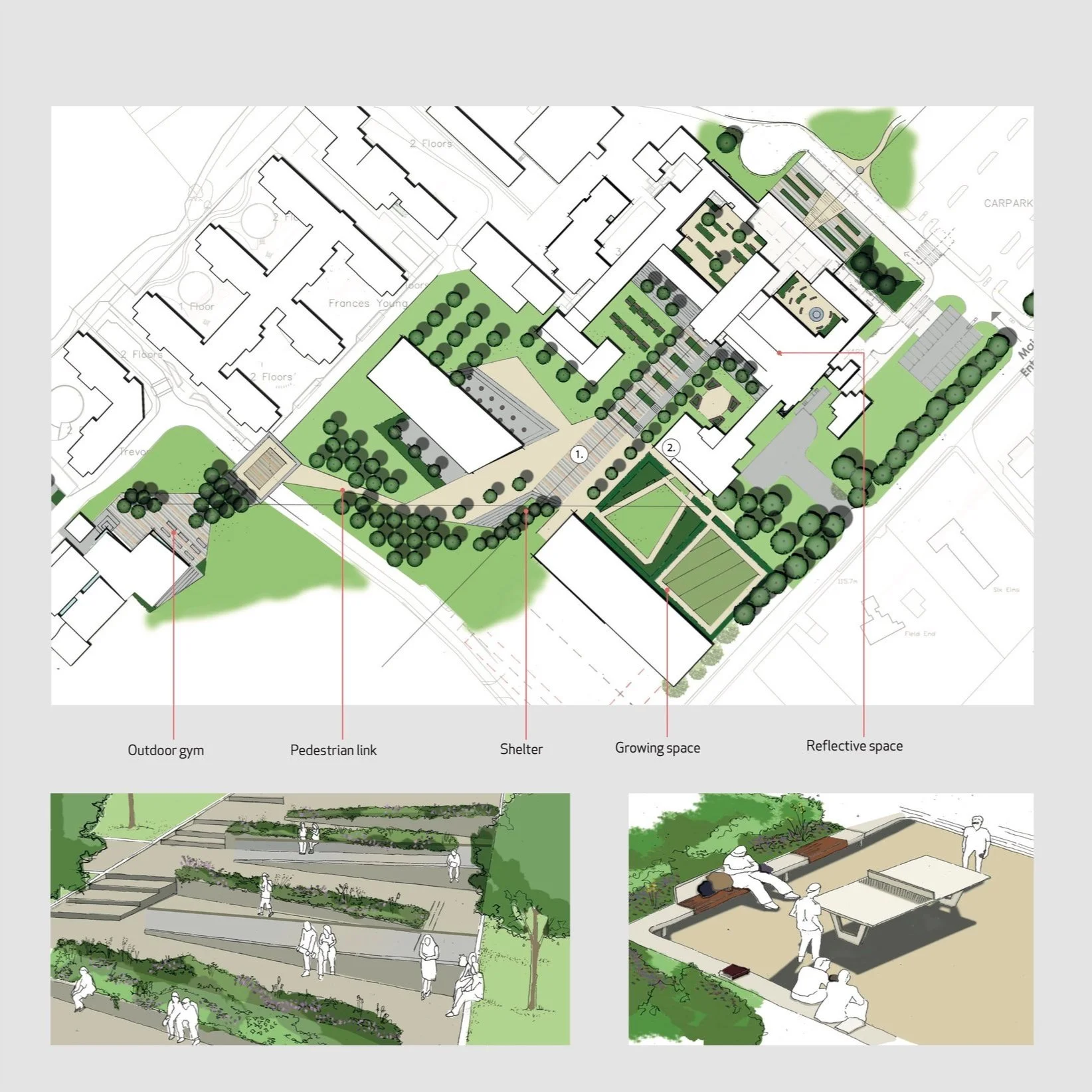

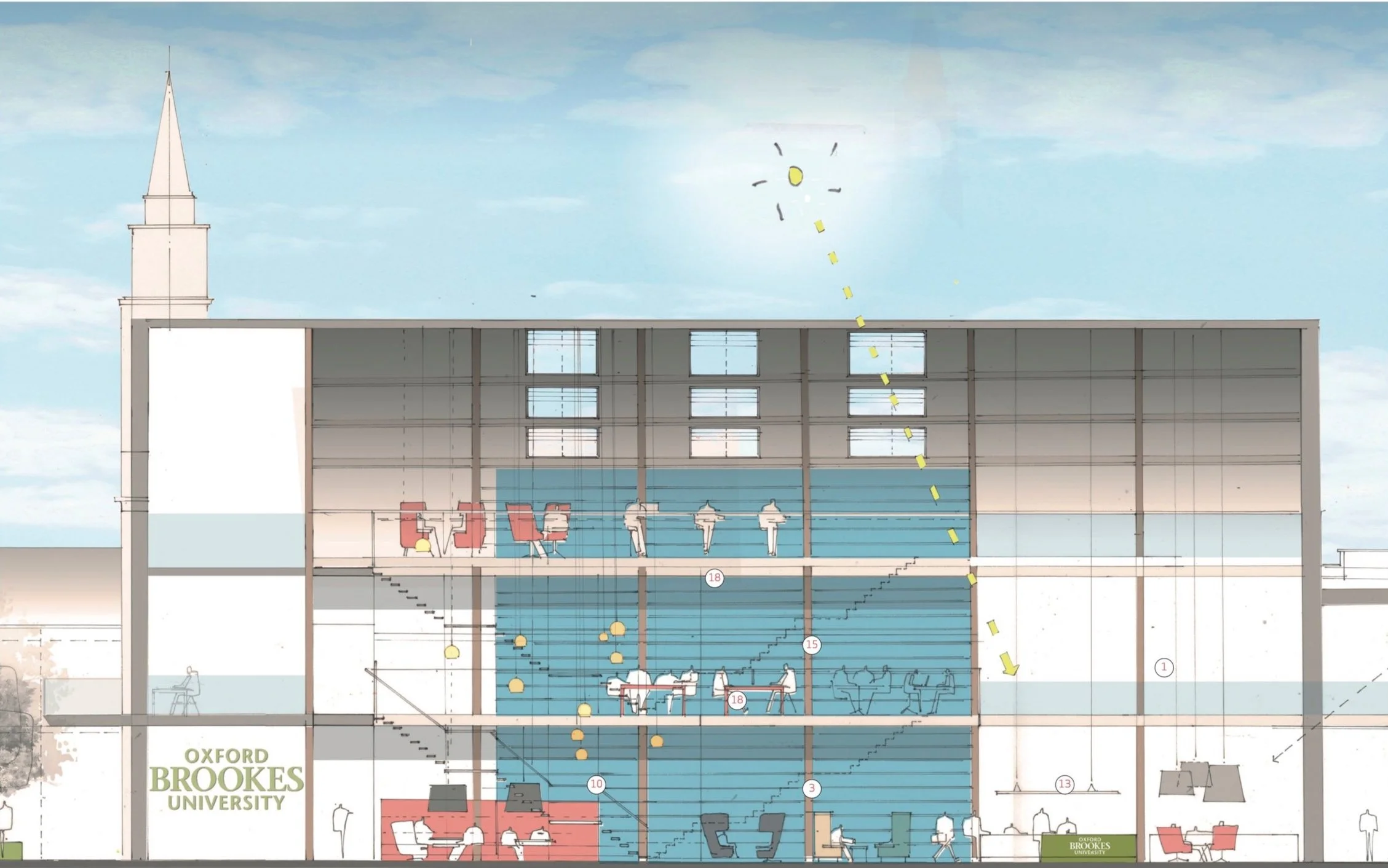


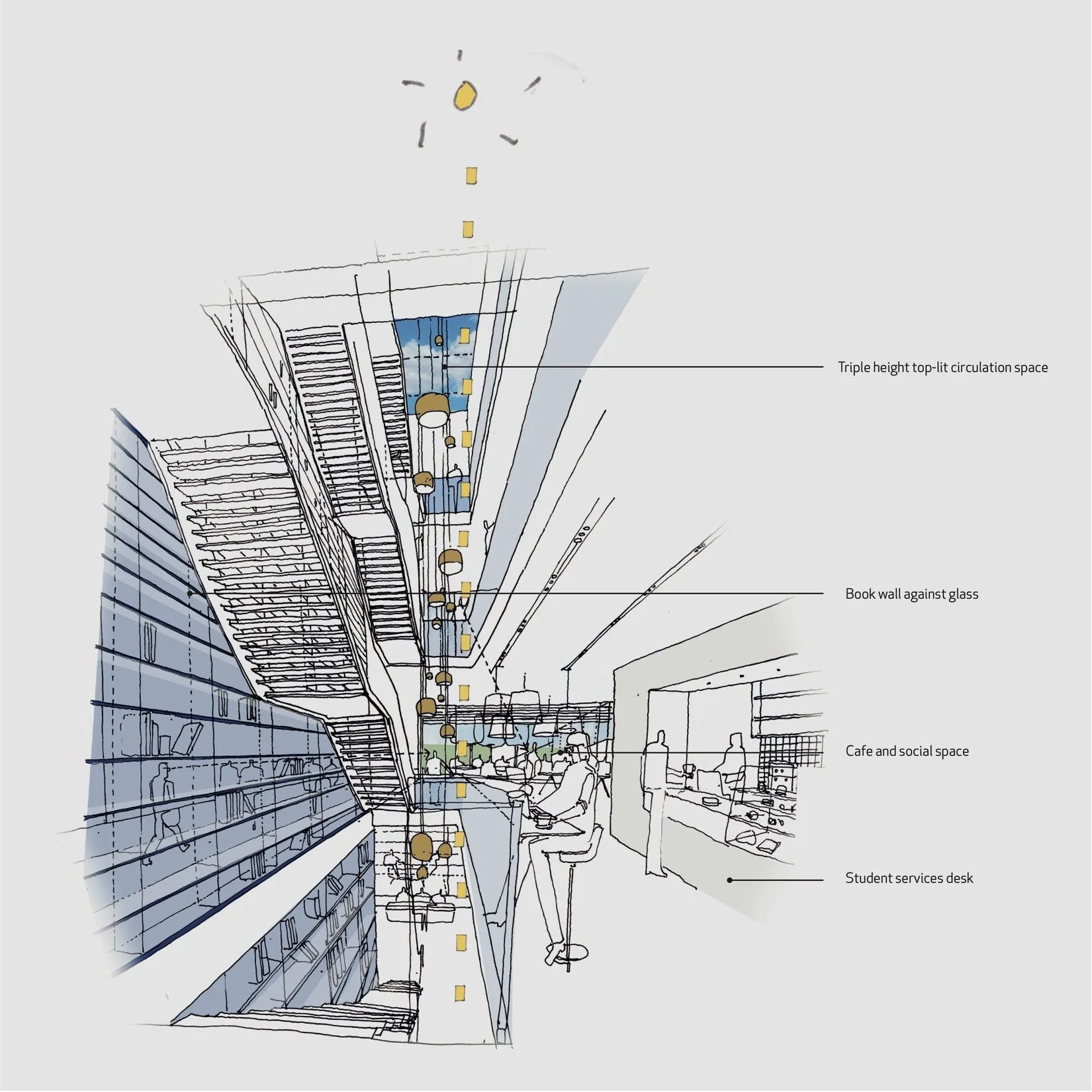



Description: Campus masterplan including new Teaching, Research and Learning Centre (TRL Centre)
Client: Oxford Brookes University
GIA: 13,000SqM
Status: Stage 2 - completed
RT Team: Mark Gabbey, Tim Robinson, Daniel Goldenberg