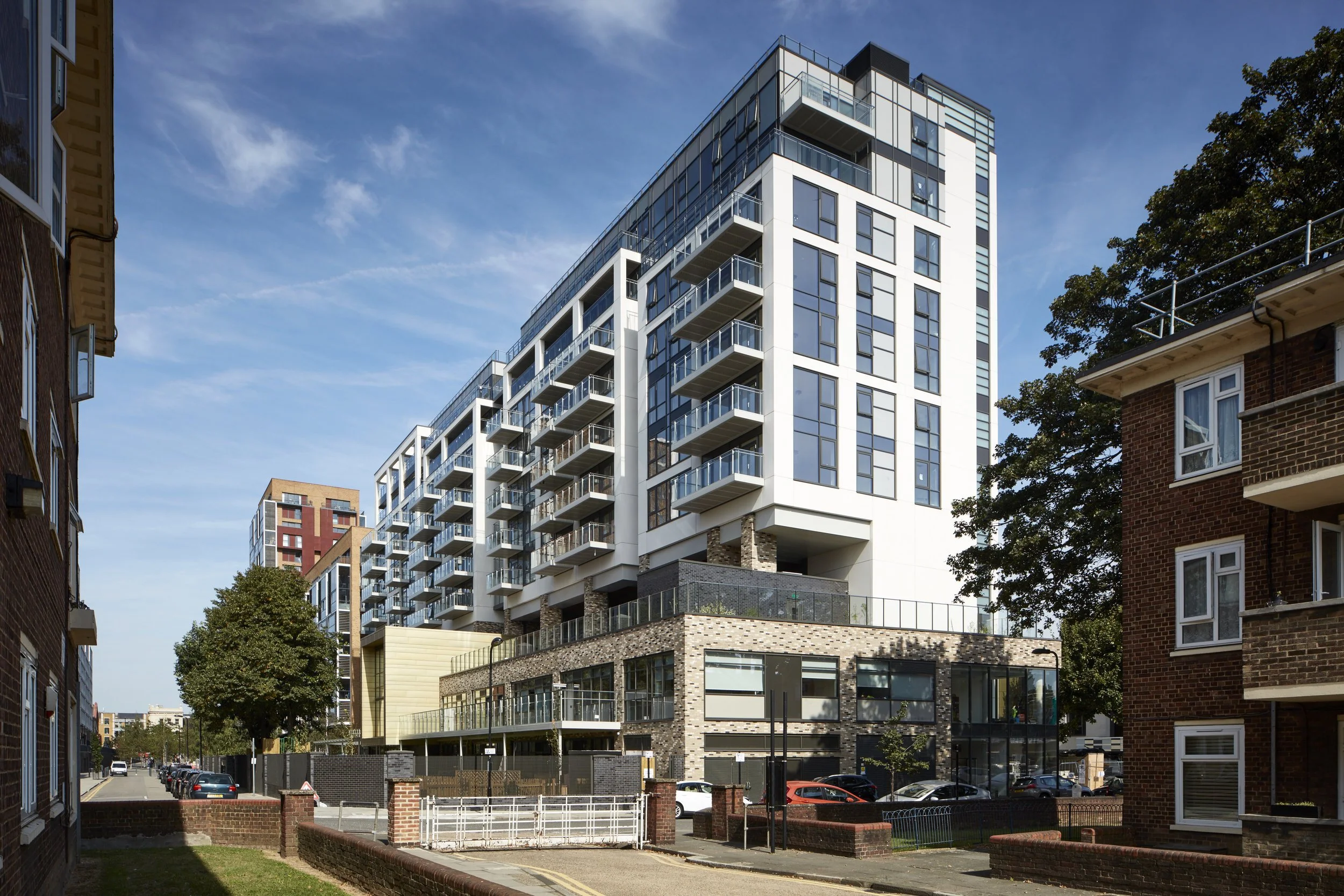
Vibe development & Holy Trinity Primary School, Dalston
What started in 2009 as a funded expansion of a one form entry primary school was subject to funding cuts and eventually required an alternative financial model to deliver the additional 210 pupil places. The success of the resulting solution is testament to a design team that asked ‘what if?’ and a client who was willing to ask themselves ‘what if we do?’


In Summer 2012, Telford Homes Plc was appointed as development partner to finalize Stage 3 design and manage the planning application process. Leveraging our experience in primary schools and residential development, we focused on creating an effective mixed-use school design.
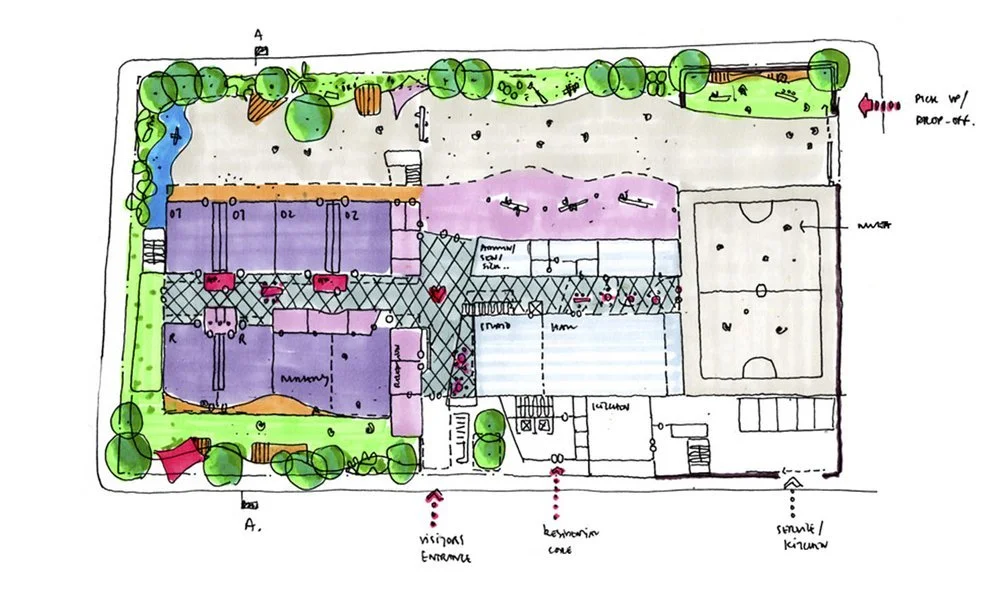
Every design element was rigorously tested, driving a thorough examination of the school’s operation, spatial requirements, and the interface between school and residential spaces. Residential entrances and circulation cores were placed at each end of the building, maximizing flexibility for the school layout. The school’s main entrances are centrally located where vertical circulation meets horizontal corridors, with classrooms, offices, and other spaces branching off the central spine and connecting to the second-floor play deck and MUGA (Multi-Use Games Area).
Early Learning, though integral to the school, maintains independence with its own playground for each Early Years room. Key Stage 1 (KS1) classrooms on the ground floor open directly onto covered outdoor spaces for all-weather teaching and play, while Key Stage 2 (KS2) classrooms and staff offices on the first floor feature generous balcony spaces.
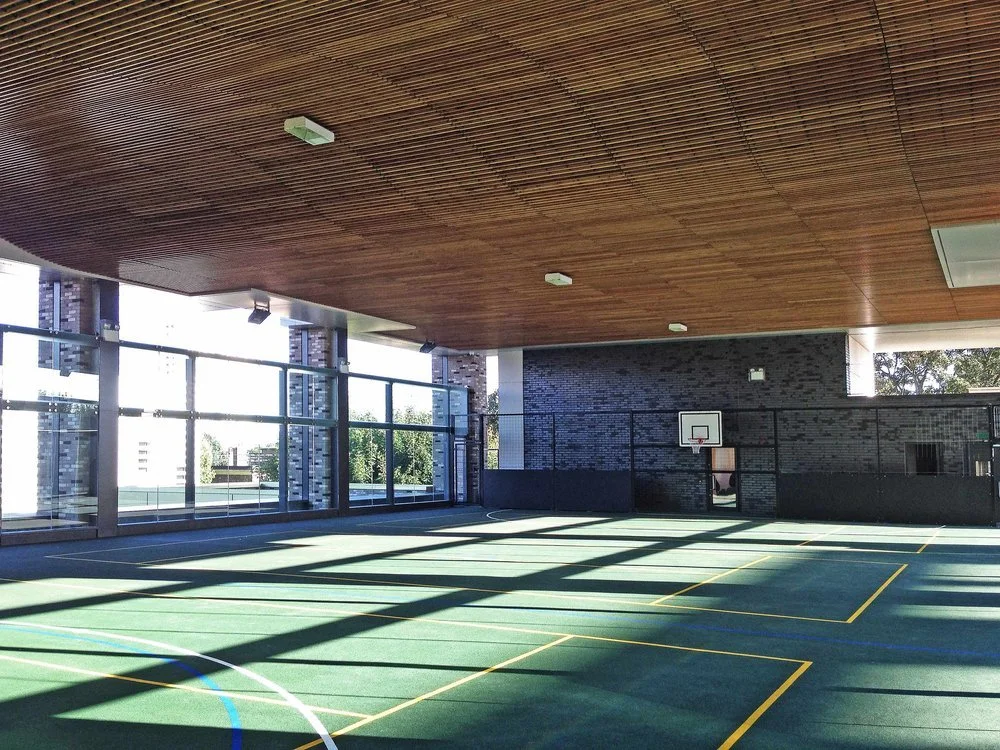
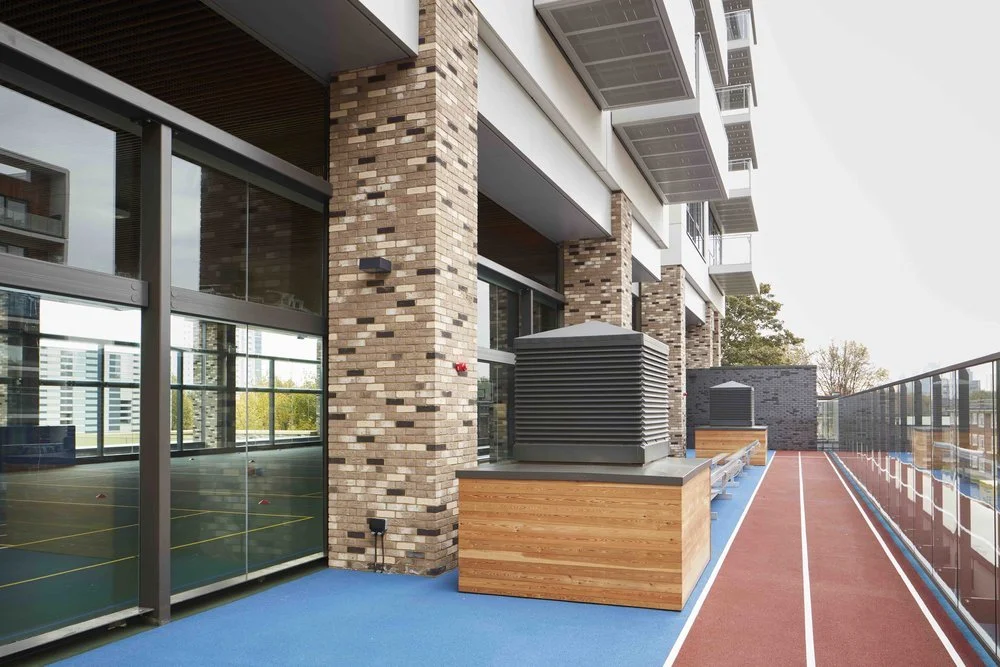
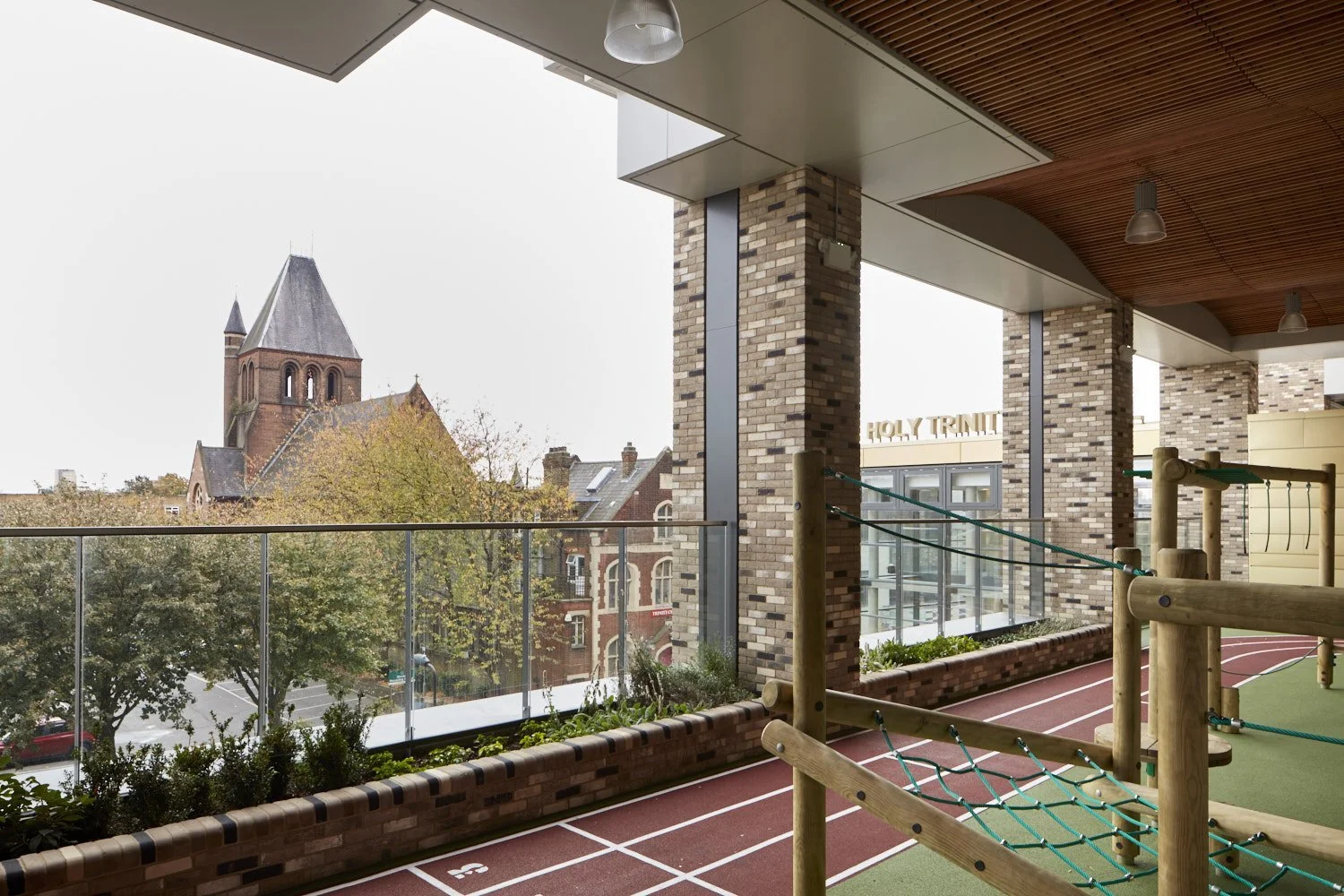
The second-floor play deck offers ample outdoor space uncommon in urban settings, including a MUGA, running tracks, playground, climbing wall, and stage. The play deck, dining hall, and kitchen can be used independently of the school for community functions, each with separate access and facilities.
Above the play deck, residential apartments from the fourth to tenth floors capture diverse views of London, culminating in a communal rooftop garden with panoramic city views.
Combining school and residential use allowed reduced environmental impact. The complementary day-time use of the school and night-time occupation of the homes enabled efficient operation of the on-site Combined Heat and Power (CHP) plant, feeding surplus power back into the grid.
The development strategy ensured the residential component (101 one-, two- and three-bedroom apartments for market sale) generated sufficient value to fund the entire project, delivering the school without requiring land sale proceeds or public subsidy. Retaining the freehold land, the Diocese secured a high-quality school building, long-term ground rent income from the apartments, and a shared overage agreement for reinvestment into the local community, education, and affordable housing.
This financial model, paired with the dedication of the senior leadership team, teachers, pupils, and parents, created an exemplary school and a broader social impact by raising aspirations.
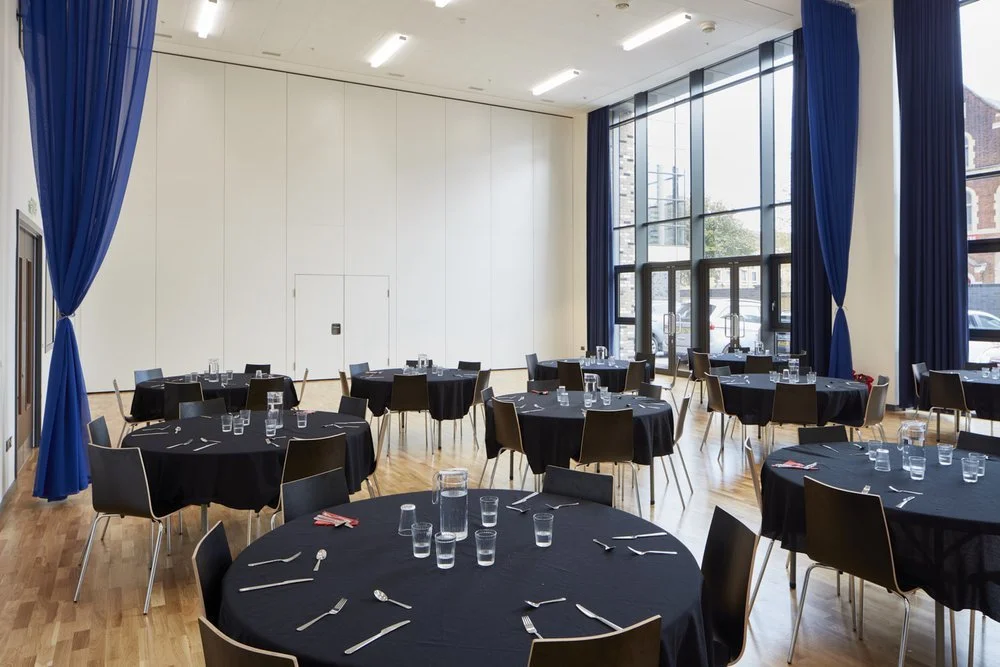
To support the school’s financial sustainability, the design allows for additional income from enhanced facilities. Drawing lessons from higher education’s third-stream funding approach, spaces like the hall, kitchen, and MUGA are available for private and community hire, generating revenue and strengthening Holy Trinity’s financial position.


typical upper floor plan - residentialDalston Square elebationsectional study connection Holy Trinity Church, School and Dalston Square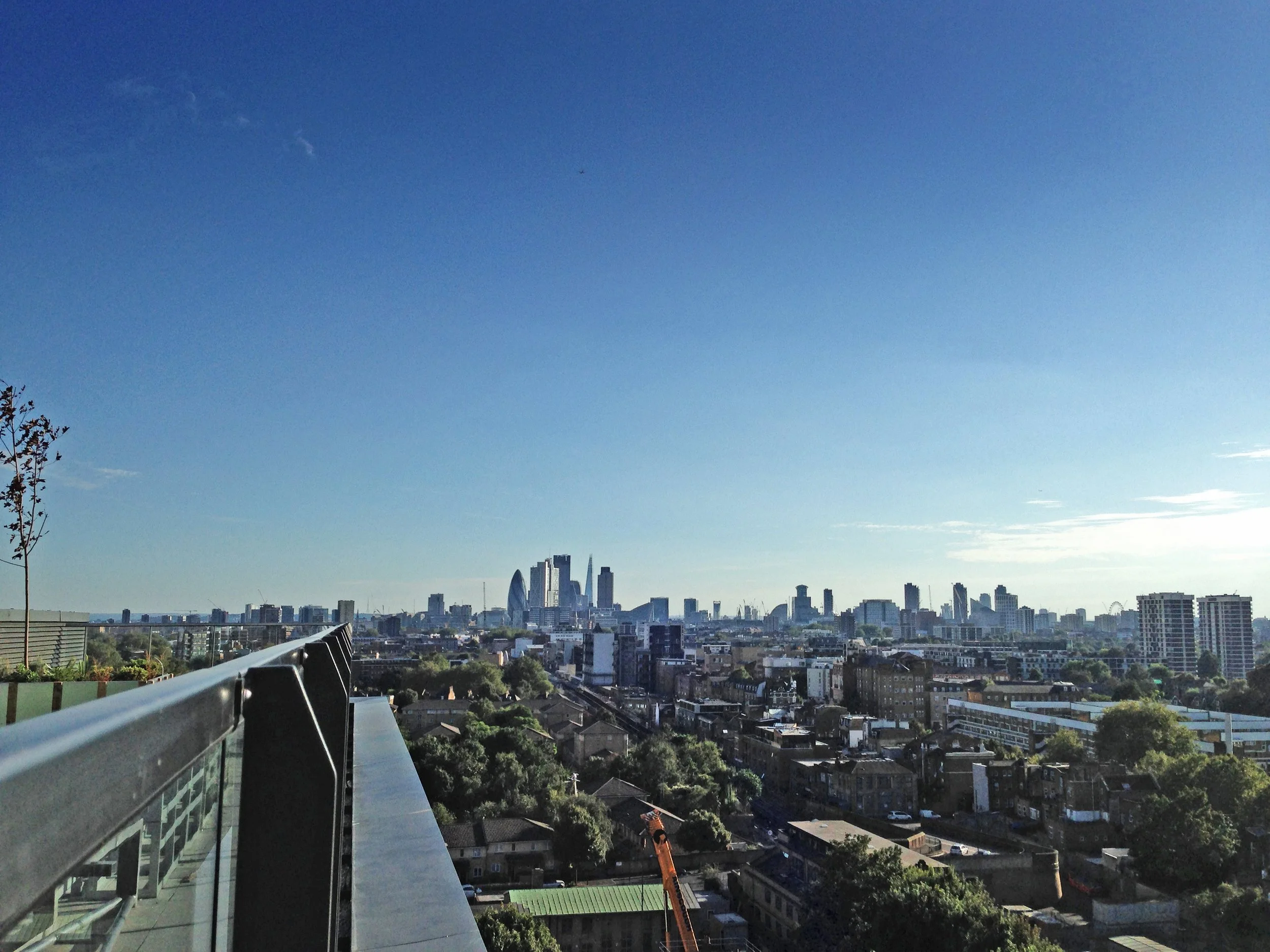


“A perfectly genius proposal.
The design for the redevelopment of Holy Trinity School is pioneering and cleverly tackles the need to provide more housing and more primary school places.”— Boris Johnson, Mayor of London

“The decks offer the most compelling precedents for how schools can exploit London’s housing boom to embed themselves into the limited space offered by the capital’s dense inner city context.”
— Ike Ijeh - Building Magazine




ground floor plan - schoolfirst floor plan - schoolsecond floor plan - play deck“The design for the School evolved over a period of 3 years as the architects wanted to provide everything on the School’s wish list. The play/sports deck caught everyone’s imagination once the idea was floated.”
— Inigo Woolf - Chief Executive, LDBS








Description: 2FE Primary School with 101 one, two and three bedroom apartments.
Client: Holy Trinity CofE Primary School, London Diocese Board of Schools & LB. Hackney & Telford Homes Plc
Floor Area: 12,810 sqm - Residential 3,260 sqm; Education 9,550
Value: £28m
Status: completed October 2016
Architect (Stage 0-4a): Rock Townsend
Architect (Stage 4b-7): Stockwool
Planning Consultant: CMA Planning
Landscape Arch.: Standerwick Design
Transport: Caneparo Associates
RT Team: Alistair Hay, James Ford, Mark Gabbey, Phil Rogers & Richard Sharp,