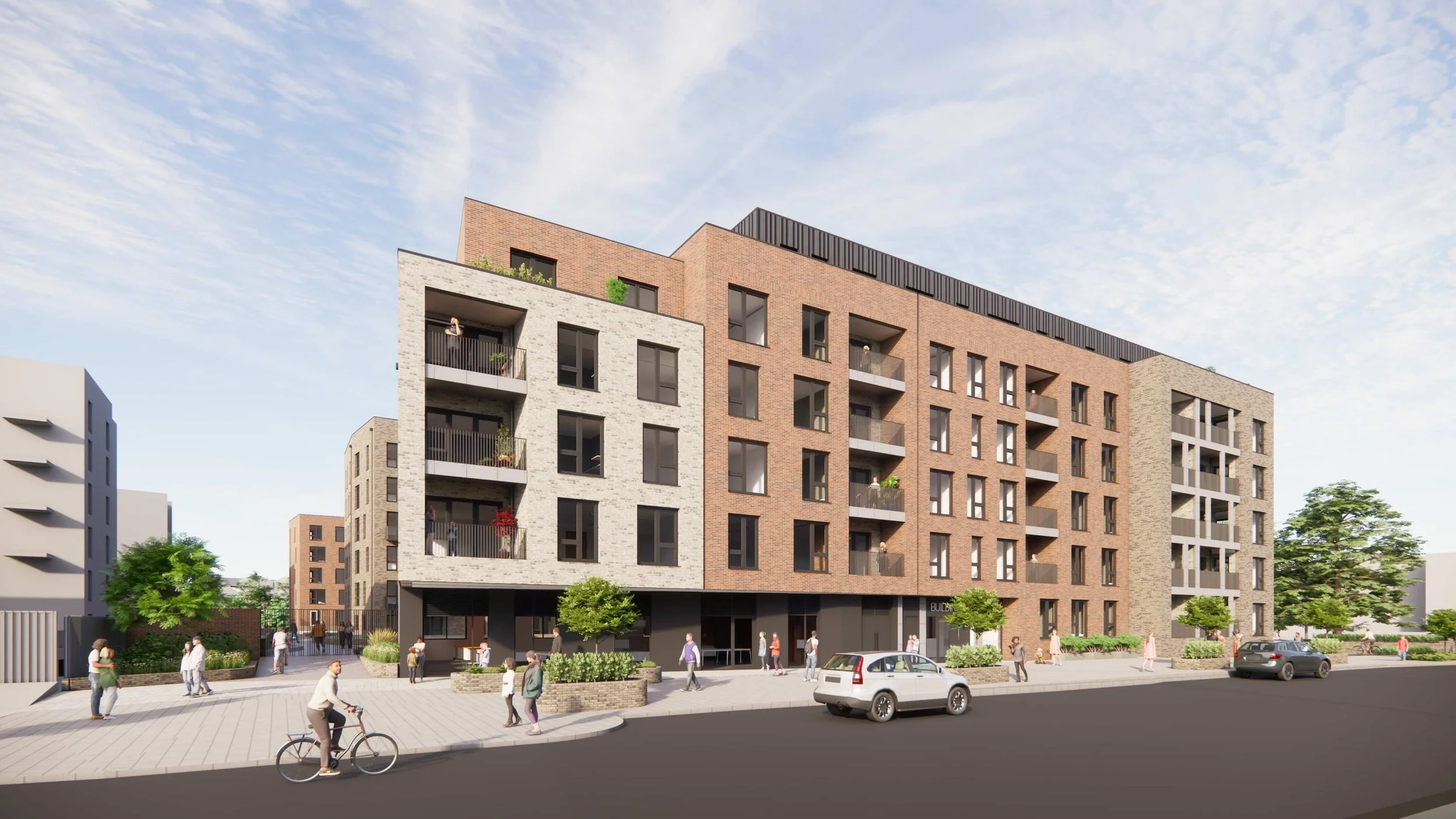
Marlowes, Hemel Hempstead - Civic Zone Regeneration
Dacorum Borough Council commissioned Rock Townsend to develop a residential-led design for the 1Hectare site within the town centre - the Civic Zone Regeneration (CZR). This project aims – a comprehensive redevelopment of the site, - maximise housing delivery while maintaining high-quality design; - provide a mix of tenures; - offer a mix of dwelling types and sizes, enhance the town centre streetscape, particularly along Marlowes and the River Gade; and integrate with neighbouring college and residential developments north and south respectively.
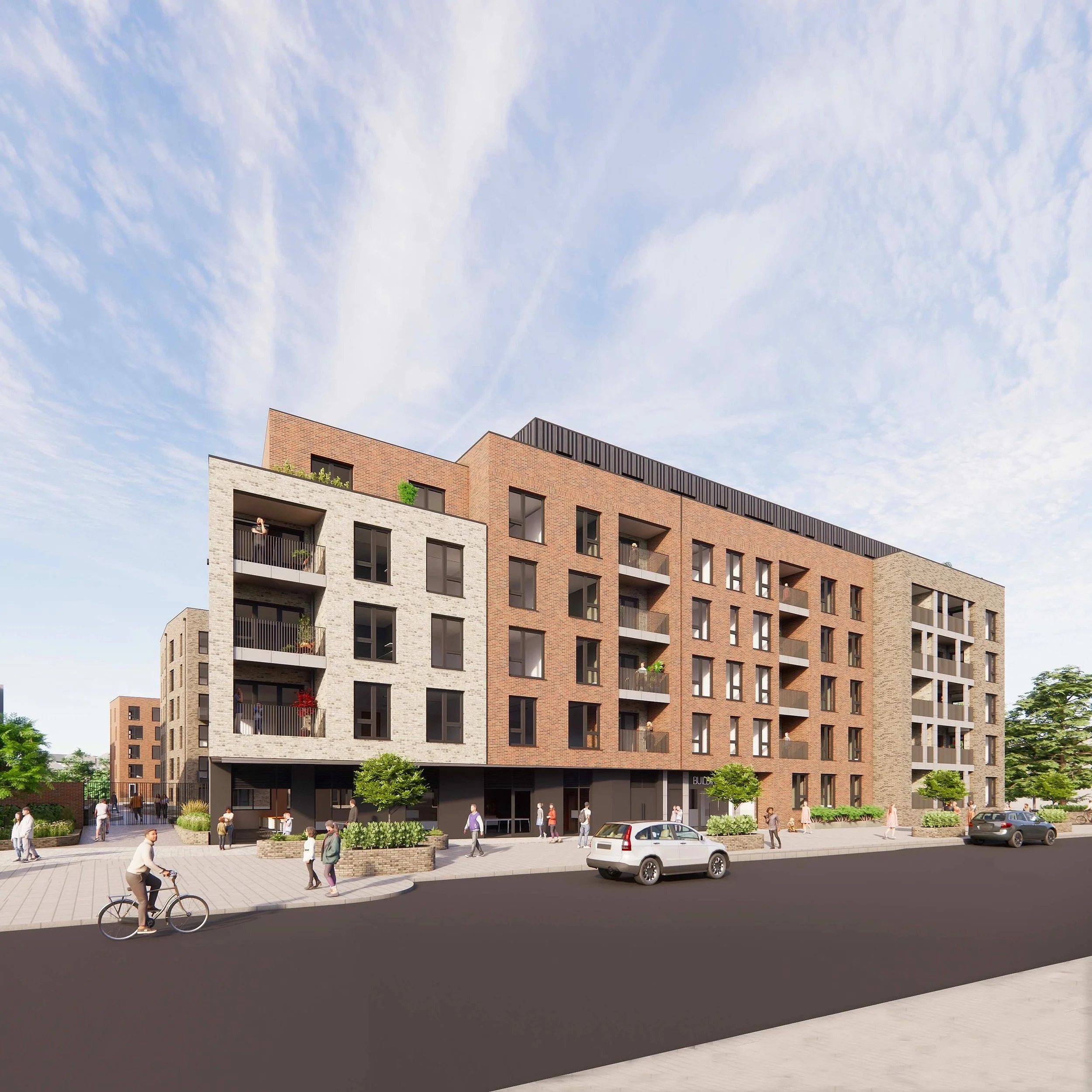
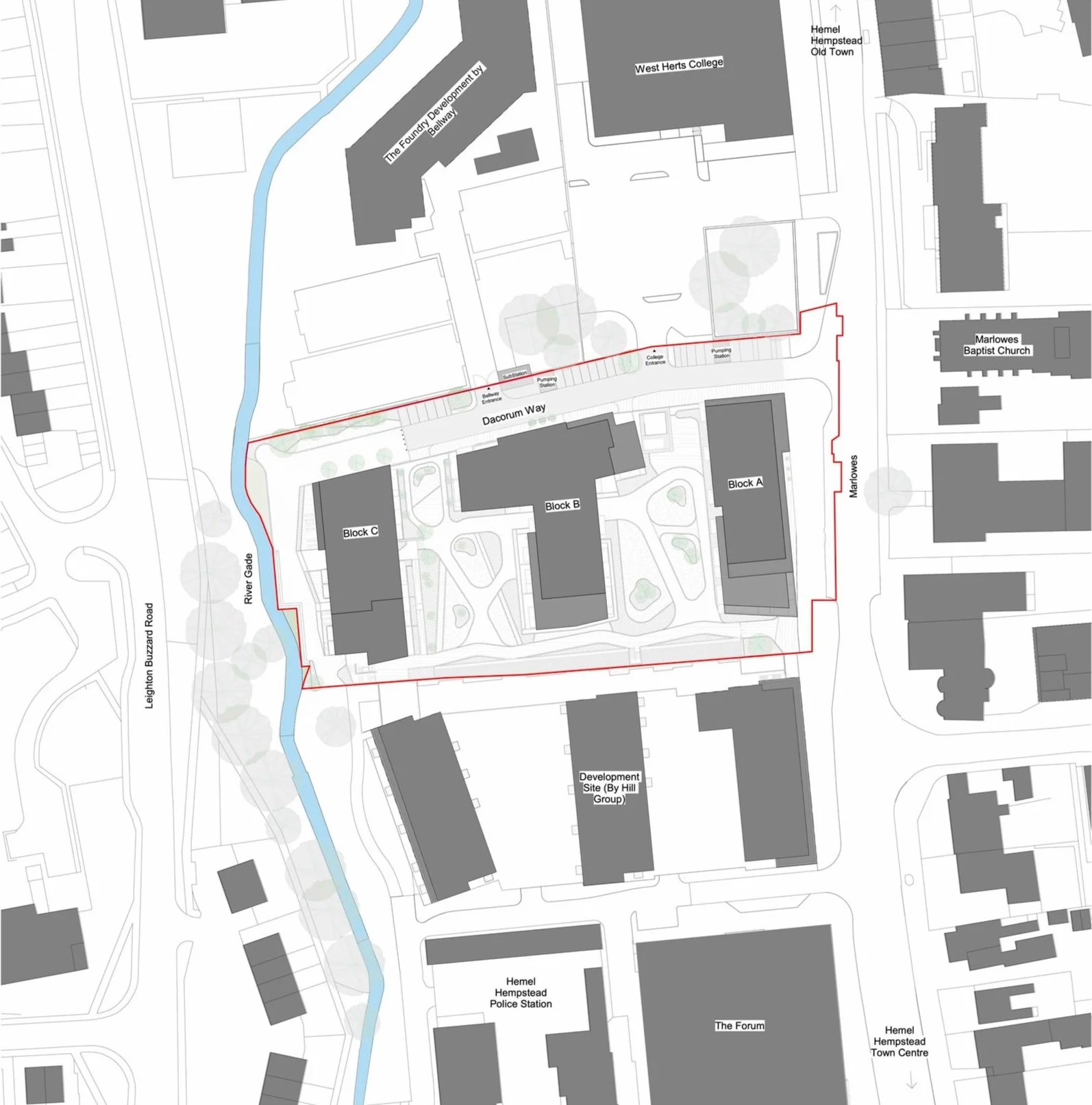

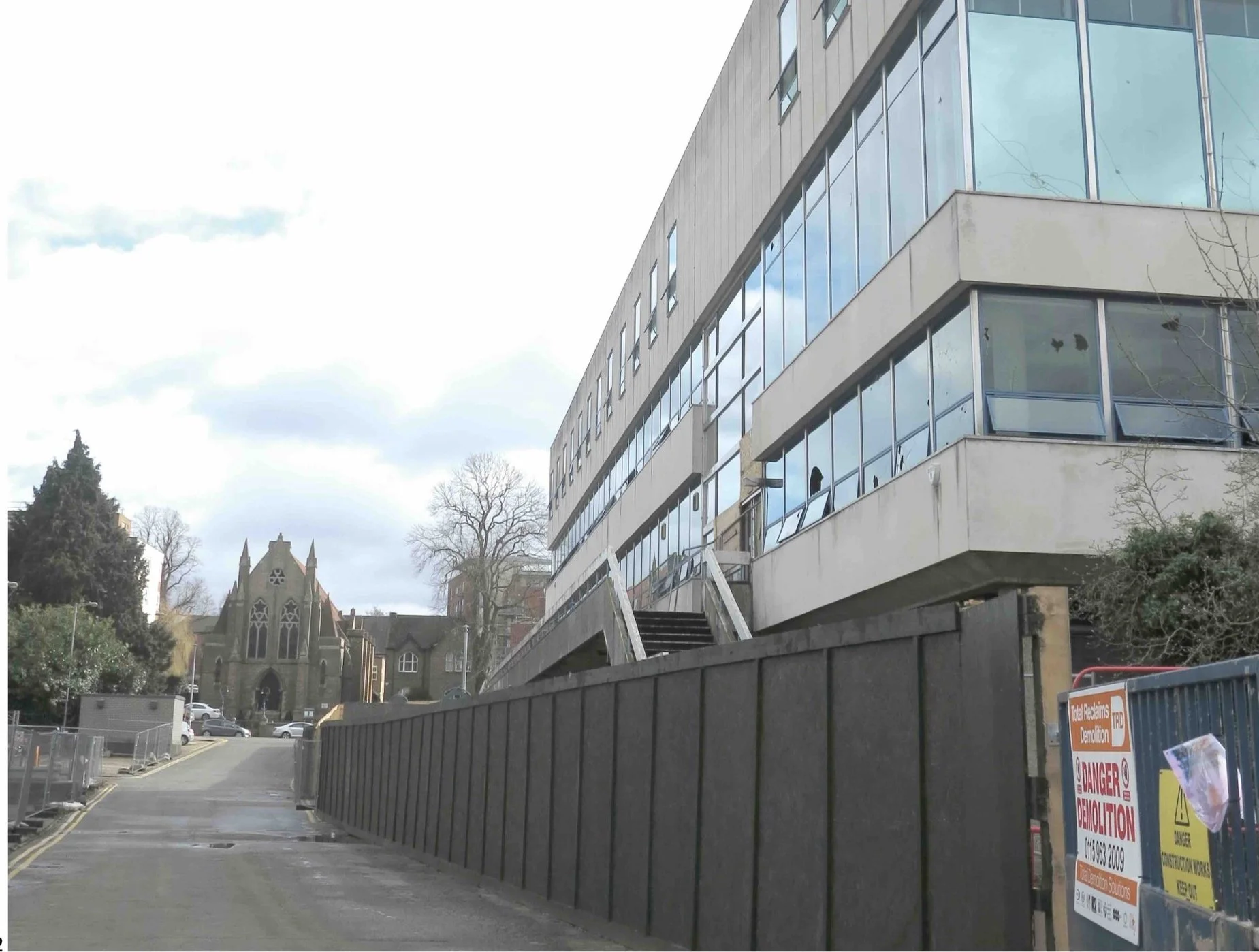
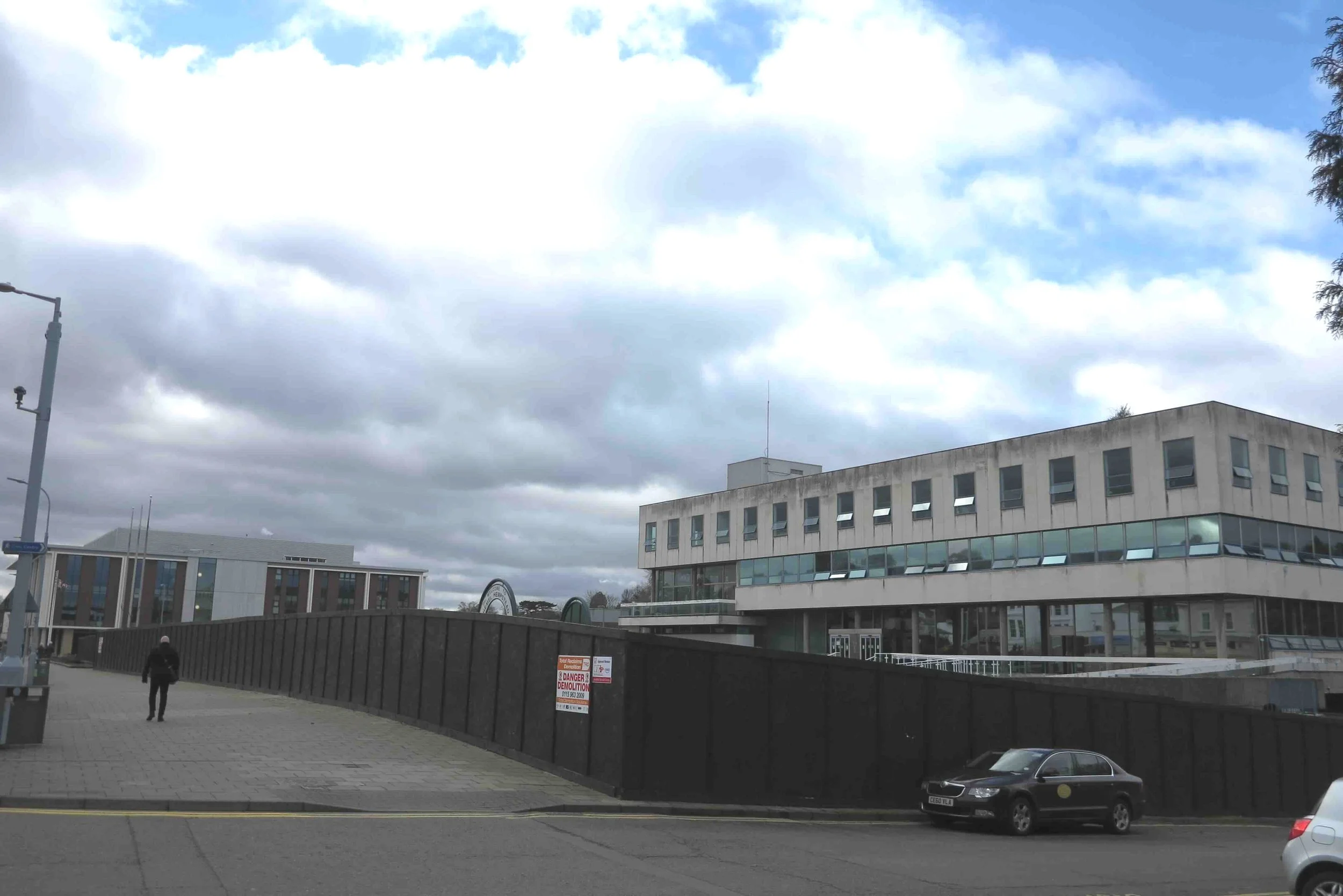
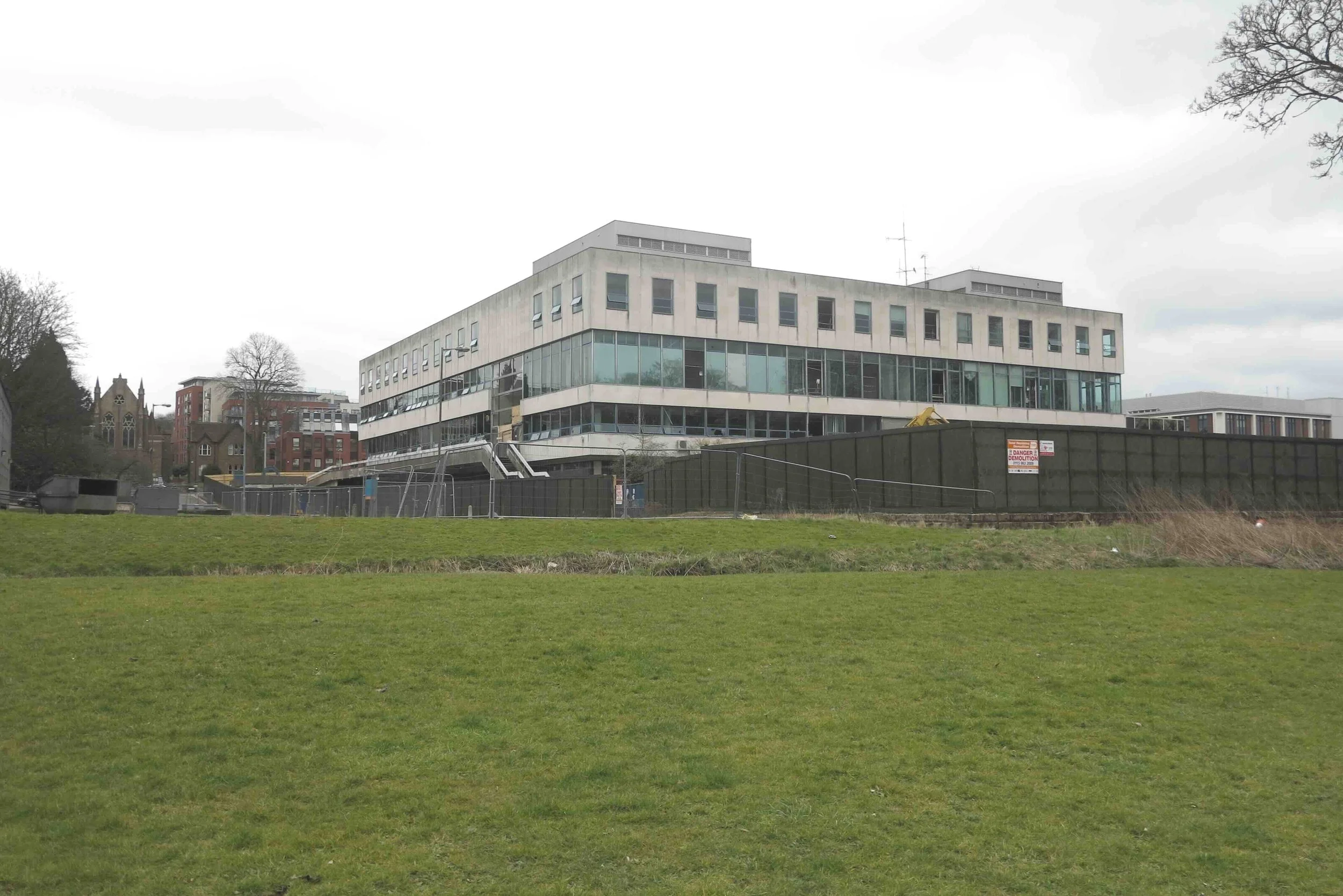
Top and above. The Marlowes - Building A addressing Marlowes; View south west toward the new Forum building.Located between Hemel Hempstead town centre and the Old Town, the site was previously home to the Council’s Civic Centre buildings. The site, currently undergoing demolition, consists of three distinct areas split across two levels - Higher-level former piazza – Adjacent to Marlowes; - Lower-level main site (3m below piazza) – Previously occupied by the Civic Centre; - Eastern hardstanding area – Formerly part of Dacorum Way’s loop.
The surrounding context is evolving, with ongoing redevelopment between Marlowes and Leighton Buzzard Road. The Council’s Forum building has set a benchmark for town centre regeneration, influencing neighbouring development projects, including 150 dwellings and commercial space, currently under construction located between the Civic Forum and the site; to the north,West Herts College site – Undergoing expansion work, including a new educational building near Marlowes and a residential development adjacent to the River Gade.
The concept design evolved through three key iterations to align with the adjacent evolving developments and the evolving brief. Iteration 1 - the perimeter block; iteration 2 - the merging of sites and half a perimeter block; and iteration 3 - the introduction of the ‘T’ building.
The design remains consistent with the principles established in the earlier iteration. Building A features commercial spaces at the front of the ground floor, with the remainder of the ground floor and all upper floors dedicated to residential use, activating the Marlowes frontage. Building B is entirely residential, while Building C follows a similar approach to Building A, incorporating commercial spaces on the lower ground floor with residential flats above.
CZR comprising 211 dwellings and three commercial units. Building A includes 54 one-, two-, and three-bedroom rental flats, along with 275 sqm of commercial space; Building B consists of 100 one- and two-bedroom flats, comprising 80 private sale/rental units and 20 shared ownership units; and overlooking the river, Building C includes 57 one- and two-bedroom flats for market sale and two commercial spaces of 195 sqm and 140 sqm on the lower ground floor.
The site is divided into two levels. The upper ground floor, accessed from Marlowes, serves Building A and the courtyard podium, while the lower ground floor, accessed from Dacorum Way, serves Buildings B and C, as well as the 211-space car park beneath the podium. The redesign of Dacorum Way, which also serves the college, introduces a narrower carriageway, a wider pedestrian pavement, and reinstated perpendicular parking. The expanded footpath now leads to the river, connecting to a newly designed riverside piazza—a welcoming public space that fosters a vibrant atmosphere, enhanced by the lower ground floor commercial units opening onto the area.
The material palette is carefully selected to complement the surrounding context. Light and medium buff brickwork define the building mass and enliven the streetscape, while recessed panels and soldier courses add visual interest to street-facing elevations. White and pale pink GRC panels highlight residential entrances and key balconies, while dark rainscreen cladding is used for top-floor treatments, creating contrast and texture. Dark powder-coated metalwork enhances the depth of balcony balustrades, and powder-coated aluminium shopfronts seamlessly integrate with lower-ground storage and ventilation elements within the commercial spaces.
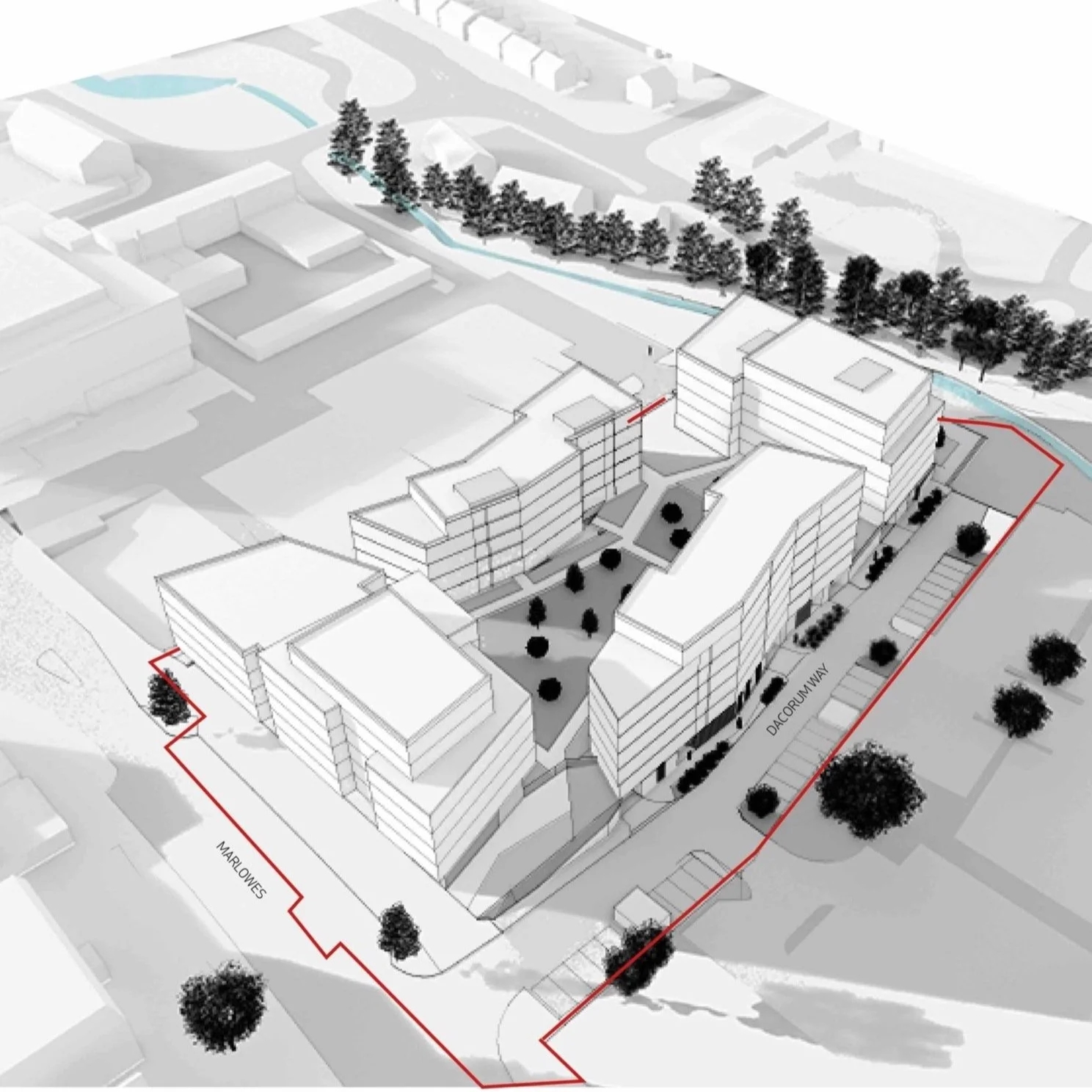
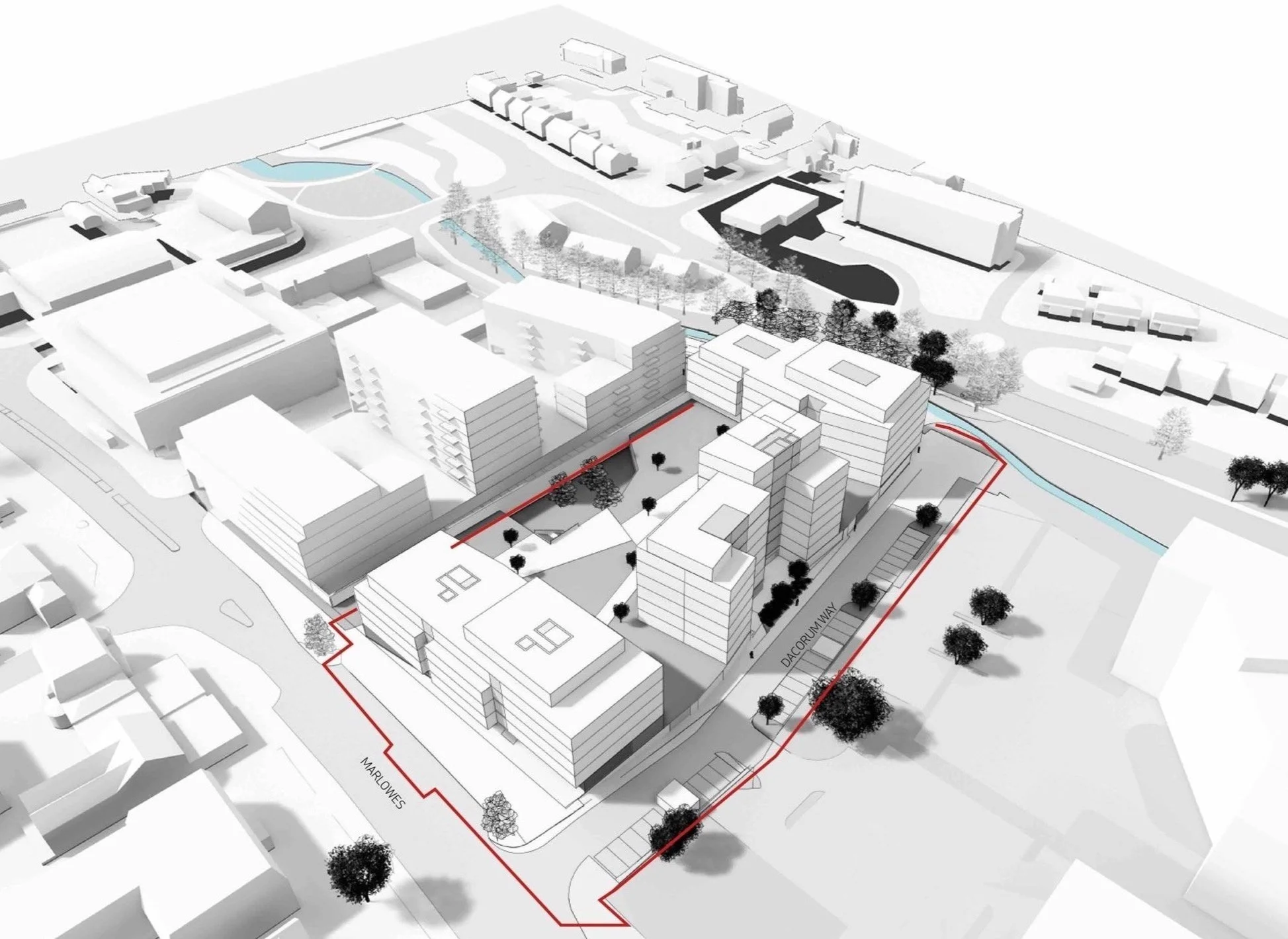

Iteration 1.The initial design featured four buildings around a central podium courtyard, elevated above a lower ground floor for parking. Commercial, restaurant, and leisure spaces activated both Marlowes (upper ground) and the riverfront (lower ground). A landscaped courtyard connected the buildings, with access from Marlowes and a stepped entrance from the southwest. Heights varied, Building A aligning with the Forum building before stepping up to six.Iteration 2.The design evolution was to merged with the adjacent development to form a larger single perimeter block, reducing buildings from four to three and eliminating the southern access road. The layout adjustments responded to the evolving neighbouring development to the south, particularly along Marlowes and the river, while maintaining a central courtyard concept. The resulting changes impacted overall dwelling numbers with a reduction of 20%.Iteration 3.A ‘T’-shaped redesign of Building B was developed forming two podium courtyard gardens. The new Building B reinstated the lost dwellings and accommodated greater rationalisation of plant, cycle storage. At lower ground parking, cycle storage, plant rooms, and riverside commercial spaces were increased. Heights ranged from five to seven stories, with massing broken up to fit the urban grain. Active frontages prioritized commercial spaces and residential entrances.
Building A - Aerial view
Building A - East elevation (Marlowes)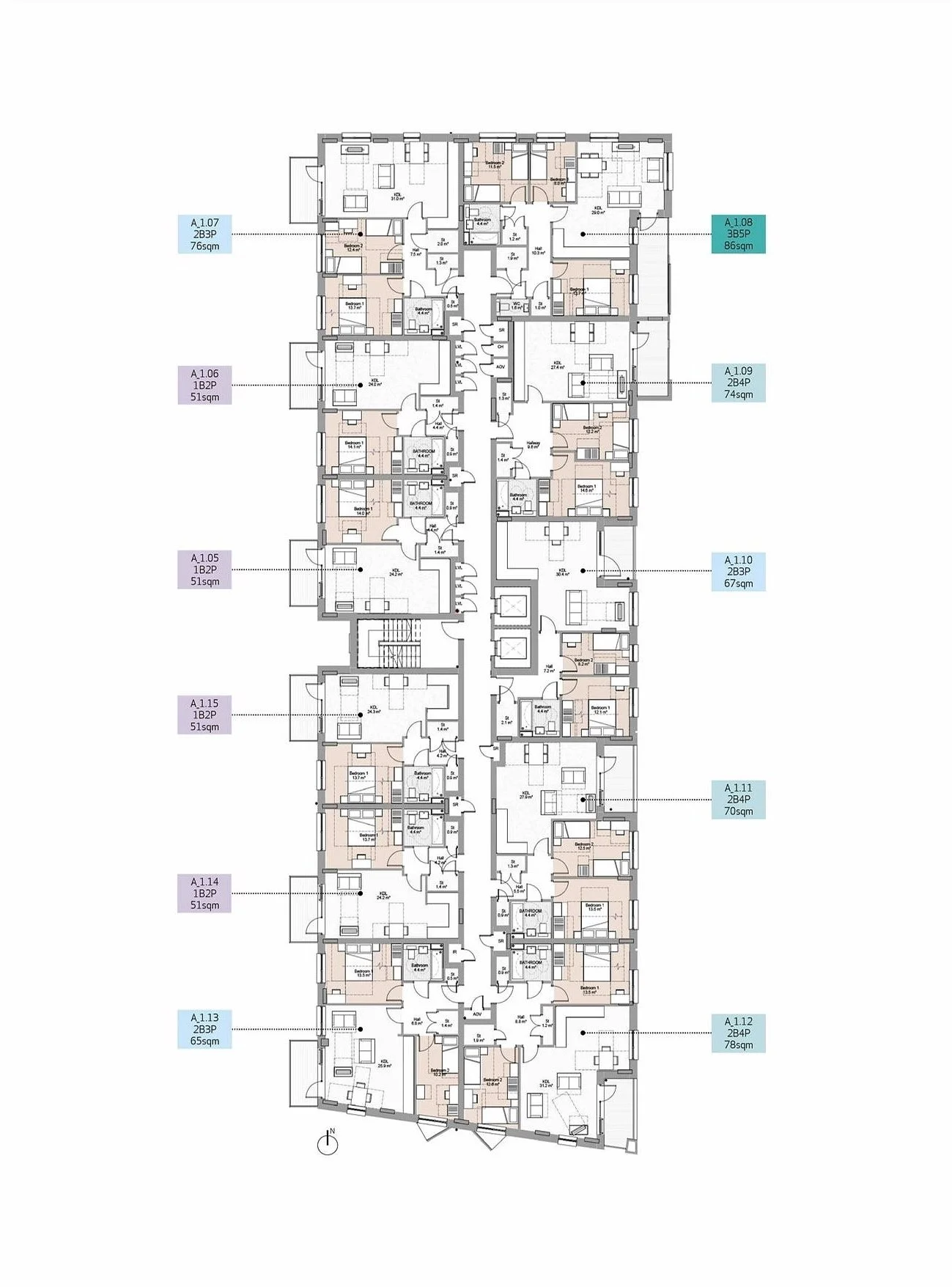
Building A - Typical upper floor layout
Building A - Materials palette and elevational composition


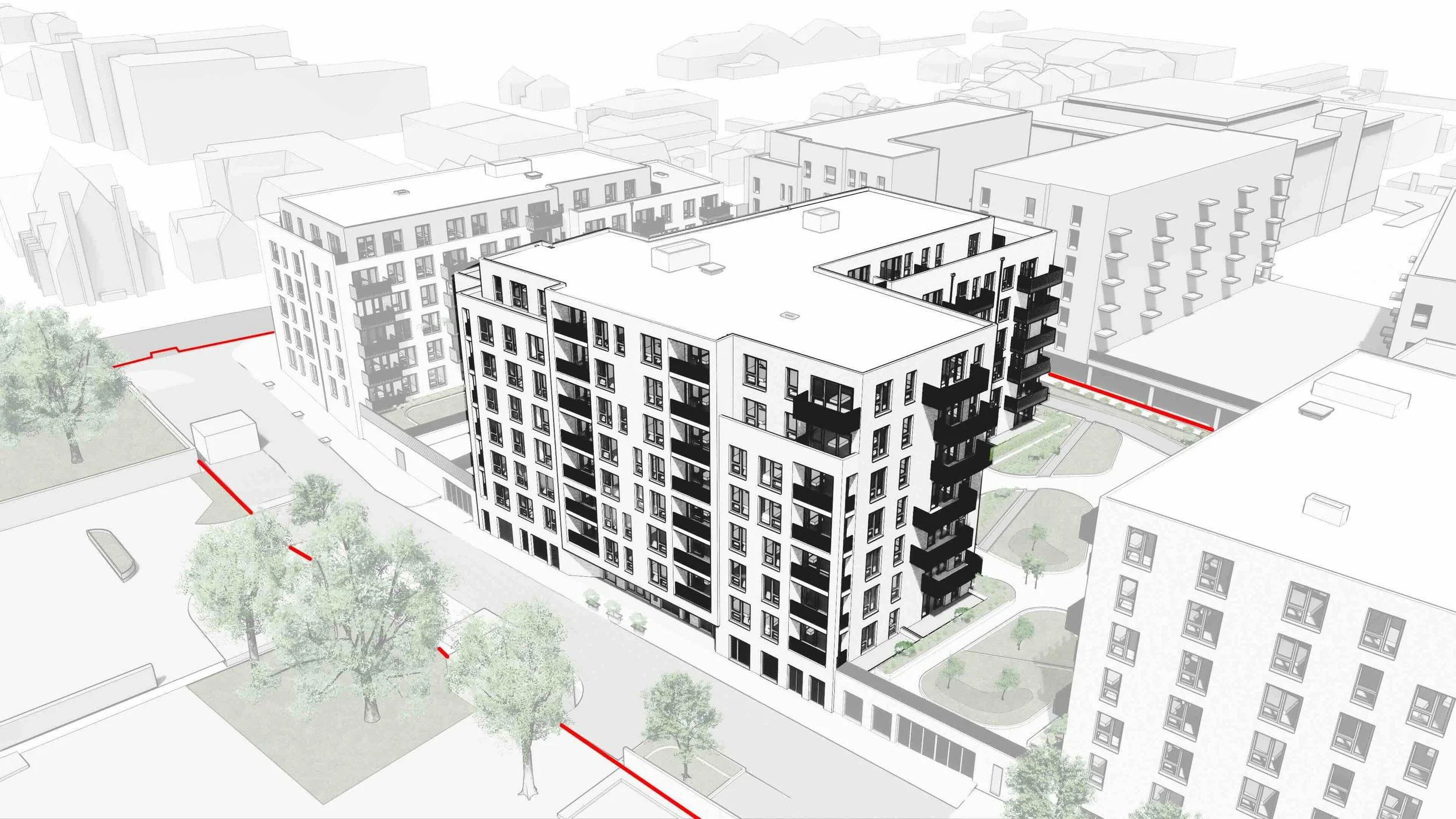
Building B - Aerial view
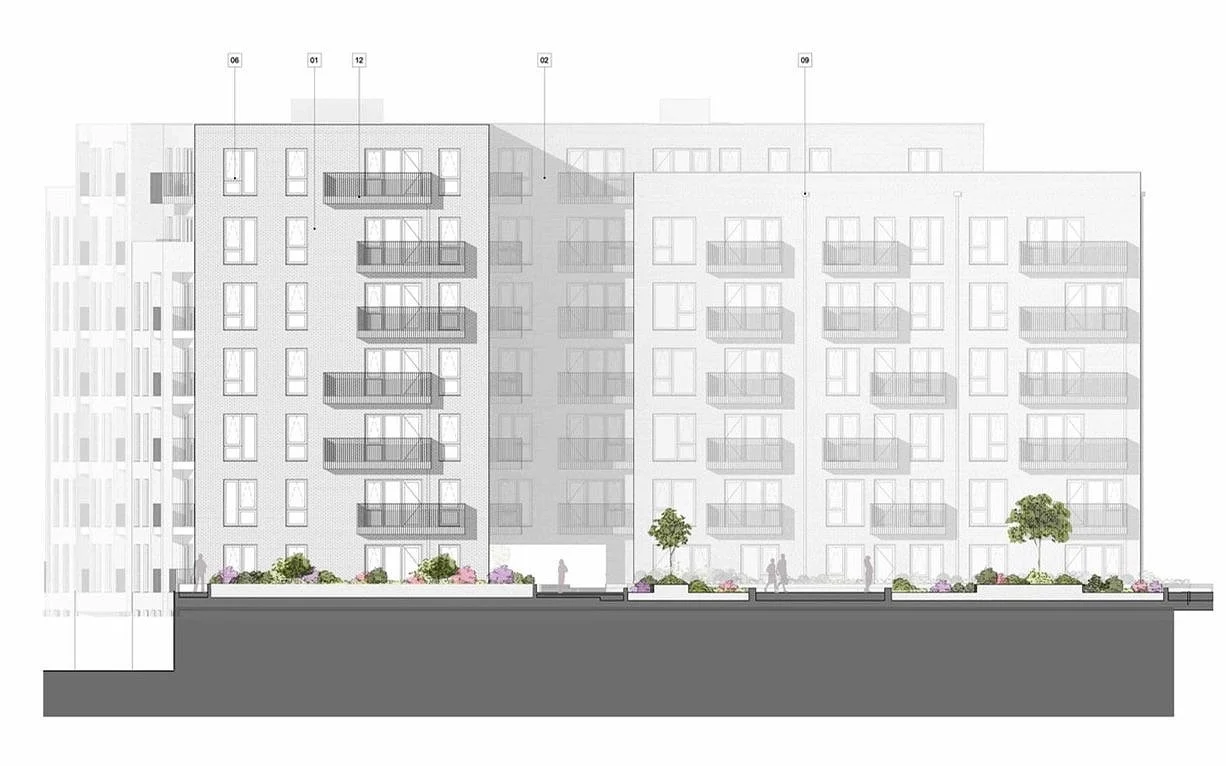
Building - West elevation (Podium courtyard)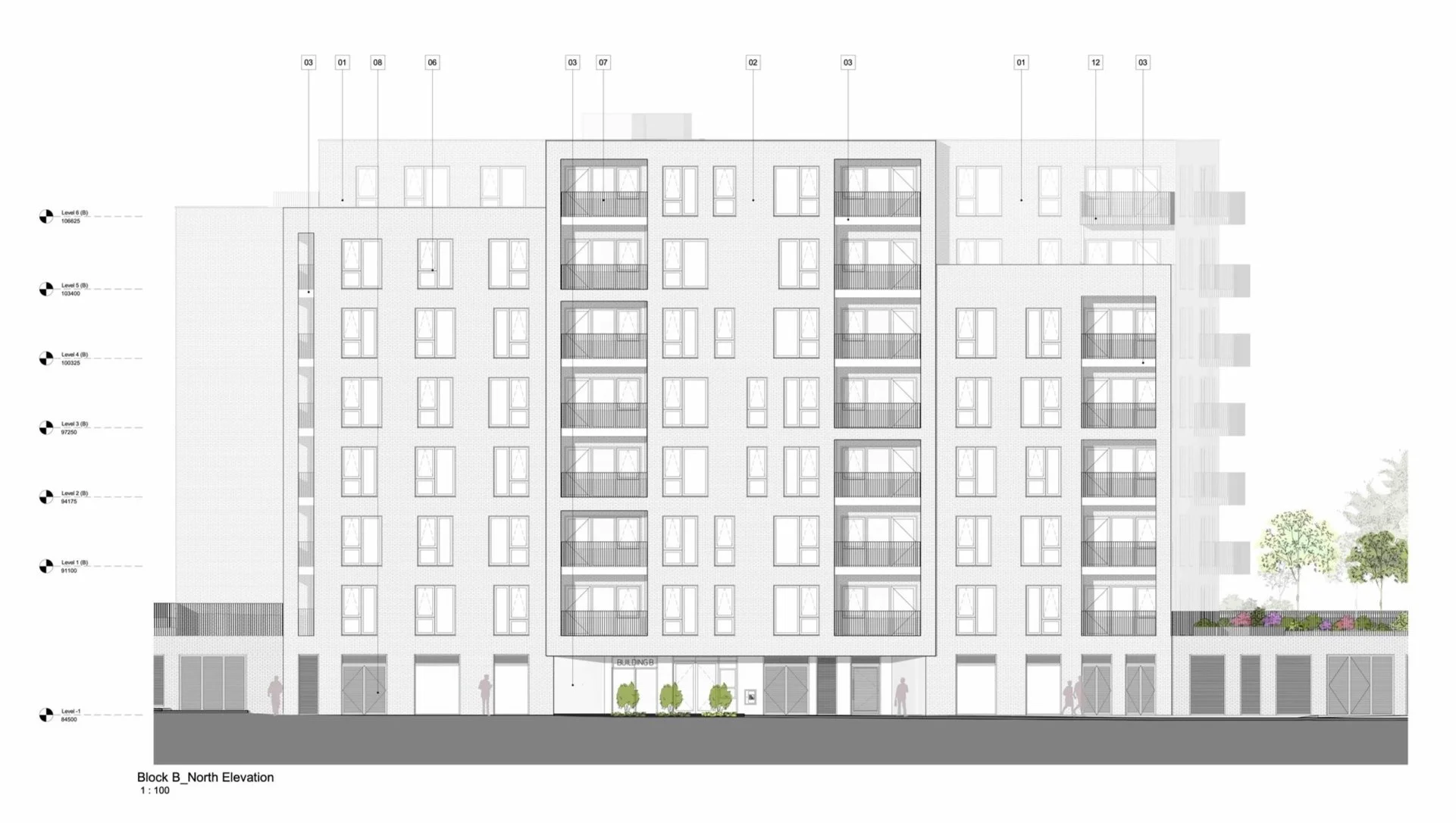
Building B - North elevation (Dacorum Way)
Building B - Typical upper floor layout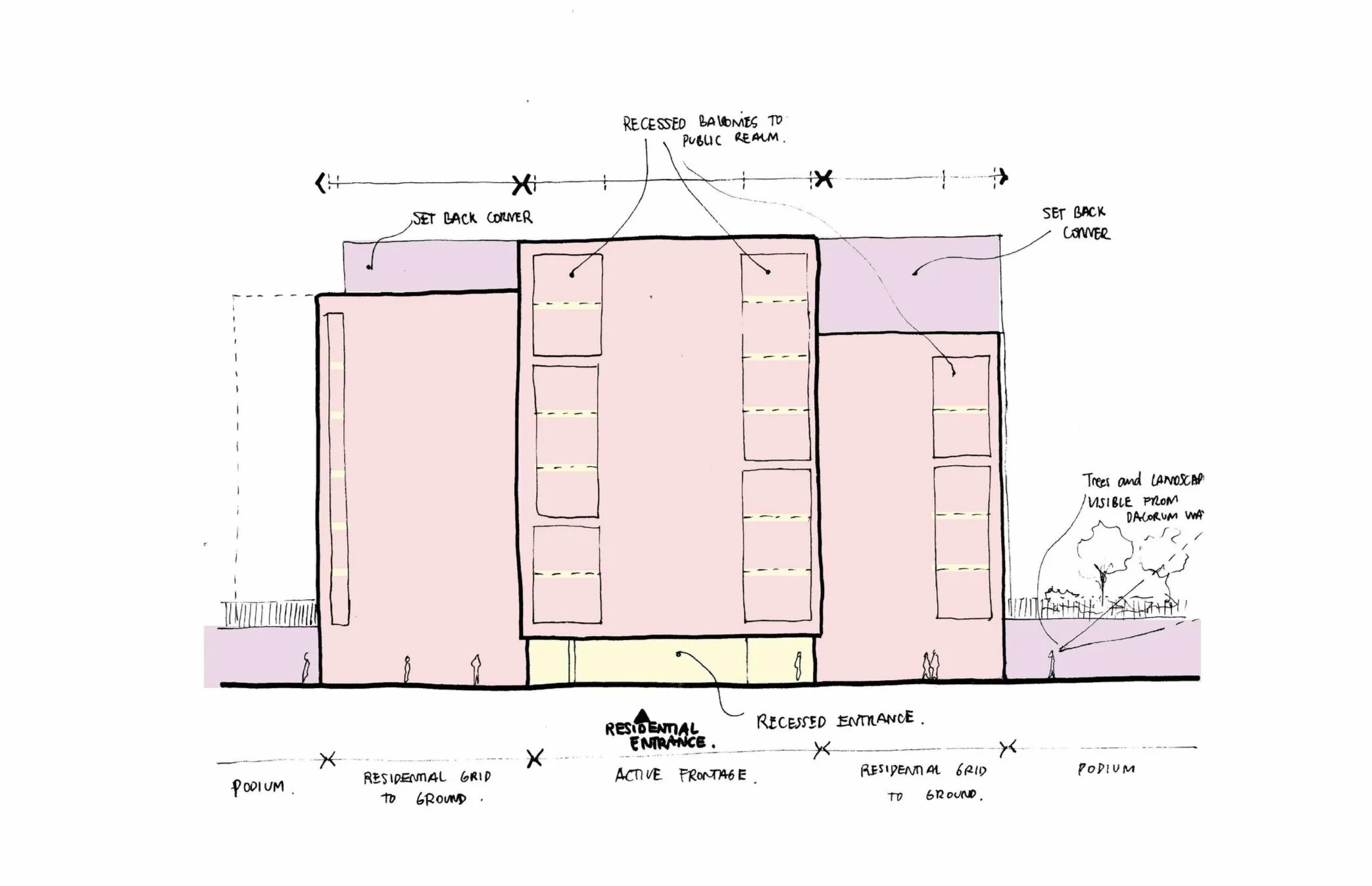
Building B - Materials palette and elevational composition
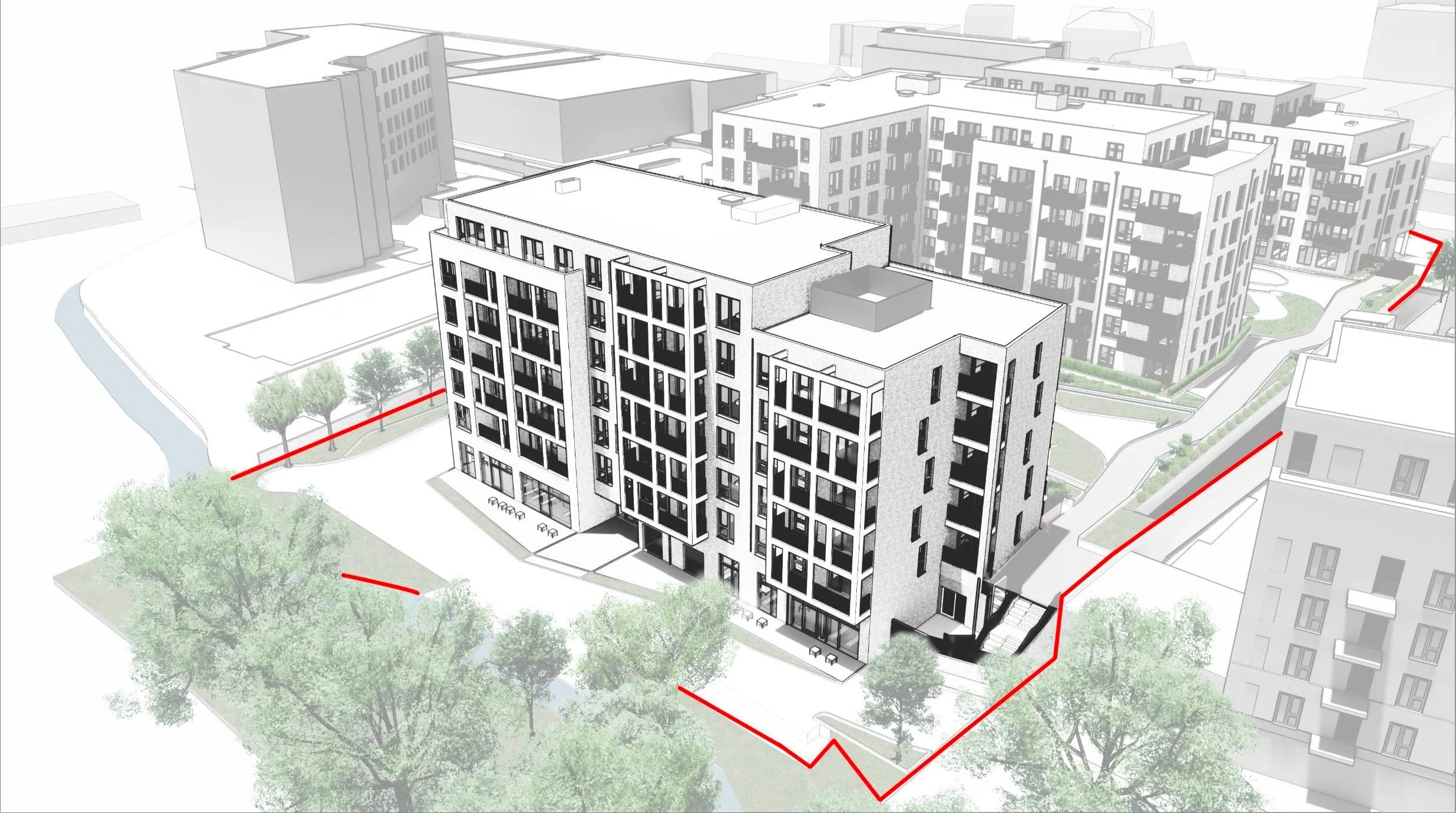
Building C - Aerial view
Building C - West elevation (River Gade)Building C - South elevation (Podium steps)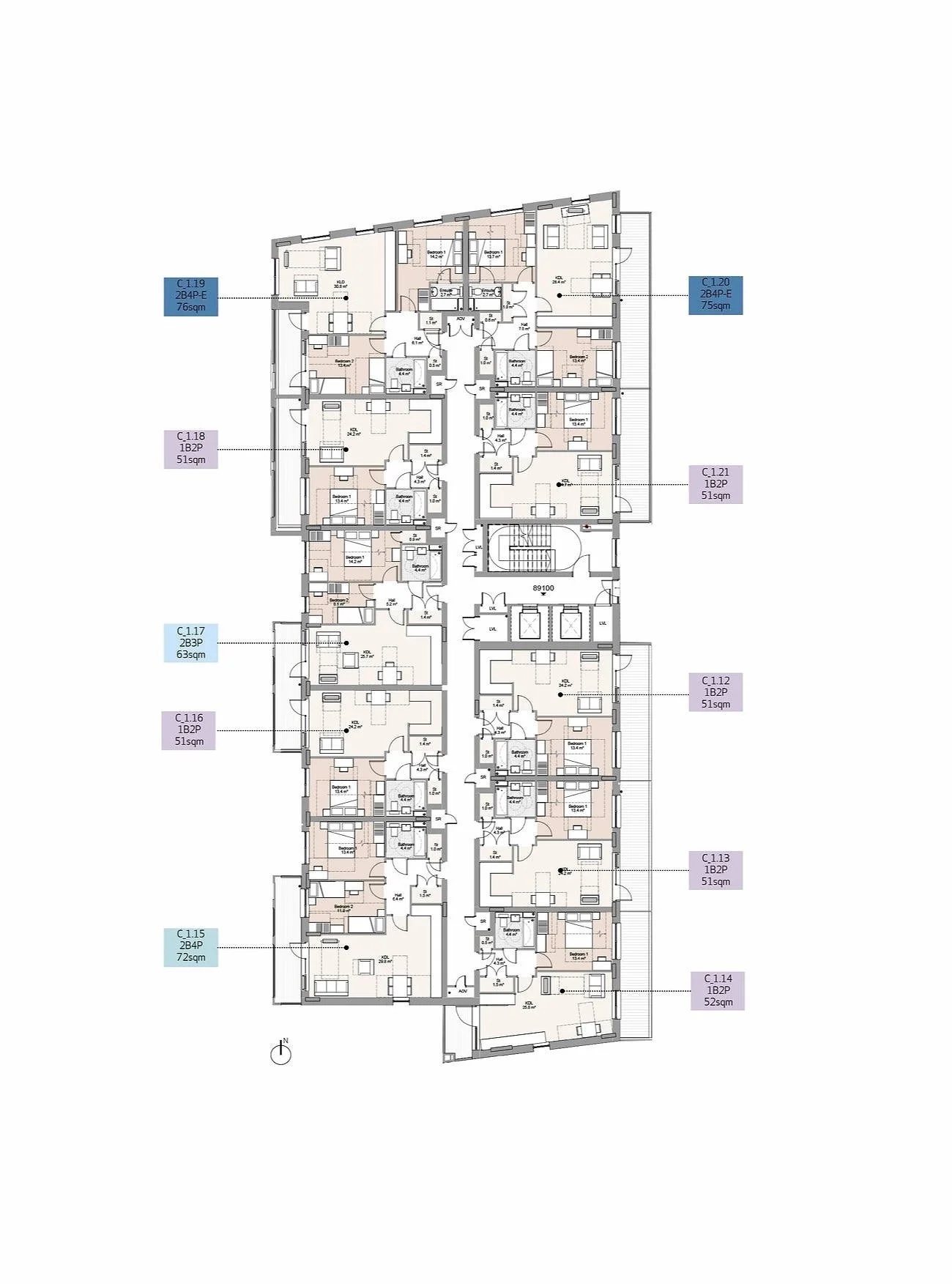
Building C - Typical upper floor layout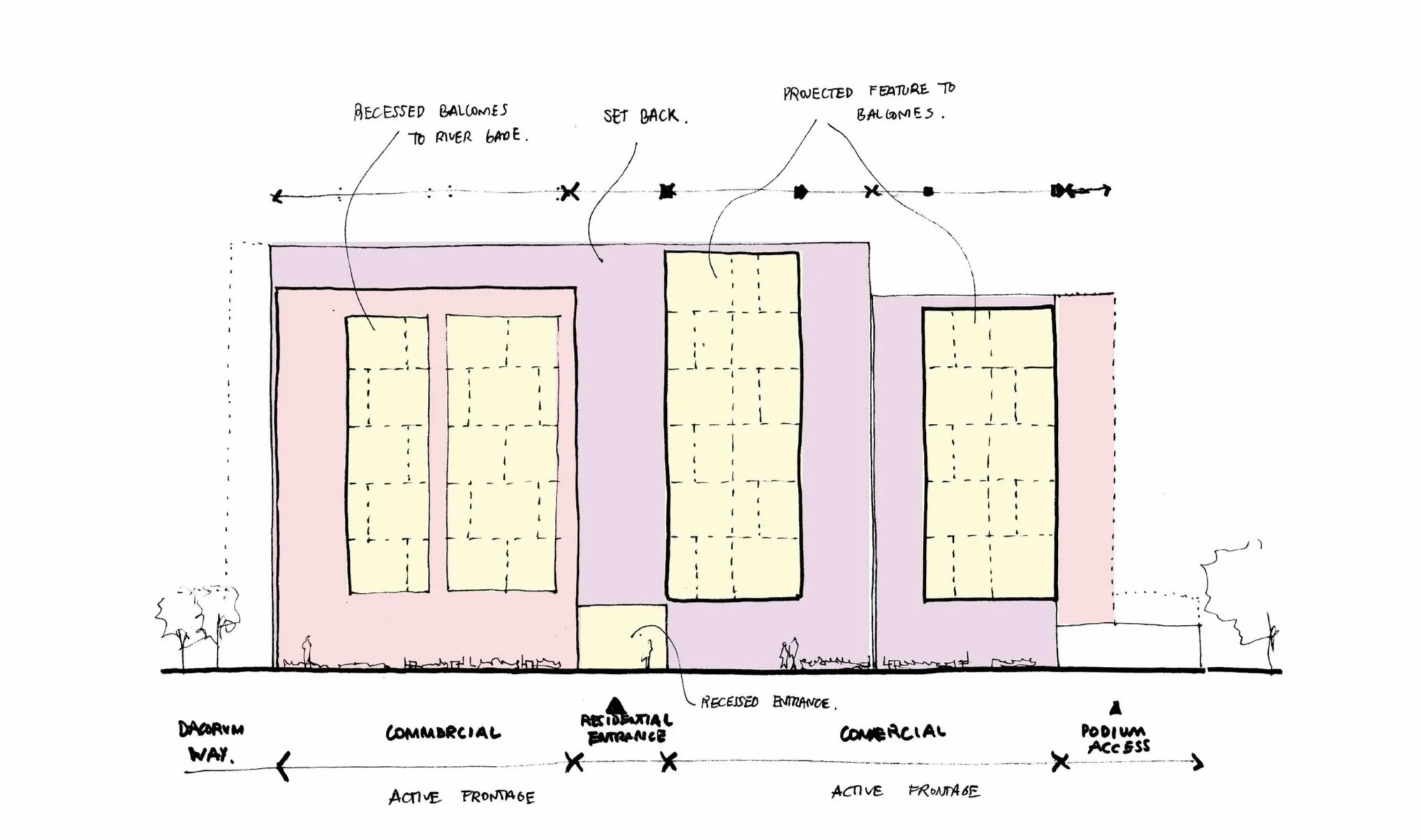
Building C - Materials palette and elevational composition


Above. podium courtyard
Lower ground floor layout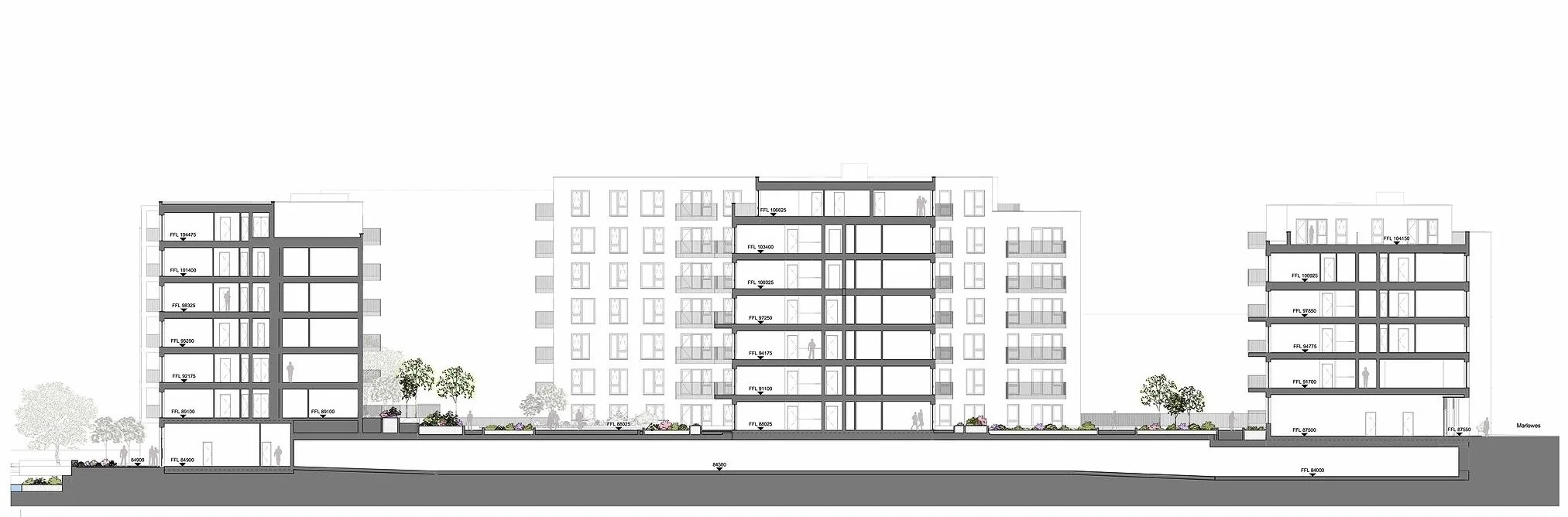
Long section - view north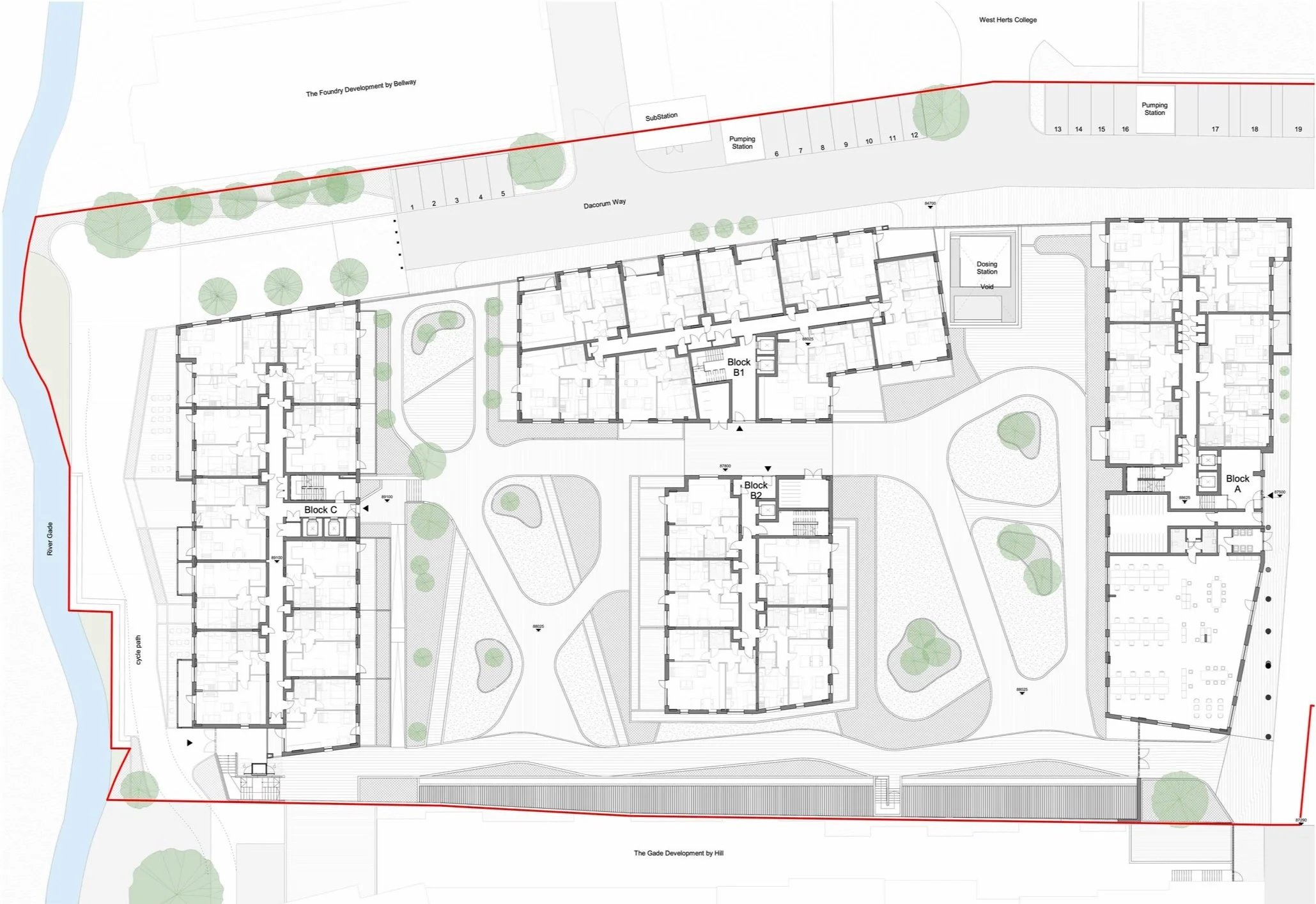
Upper ground floor layout (podium courtyard)Landscape Design
Riverside piazza featuring social, recreational, and commercial spill-out spaces will connect to the town centre via a shared cycle/pedestrian footpath. Planting will reinstate the river edge once the culvert has been removed. Gabion walls with integral seating and biodiverse vegetation will further enhance the ecological value.
The Podium Garden, inspired by the River Gade and Jellicoe Water Gardens, the podium gardens will offer a tranquil space with raised seating beds, informal play elements, and evergreen hedging for privacy.
Dacorum Way will be tree-lined streets, visible podium planting, and a focal-point Willow tree will integrate the urban and riverside landscapes.
Connections & Movement. Defined pathways, varied paving, and a pedestrian-prioritised riverside walkway will ensure smooth connectivity to adjacent developments, with inclusive access features like ramps and diverse seating options.
Planting Strategy. The planting design will structure spaces, enhance seasonal appeal, support biodiversity, and promote community gardening. Evergreen shrubs, flowering plants, and native species will enrich the landscape, while open lawns and feature trees create a vibrant, sustainable environment.
Above. view of route through from Marlowes to the River Gade

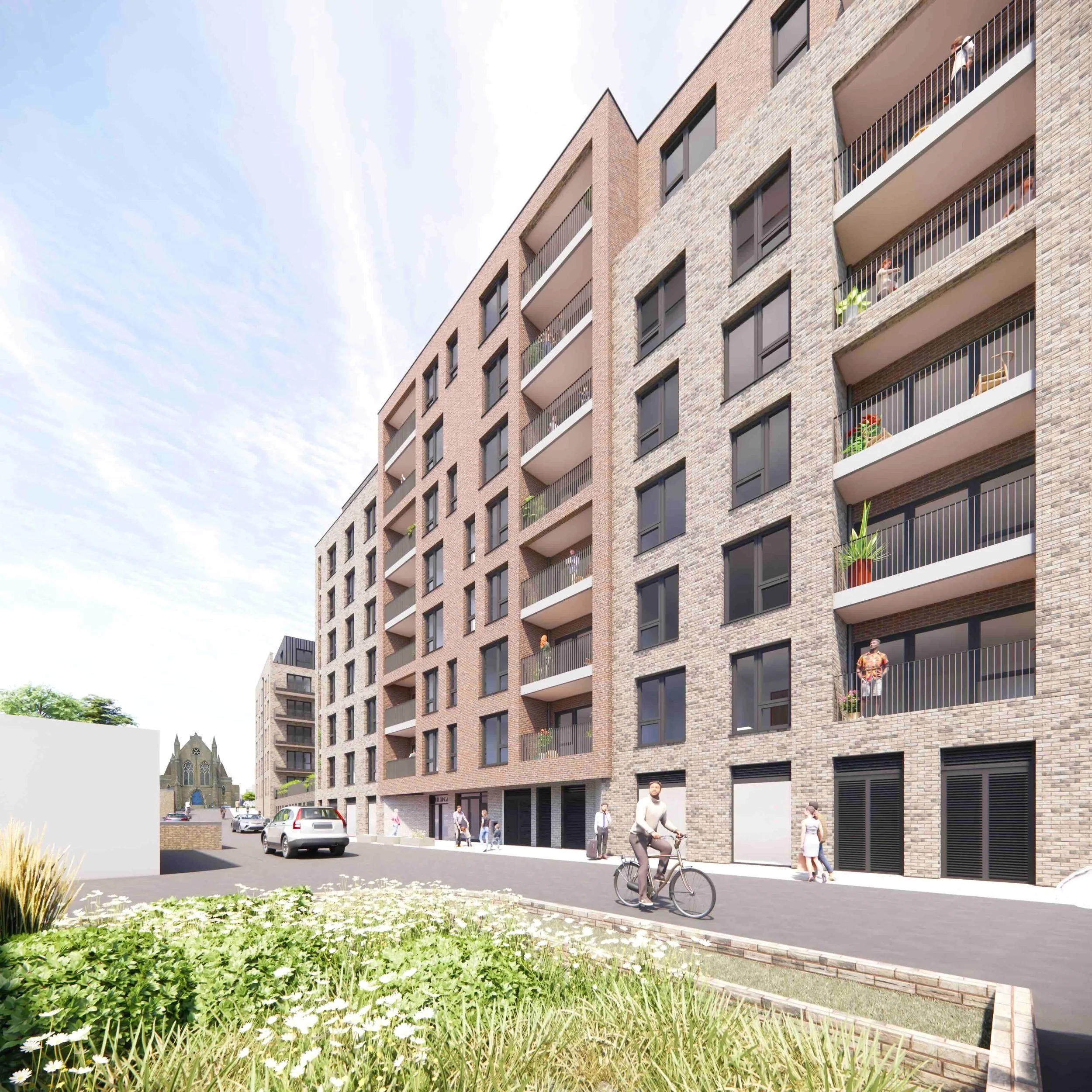

Top left and right. Dacorum Way - views west and east and Building B; Bottom left. View from the River Gade towards Carey Baptist Church and Building C in the fore ground; Bottom right. view north along the new cycle route and lower piazza and Building C.left to right. view north along Marlowe’s - former Civic Centre behind hoarding; view south towards the new Forum building; Dacorum Way - view west towards river Gade.left to right. view east along Dacorum Way towards Careys Baptist Church; View east from across the river Gade; view along south boundary with the river Gade.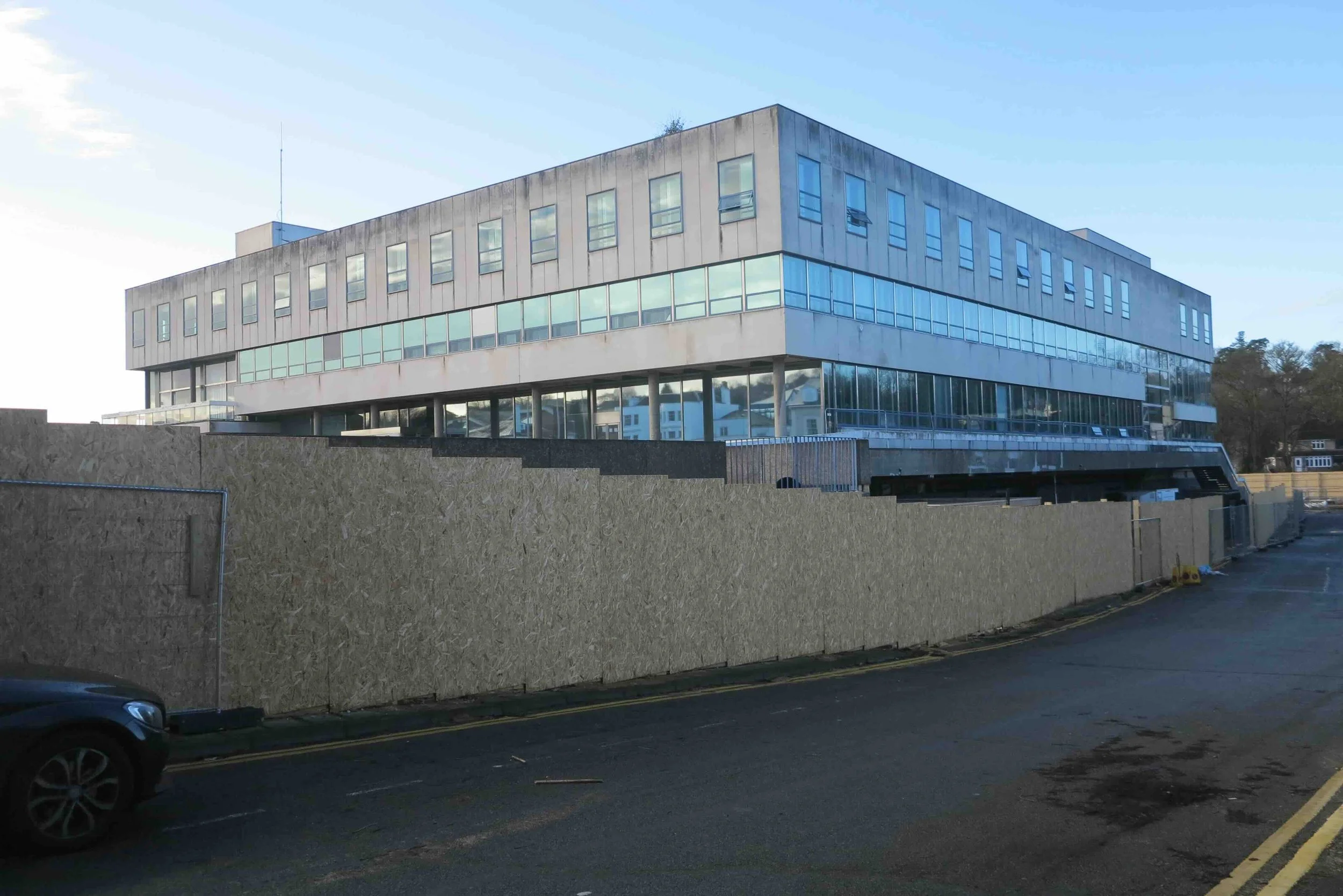


Description: 211 apartments for affordable, shared ownership and market sale; 3 retail or community spaces and lower ground floor car park.
Client: Dacorum Borough Council
Site: 0.95 Ha; Floor Area: 16,850 SqM
Status: Stage 3 Design - Planning
Planning: Smith Jenkins
Transport: Meyer Brown
Fire Eng.: FCS Live
Struct. Eng.: Calfordseaden
MEP Eng.: Calfordseaden
Ecologist: Ecology By Design
Landscape: The Environment Partnership
RT Team: Hidely Garcia, Jacqueline Lam, Guilia Simone, Rafaelle Trabace,