
Brynn Mill, Withiel, Cornwall.
Brynn Mill, an important historical building complex, has suffered from neglect over the years. Despite the dilapidation, the site holds immense potential for restoration. This proposal is for the restoration of the water mill, cottage, and outbuildings, as well as the construction of a new house to support the restoration efforts.

The water mill and cottage now stand in a state of disrepair. The slate roofs have collapsed, and the structures have been exposed to the elements. However, the restoration plan aims to bring these back based on the 1981 survey and architectural records.
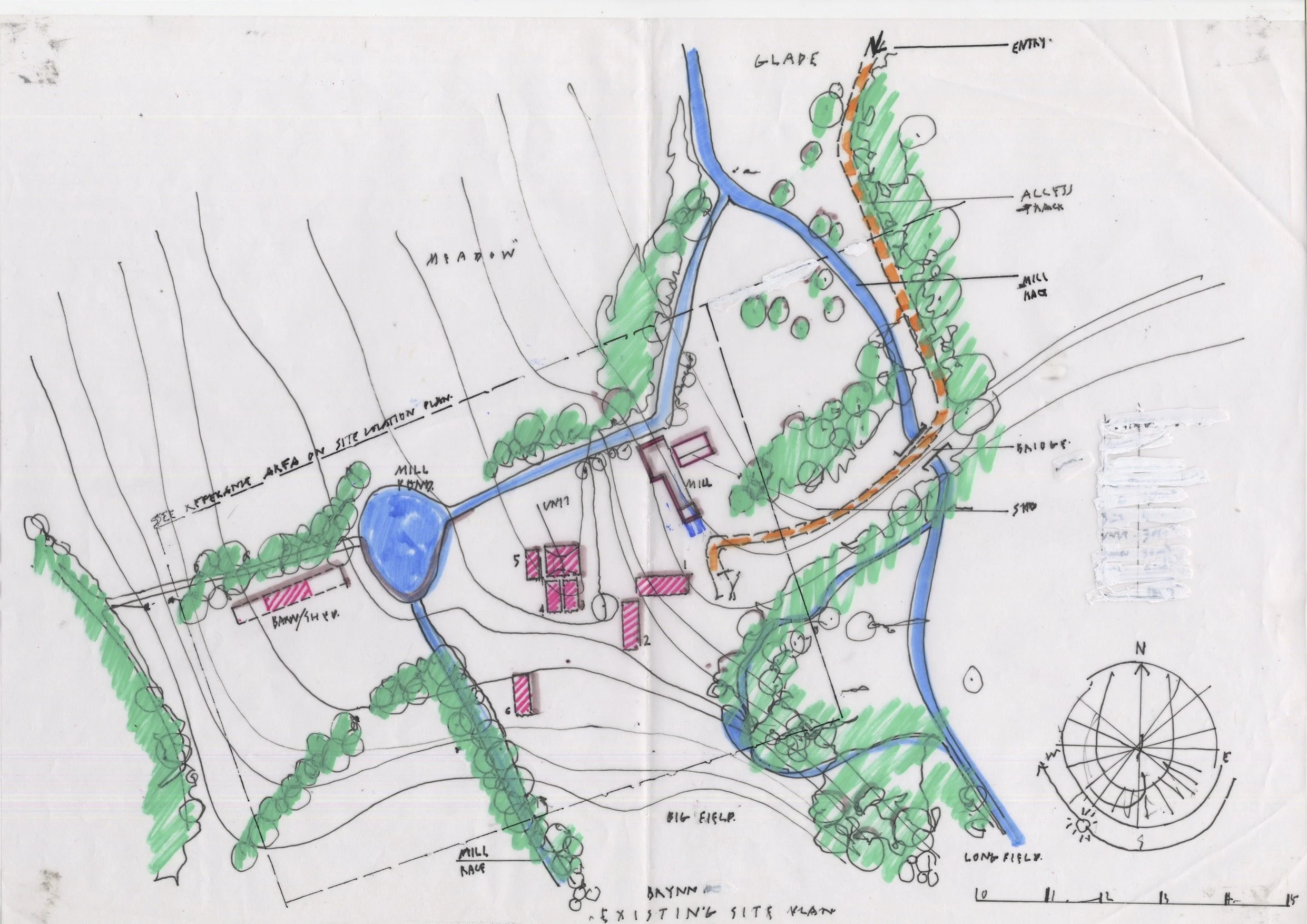
Vegetation and fallen trees will be cleared. The rubble stone walls will be stabilized, dried out, and surveyed. The stone walls will be rebuilt and repaired according to structural engineers' designs. The cob walls in the cottage will be repaired and reconstructed, and a new timber-framed roof with salvaged slates will complete the main structure. A new slate floor will be installed on the ground floor, and a timber floor on the first floor. Casement and sash windows, timber doors, slate sills, and stone steps will be added. The internal finish will be a lime render and wash, with timber stairs leading to the upper levels. The mill machinery will be salvaged and incorporated into the interior design. Lean-to corrugated sheds will be repaired or replaced, insulated with sheep’s wool, and lined with timber panelling. The leat, pond, and mill race will be renovated to restore the waterway. The granite stone and wheel pit will be cleaned, repaired, and repointed. The iron wheel will be salvaged and retained.
The outbuildings, including three stone barns (A, B, and C), lie to the east of the mill. They are in various states of collapse, but good records and photographs from 1988 exist to guide their restoration: Barn A: A course rubble stone
Barn A: A course rubble stone structure, originally 2.7m tall, now reduced to rubble. Barn B: A two-story rubble stone structure with an intact slate roof. Barn C: A stone structure cut into the slope, with an adjoining lean-to building.
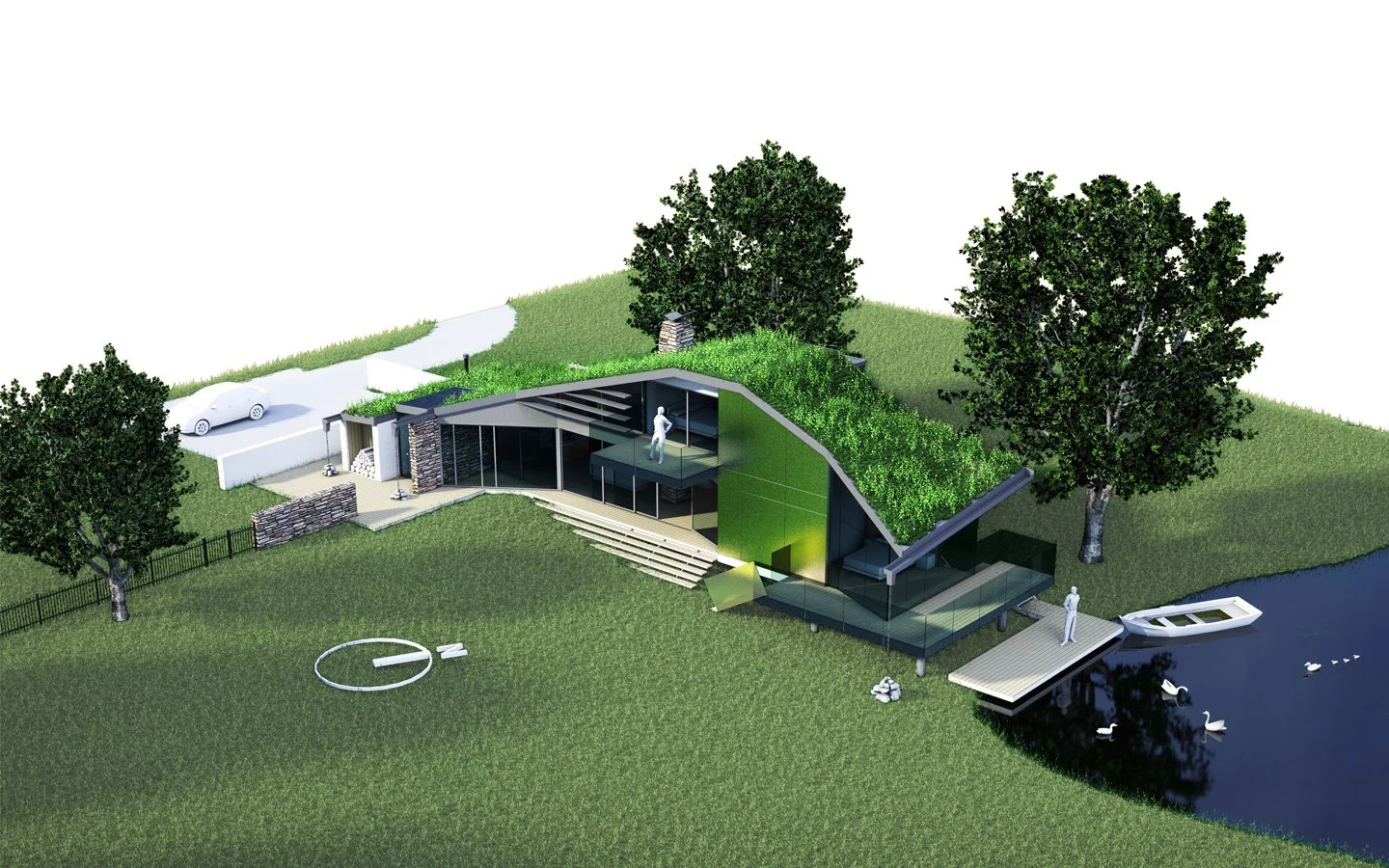
A new pavilion-style house is proposed to replace a dilapidated timber barn, situated 50m west of the mill. This modern intervention will support the restoration of the mill complex and provide necessary funding. The house will be aligned with the main axis of the reinstated waterway, maintaining harmony with the mill's geometry. It will be set at a sensitive distance from the restored mill. The house will feature a planted roof, granite and glass walls, and will be elevated on stilts. It will blend into the landscape, reflecting surrounding trees and allowing for natural light. A sequence of growing terraces and a footpath will link the new house with the mill, creating a seamless integration of old and new.
The mill and its surrounding outbuildings represent a 200-year evolution of architecture and functionality. The new house is seen as a continuation of this evolution, respecting the historical context while introducing modern amenities. Restoration of the leat, pond, and mill race is crucial for reviving the water mill. Vegetation will be cleared, banks recut, and clay puddling used to ensure water retention. Restoration efforts will include measures to protect and rehousing local wildlife, including installing bat boxes as recommended by the Bat Conservation Trust. The restored mill will serve as a working, sustainable environment, integrating Kate’s equestrian business and Ant’s workshop.
Brynn Mill is poised for a revival. Hedgerows are being restored, fields uncovered, and woodlands managed. With English Heritage and Cornwall Council consent, the restoration of the mill buildings can proceed, funded partly by the construction of the new house. The mill will be open to the public on certain days each year, offering a glimpse into its history and restoration process. Local schools will be invited to use the mill and its surroundings as an educational resource.
Brynn Mill is not just a restoration project but a journey into the past and a step towards a sustainable future. The proposed restoration and development will ensure that Brynn Mill remains a vibrant part of the landscape, blending history with modern needs. The mill’s revival will provide a living classroom for future generations, ensuring that its magical quality is preserved and appreciated.
‘Because places mould us as much as we mould them, understanding a place and its impact helps us understand our lives and the world around us.’

Description: Modern detached house with the restoration of the mill house, outbuildings and water system
Site: 10.5Ha
GIFA: 300SM (3230SF)
Value: £600,000
Status: Stage 3 - Planning: Granted
Client: Private
Team: Peter Phillipps
