
Paul Webley Wing, School of Oriental and African Studies, Russell Square, London
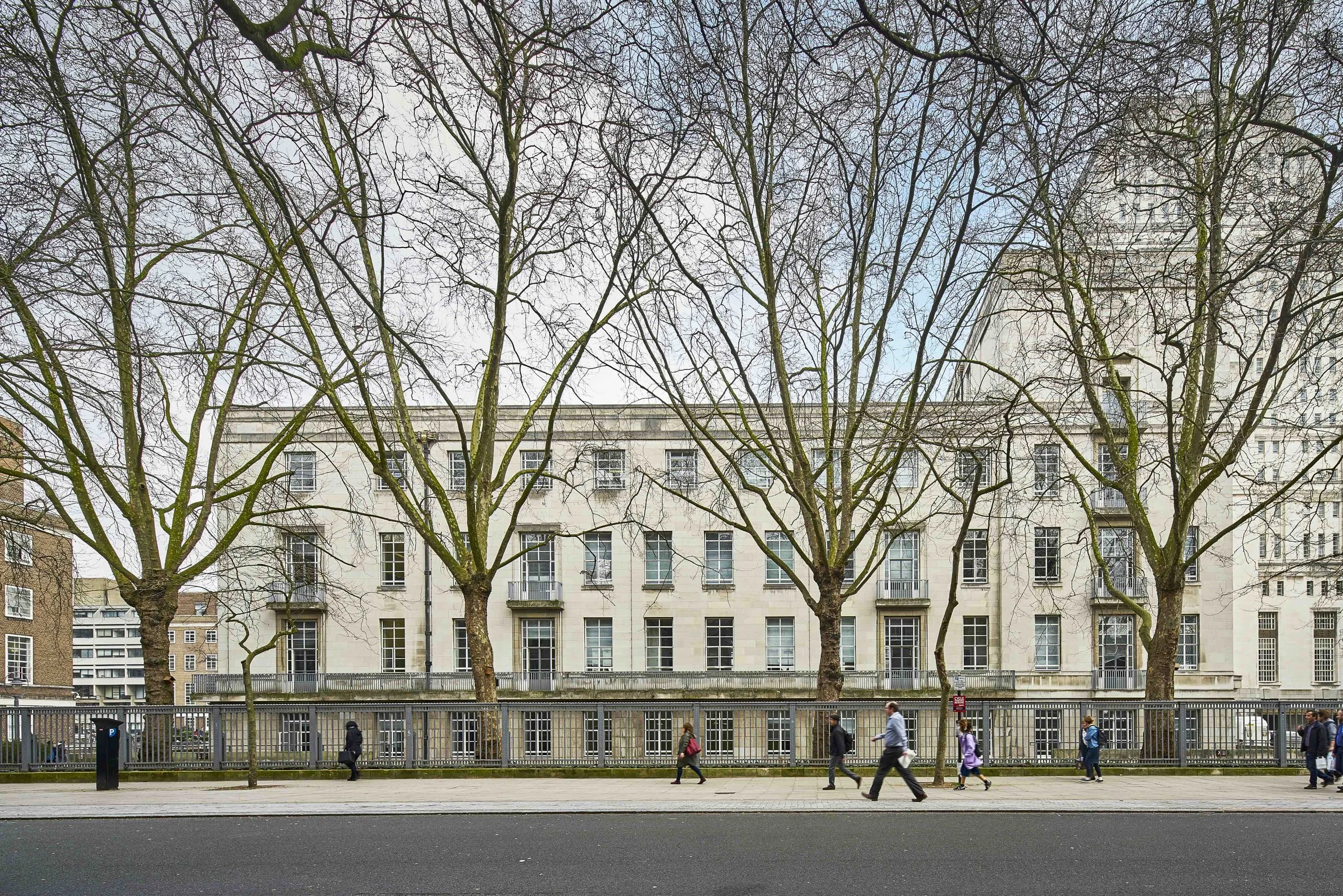
The Paul Webley Wing at SOAS, a collaboration between Mace and Rock Townsend, involves the refurbishment and extension of Charles Holden’s Grade II* listed Senate House North Block. The project consolidates SOAS buildings into a single campus in Bloomsbury, provides a new student and academic hub to reflect the culture of the SOAS community and enhances school’s identity and dynamics for students and staff.
Sectional study through courtyardThe proposal for the refurbishment of Senate House North Block involves several design elements. The design involves several design elements and includes a variety of subtle and bold elements that complement, reinstate, and articulate Holden’s original design.
The refurbishment includes an accessible entrance from Torrington Place, leading to a restored Cloister aligned with Holden’s original design. Original features like travertine walls, a panelled ceiling, and stone flooring are revealed, while the courtyard is transformed into a light-filled learning space under a glazed roof. The ground floor's level is raised for improved accessibility, and an updated, energy-efficient heating system is installed. Key improvements include a new lift core, a replacement stair on Malet Street, modern services, upgraded WCs, a catering facility, fire lobbies, and fire curtains for enhanced safety.
Location planLower ground floor layoutGround floor layoutTypical upper floor layout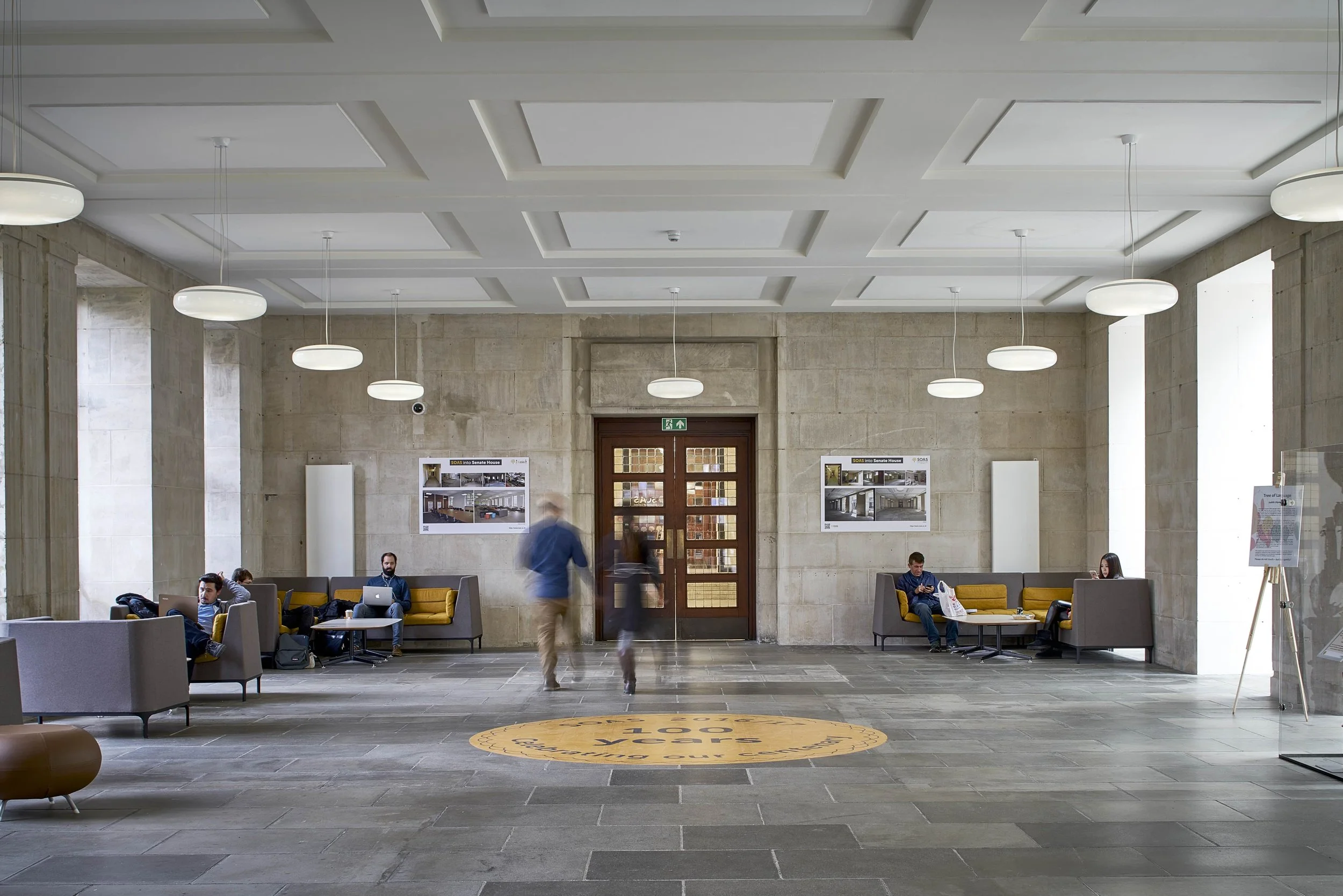
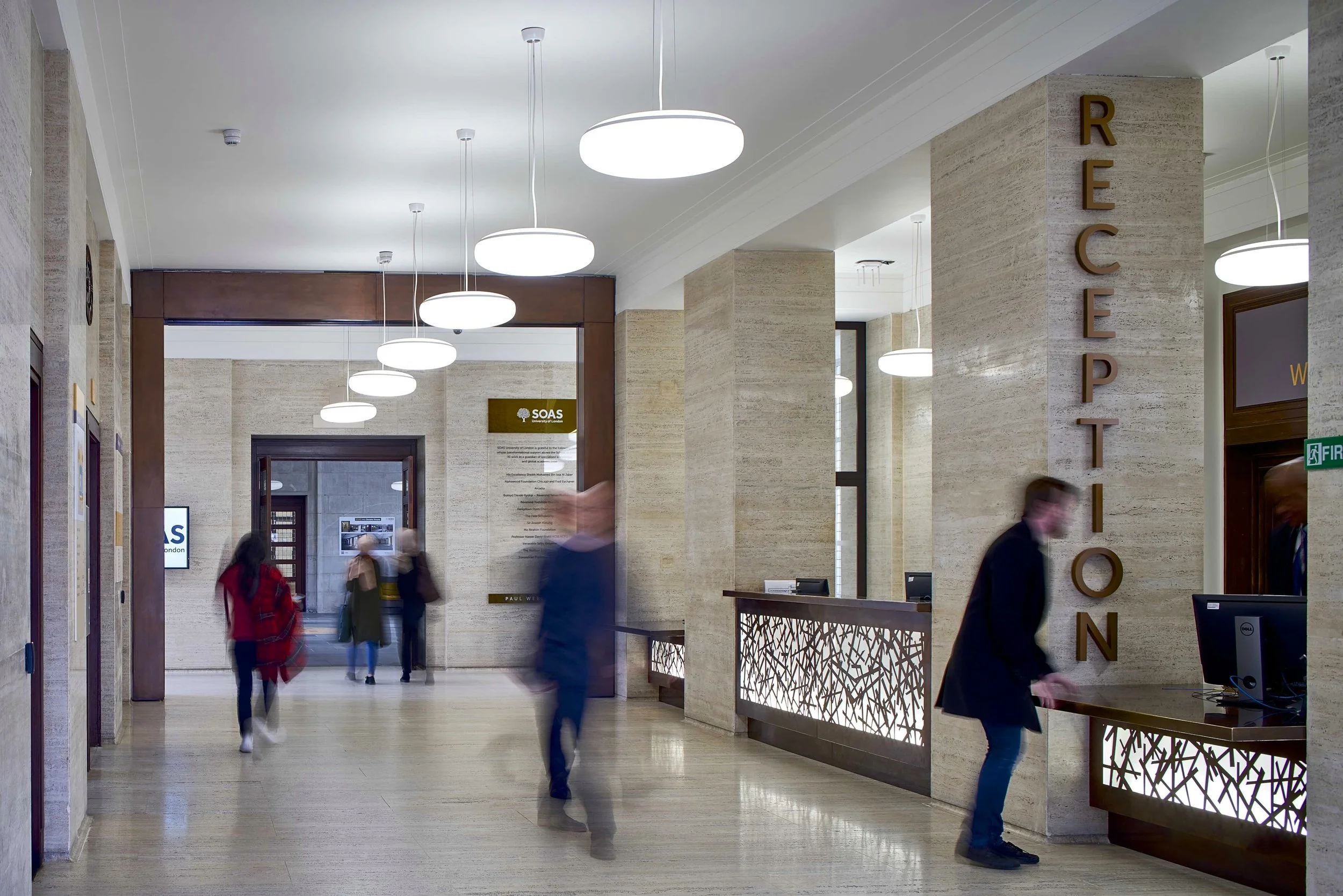
The transformation of the entrance and cloisters creates an accessible and welcoming learning space while preserving historic features. Symmetrical York stone ramps replace steps for disabled access, with bronze balustrades complementing the original materials. Inside, restored travertine flooring, timber doors, and refurbished finishes enhance the lobby’s elegance, while modern additions like lighting and signage blend with the historic character.
The fully restored cloister, with stone walls, flooring, and a coffered plaster ceiling, connects visually to the modern courtyard. New metal windows maintain continuity, while furniture, lighting, and a bronze coffee bar create a versatile, exhibition-friendly space. This restoration merges history with modern functionality, promoting inclusivity.


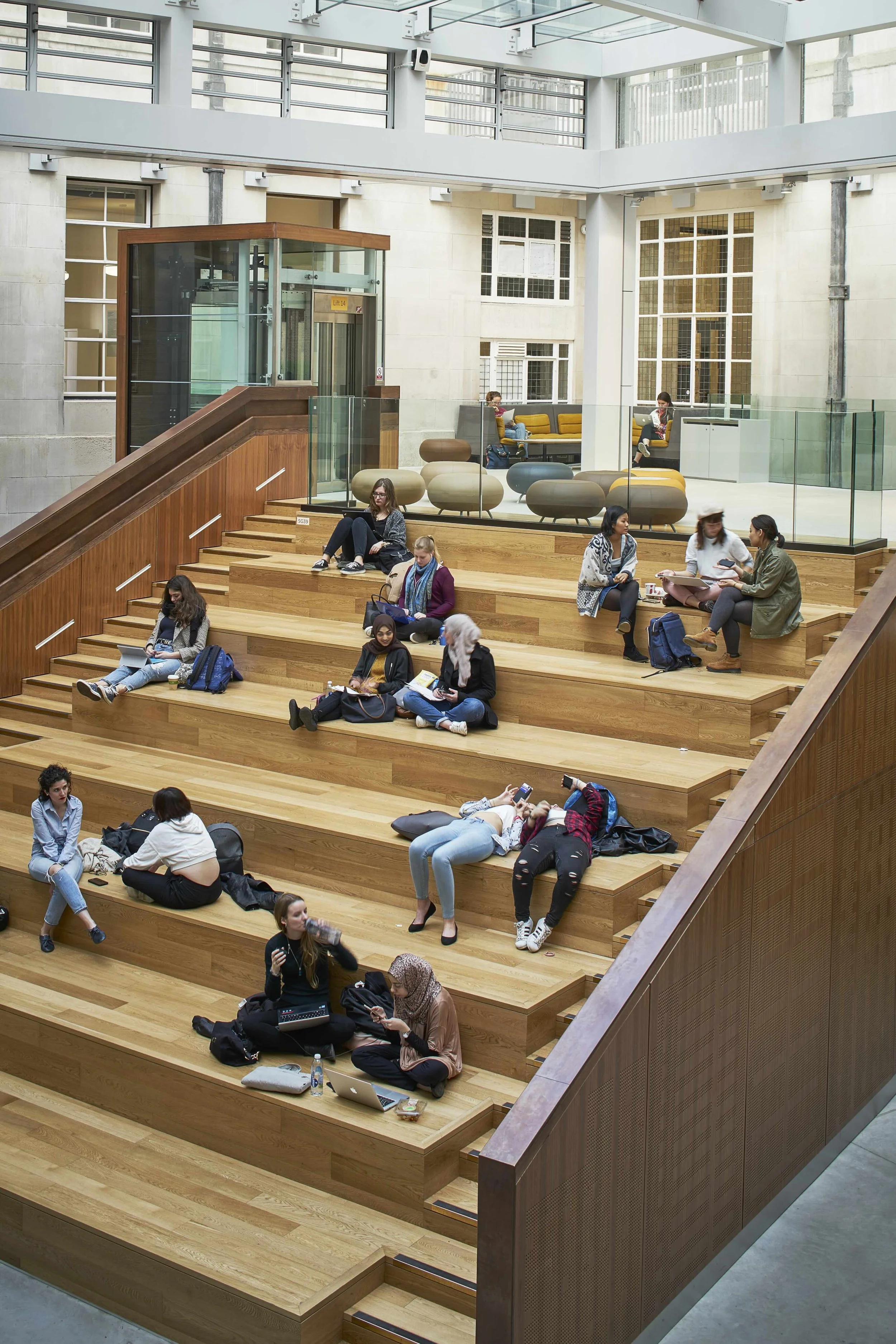
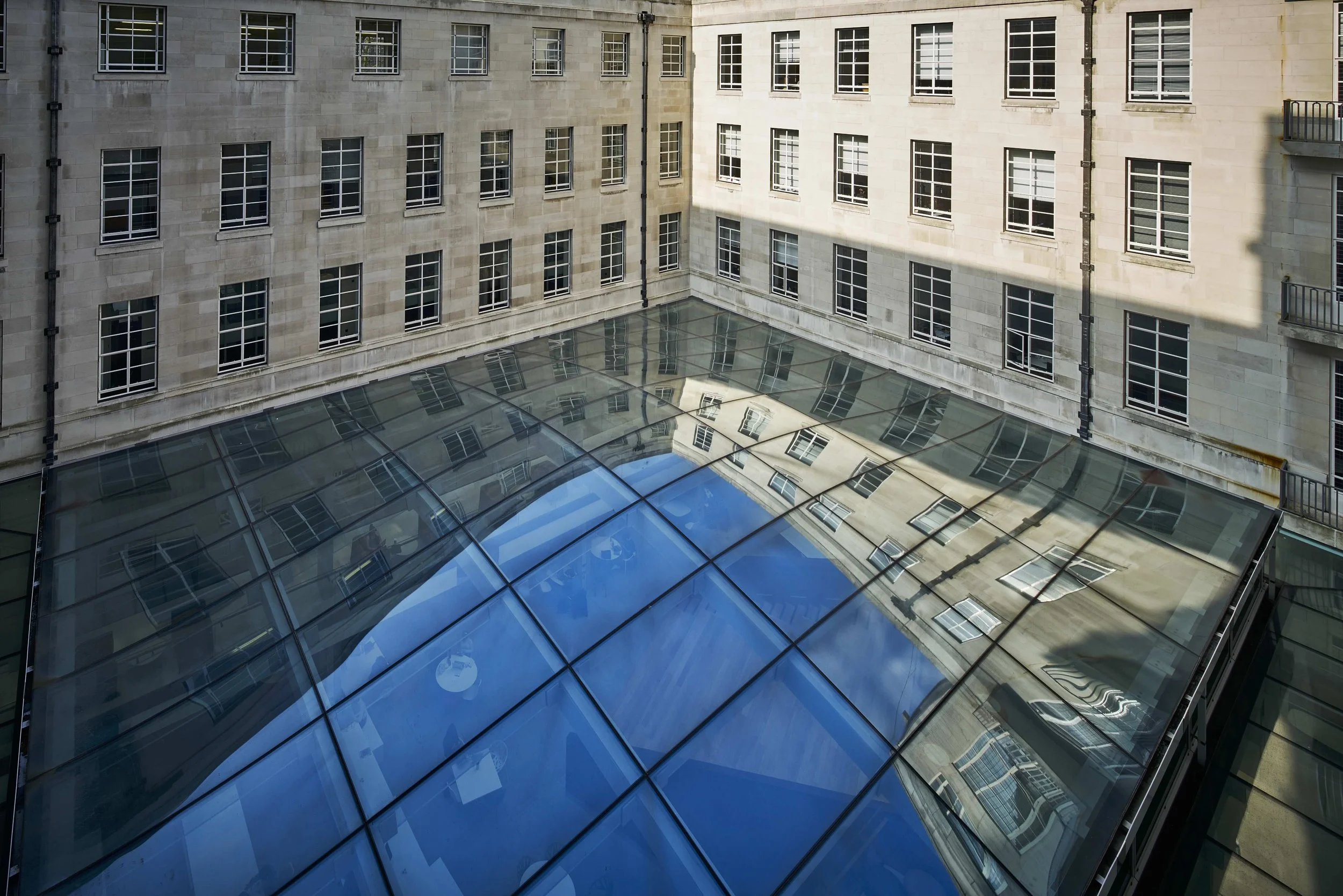
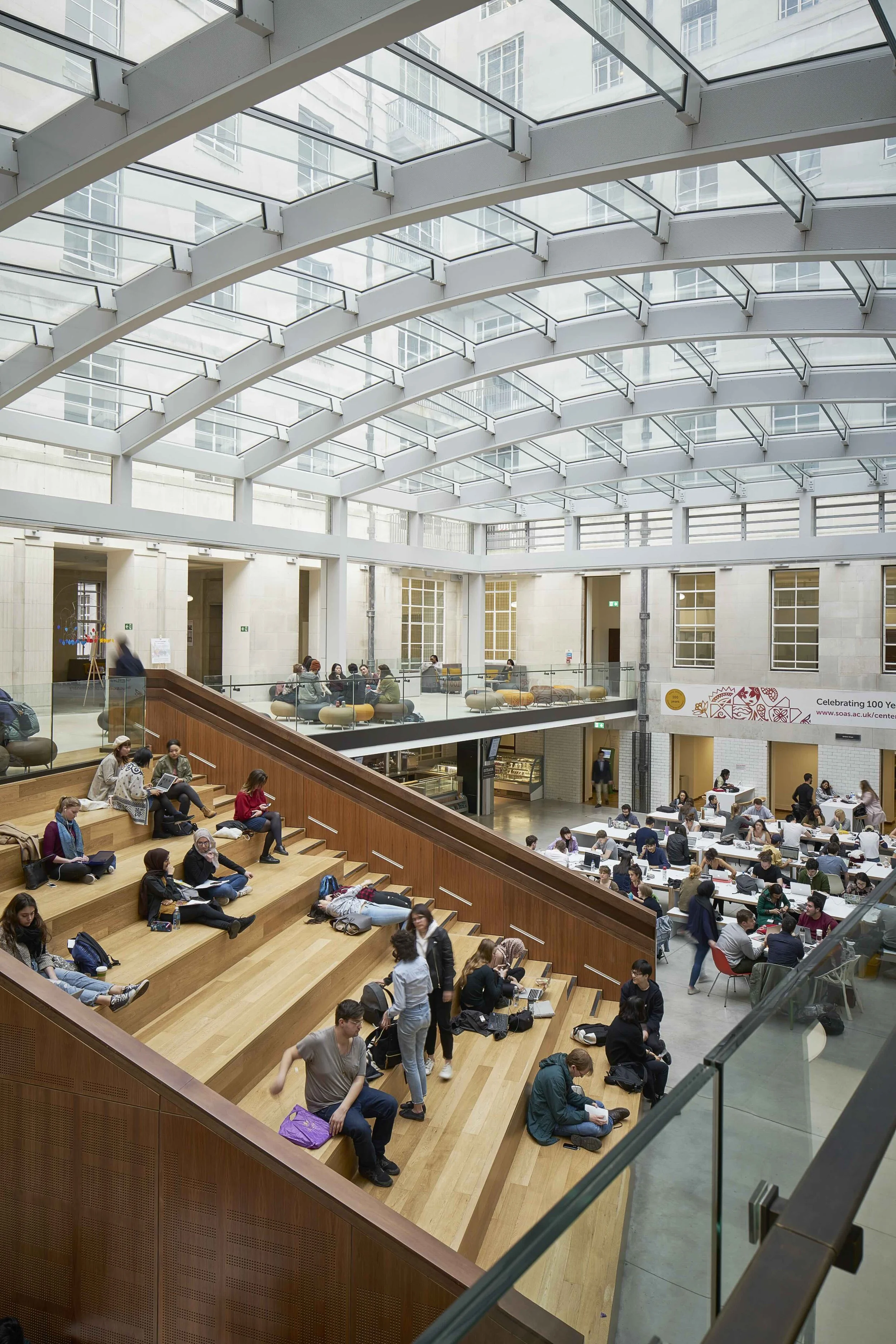
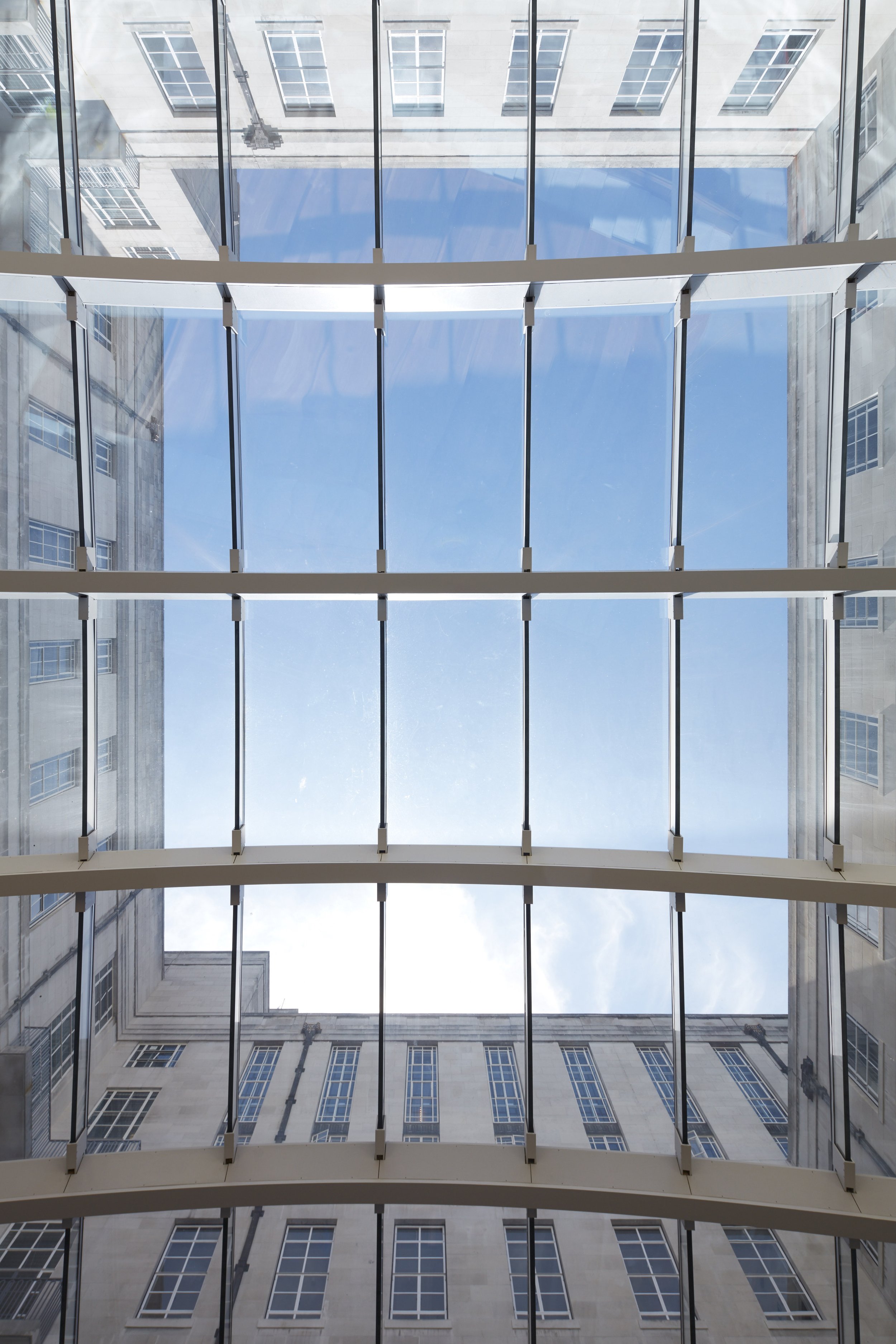
The Courtyard serves as a new student hub, offering a flexible space for studying, socializing, and relaxing. Designed to meet the needs of a modern university experience, it addresses the demand for adaptable areas that accommodate evolving technology, teaching methods, and student demographics. Spanning the lower ground and ground floors beneath a new glazed roof, the double-height space supports informal gatherings, lectures, and performances visible from multiple levels.
Eight polished concrete columns support cantilevered galleries and the curved glazed roof, creating a seamless connection between old and new elements. Tapered beams and clerestory windows enhance ventilation and views of Senate House, balancing sustainability with structural elegance.
The lower ground floor, central to the design, features the main student hub with flexible spaces for studying, meeting, and eating, complemented by a kitchen and servery. The glazed roof offers extensive views of the original facades, while raised slab levels on the ground floor improve accessibility and headroom. Historic features like the assembly hall’s coffered ceiling are preserved.



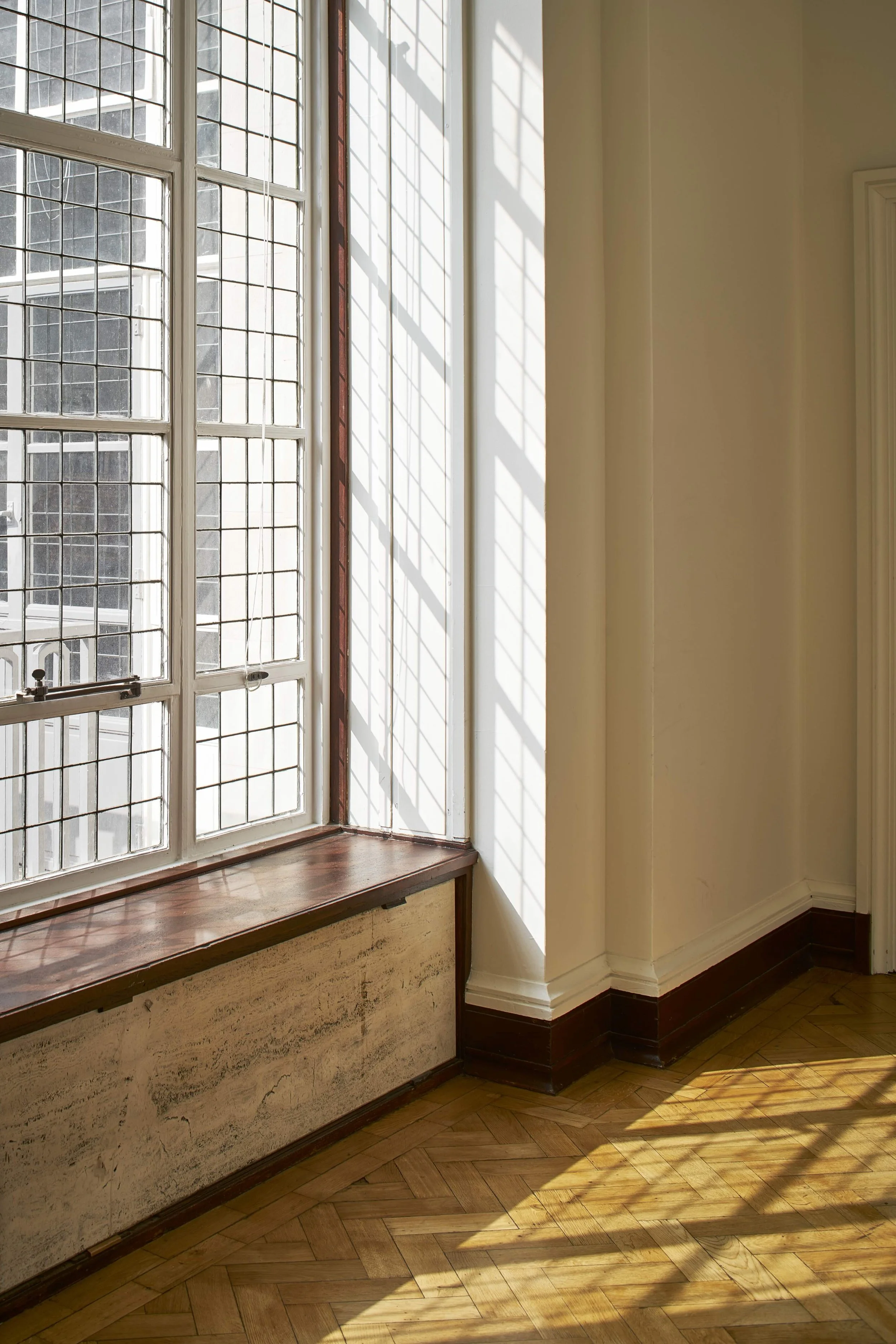
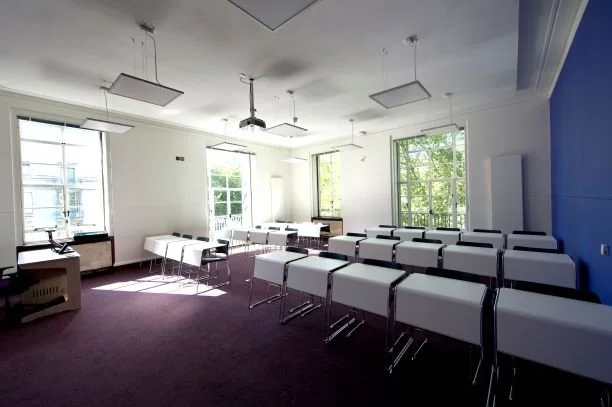
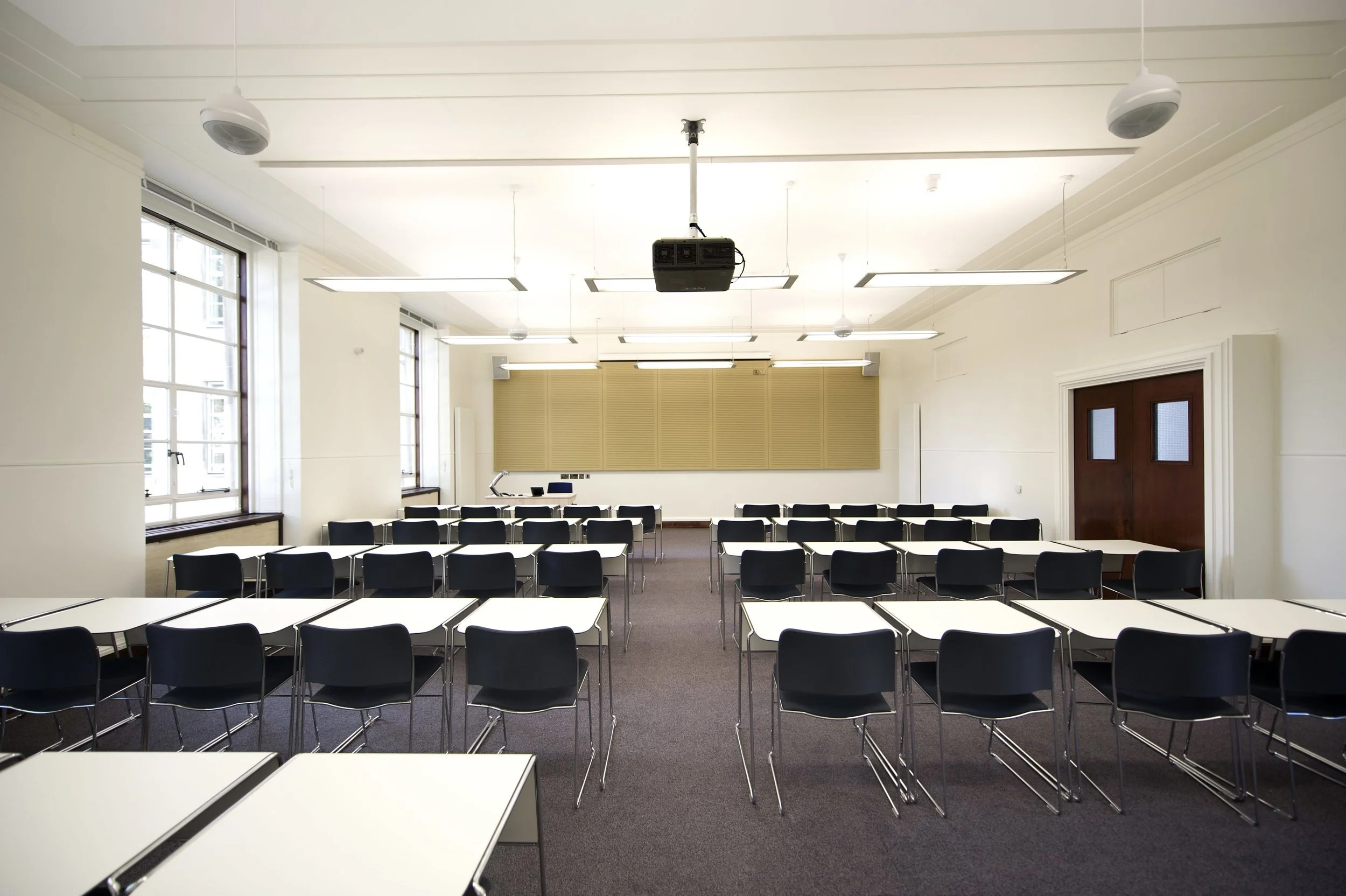
On the first to third floors, original layouts are largely retained, with new lecture spaces, including a Harvard-style room, created by removing non-original partitions. Original architectural details are conserved and reused.
The circulation plan includes a new glazed lift and upgraded stair cores, enhancing accessibility and functionality throughout the building.
Existing toilets on the lower ground, first, and third floors near Stair 10 are upgraded with new terrazzo flooring, ceramic wall tiles, cubicle partitions, and sanitary ware, maintaining the original aesthetic. Refurbished white marble radiator panels and additional column radiators improve heating. New toilets are added on the second floor, matching those on the first and third floors, with a new door providing access to the male toilet from the lift lobby. Accessible unisex WCs and showers are added on the lower ground floor.
The building has four escape stairs (7, 8, 9, and 10). Stair 9, designated for SOAS, now includes a direct external exit. A ground floor window is converted into an escape door, and a metal escape stair is relocated. Stair 10's exit is discreetly added, minimizing visual impact on the building. Fire curtains are added to the main and secondary lobbies to protect escape routes, discreetly housed in bronze fixtures. Disabled refuges are established near Stair 9 with glazed fire-rated partitions, and timber doors are upgraded to 30-minute fire doors. A dry riser is installed at Stair 9 for firefighting support.
Acoustic plaster is applied to ceilings for better sound quality, particularly near Malet Street. New partitions divide spaces while preserving original cornicing. Windows are refurbished for natural ventilation, and mixed-mode systems are added in lecture rooms.
The building transitions to district heating, with adaptations to travertine panels and added trench heaters. Light fittings are refurbished or replaced with care to maintain the historic interiors. External lighting is restored to original positions.
Terrazzo floors and skirtings are restored, and new signage mimics original bronze designs. The external façade is refurbished with discreet updates for ventilation. The glass roof over the courtyard measures 21 by 28 meters and 10 meters high, blending modern and traditional materials throughout.





Description: excavation and new-build courtyard extension and wider refurbishment of North Block
Client: University of London & MACE
Location: Senate House, Russell Square Campus
Area: Demolition: 311 SqM (GIA); Proposed courtyard: 911 SqM (GIA) 600 SqM (NIA); Total: 7,110 SqM
Architects: Rock Townsend & Mace
Heritage Architects: Donald Insall
Contractor: Graham
Civil Eng./Structural/MEP Eng.: Mace
Planning Consultant: DP9
Acoustic Eng.: WSP
Status: completed 2015
Photography: Matt Clayton and Timothy Soar
RT Team: Mark Gabbey, Alistair Hay,
