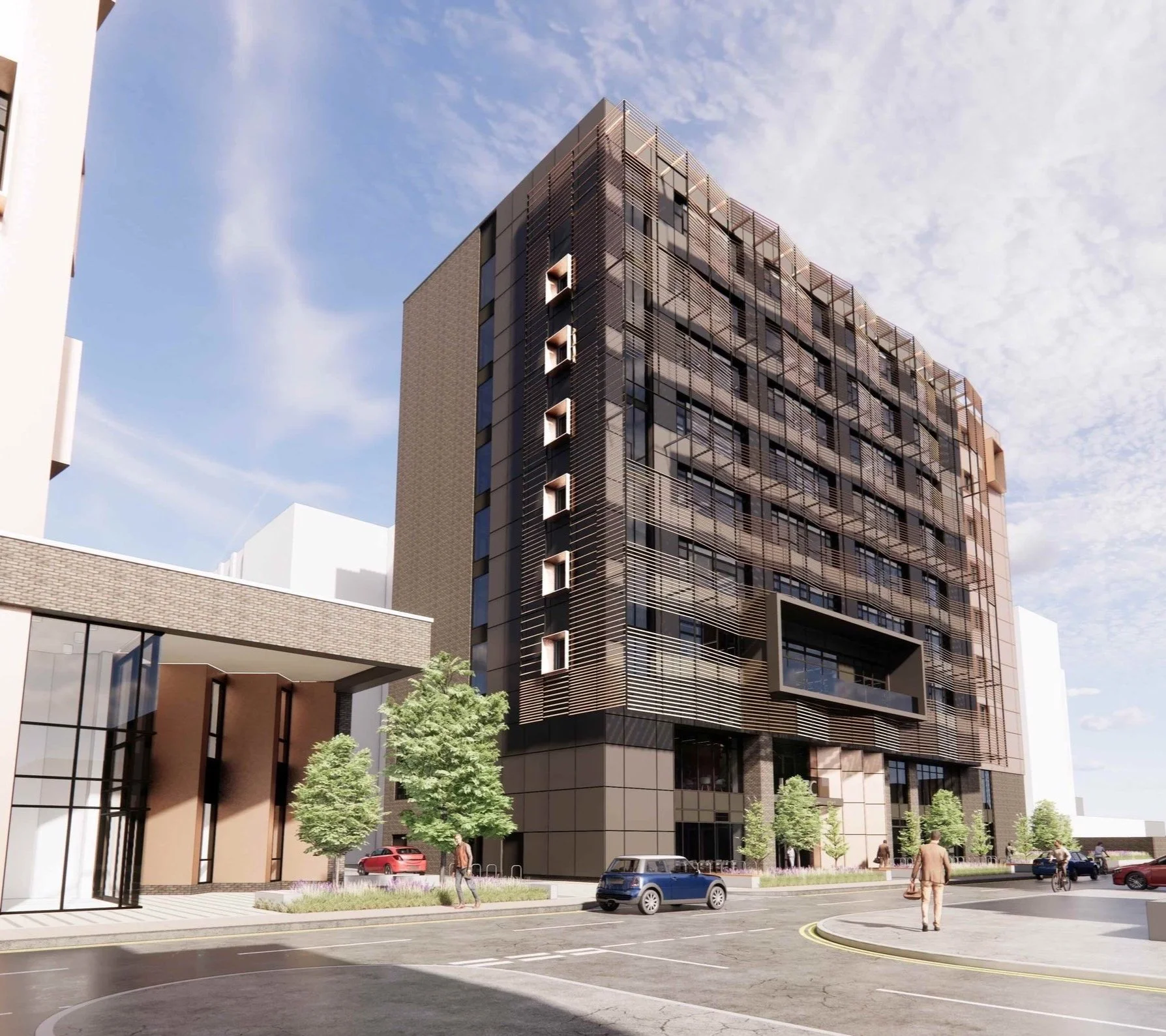
LSBU & South Bank Colleges, Blocks D, Nine Elms, Vauxhall, London
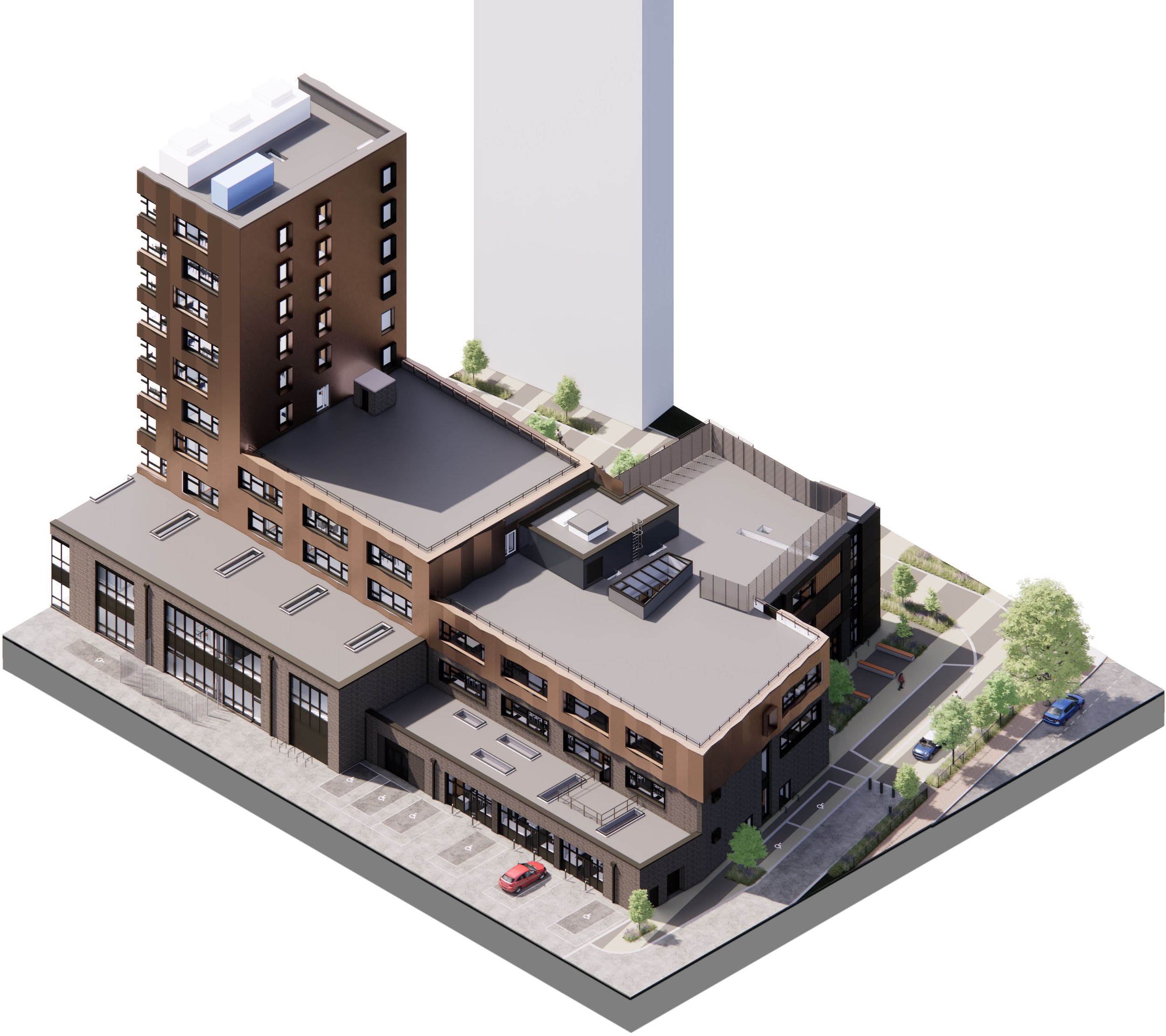
The proposal for Block D, the third of three buildings on the campus, has been carefully developed in line with the consented outline masterplan, design code, and the client’s updated brief.
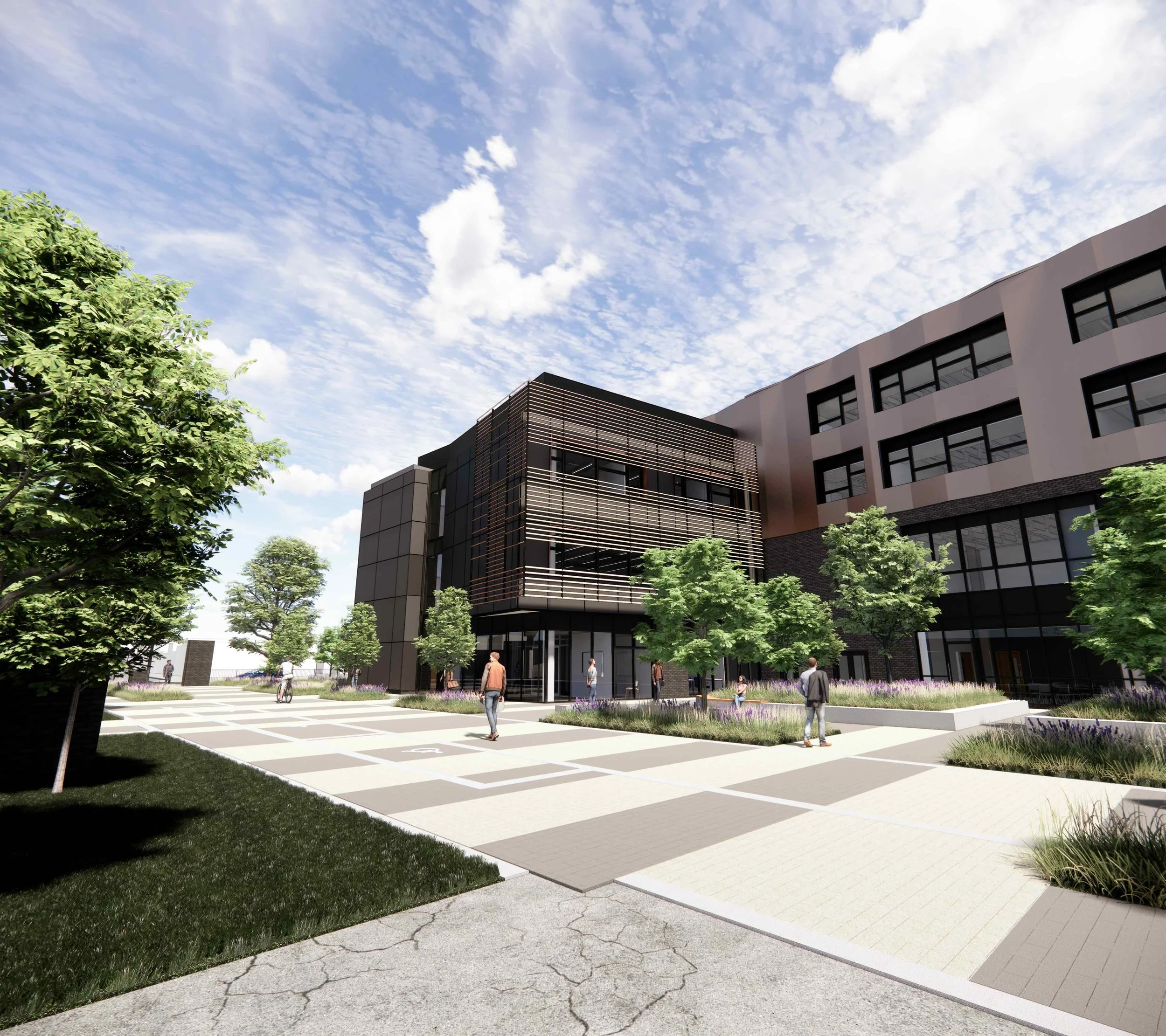
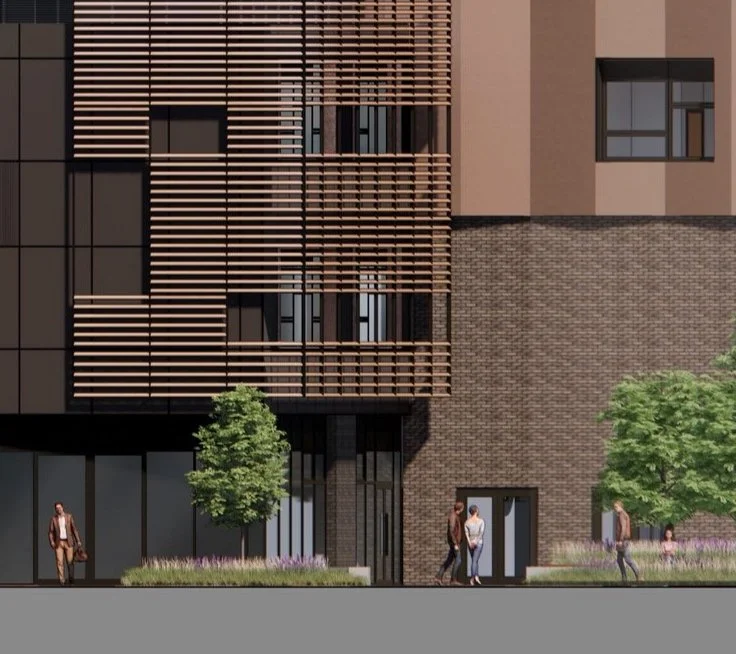
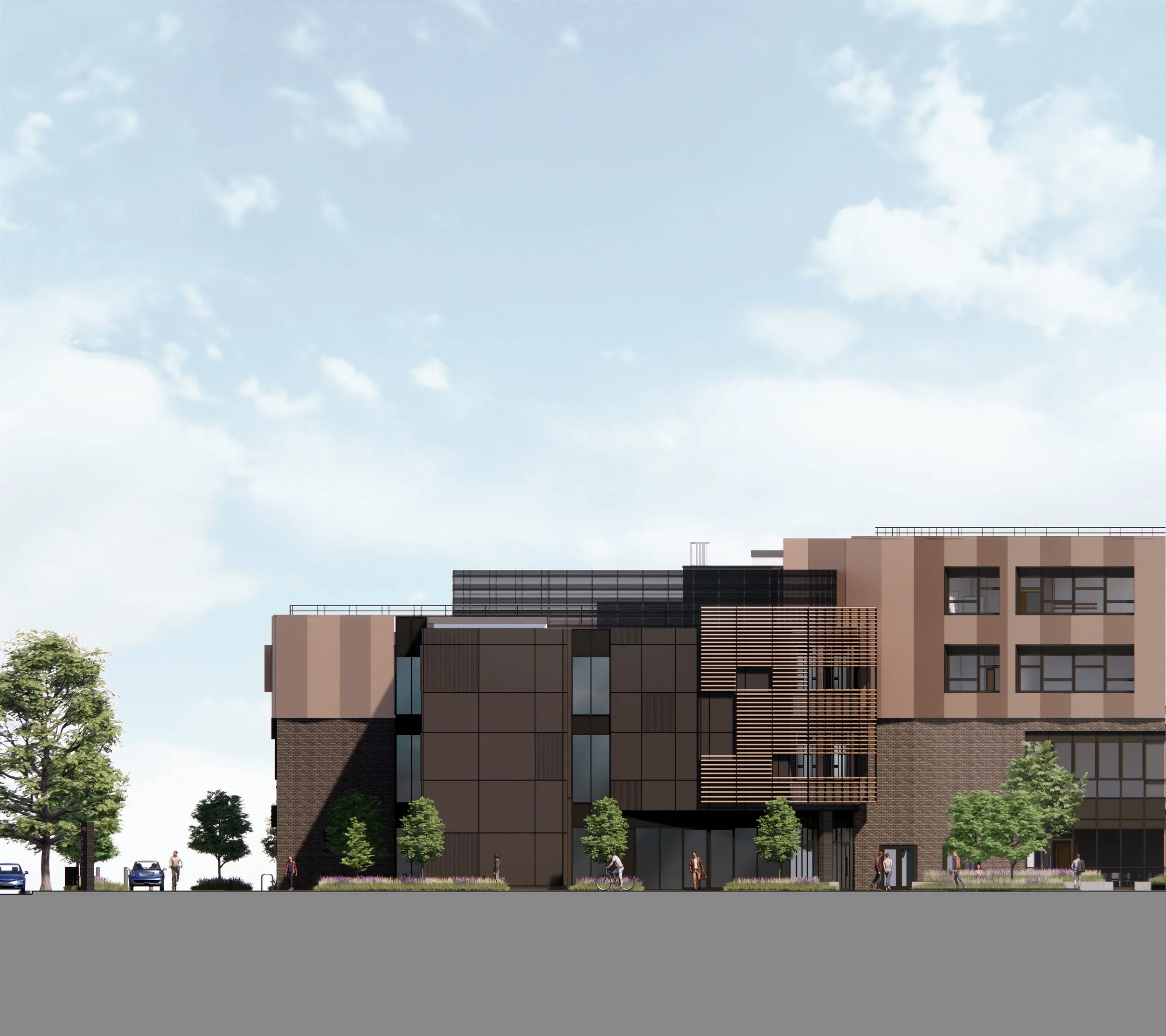
Staying within the height, mass, form, and area parameters, the design has evolved with adjustments to plan and elevation to better suit the revised curriculum. The proposed design is a reduction in area and height with the gross internal area has been reduced from 4,570 SqM to 2,618 SqM.
Block D houses a wide range of general teaching space and curriculum activities including the Visual Arts, Technology, Business and Computing together with an Employer Innovation Hub . A central lightwell and glazed rooflight allows a deep plan arrangement to work by introducing natural daylight and the potential for stack ventilation centrally into the heart of the plan. Break out, informal learning spaces and circulation are arranged around this central zone in order to create a lively vibrant heart space to encourage a sense of community and wellbeing.
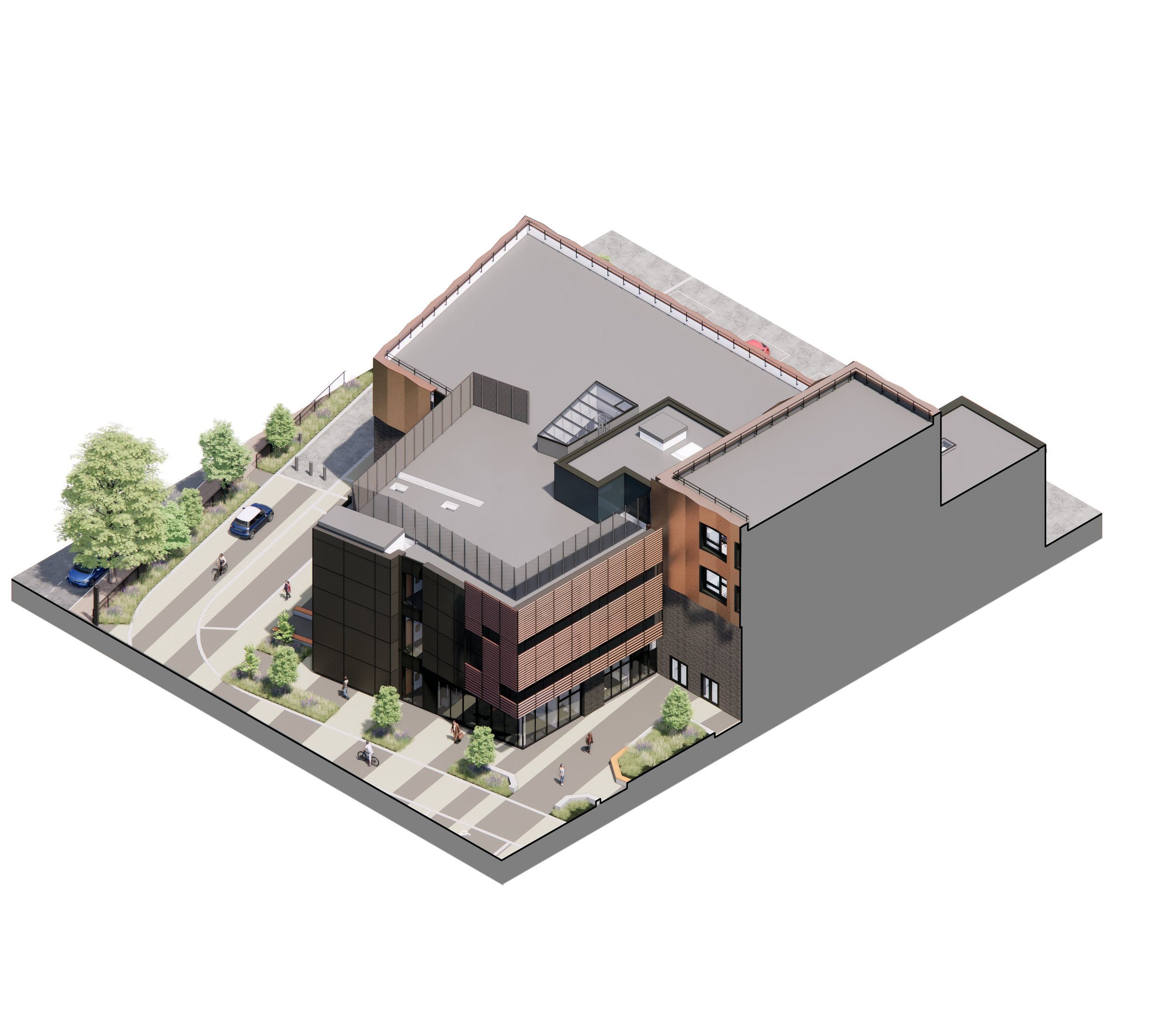
The façade design continues the architectural language established by Blocks A and B. While the proposed material palette aligns with Block A, subtle variations in brick color and cladding differentiate the new structure. Glazed elements enhance the entrance and ground floor, while a faceted façade with crisp-edged punched windows adds a dynamic, extruded form. This approach maintains visual coherence with Block A while giving Block B its own distinct identity within the campus.
The south-facing screen of Block D is flat, unlike the faceted design of Block B, though it utilizes the same material palette. This distinction creates a clear visual identity across Blocks A, B, and D, while also establishing individuality for each block within the Nine Elms campus.
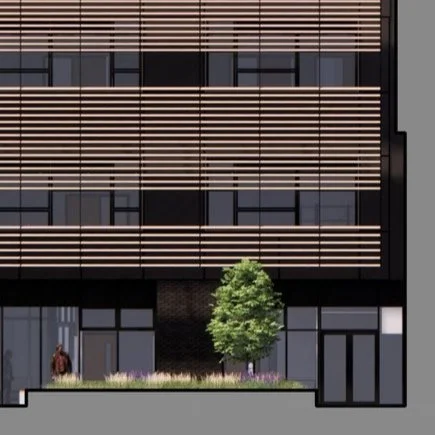
The same strategy as Block B to minimize solar gain in teaching spaces has been incorporated. Lower-density louvres is strategically positioned to align with the angle of the morning sun, reducing heat transfer and passively cooling them during college hours.

Early iterations of the evolving design were presented to the Council and their team as part of the Pre-Application process. This early collaboration and feedback enabled the design team to implement several adjustments, early on:
Modifications to the boundary relationships of the lower floors.
An enhanced entrance design featuring double and triple-height spaces that improve natural daylight and intuitive way-finding, complemented by a prominent staircase connecting the 1st and 2nd-floor social learning and café areas.
Technical enhancements for solar shading, including the addition of horizontal louvres.
Further design references to Block A’s chamfered chevron form to aid intuitive wayfinding and establish visual links between the buildings.
Improved façade articulation with punched extruded windows that distinctly separate social spaces from non-teaching areas, supported by a louvered screen.
The plan strategy for Block D is that it is designed as an extension of Block A, with the connection between them dictating the placement of a central north-south corridor. This corridor establishes both the depth of the east-facing learning spaces and optimal environmental conditions.
The revised layouts maximize learning space and create more regular, orthogonal rooms. The building cores have been rationalized to align with the fire escape strategy, and the central corridors are designed to optimize natural daylight and exterior views. A central atrium at the corridor junction introduces controlled natural light into the building’s core, mitigating the deep-plan layout. The adjacent café and informal learning spaces also benefit from this natural light and exterior views.

The section strategy organises the location of spaces up the building. The lower floors, including the entrance and Learning Resource Centre (LRC), feature double-height voids to optimize natural daylight and enhance visual connectivity between interior and exterior spaces. Upper floors are organized around a central corridor, efficiently serving classrooms on both sides, maximizing space utilization and improving circulation.
In developing the design, the current building envelope has been adapted from the original ‘jelly-mould’ shape to meet the Department for Education (DfE) standards. The depth of the building aligns with DfE teaching space requirements and corridor widths.

The landscape strategy is a continuation of the distinctive design set out within the masterplan and started around Block A. As part of the sustainable transport strategy, an additional 128 cycle parking spaces have been incorporated, 48 short-stay, near the entrance, and 80 long-stay, in covered storage to the rear.
Type: Further Education College
Client: LSBU & South Bank Colleges
GIA: 6,905 SqM
Value: £25m construction cost
Status: Stage 4 (Tender)
Project Manager: Atkins Realis
Main Contractor: TBC
Structural & MEP Eng.: BDP
Landscape Architect: Rock Townsend Arch.
Quantity Surveyor: Atkins Realis
Planning Consultant: Lichfields
Fire Engineer: Solas Realta
PD (CDM): Atkins Realis
RT Team: Mark Gabbey, Tim Robinson, Peter Phillipps, Wajiha Dababhoy, Richard Sharp, Cezara Misca, Molly McAllister